

We are a digital agency helping businesses develop immersive, engaging, and user-focused web, app, and software solutions.
2310 Mira Vista Ave
Montrose, CA 91020

2500+ reviews based on client feedback
What's Included?
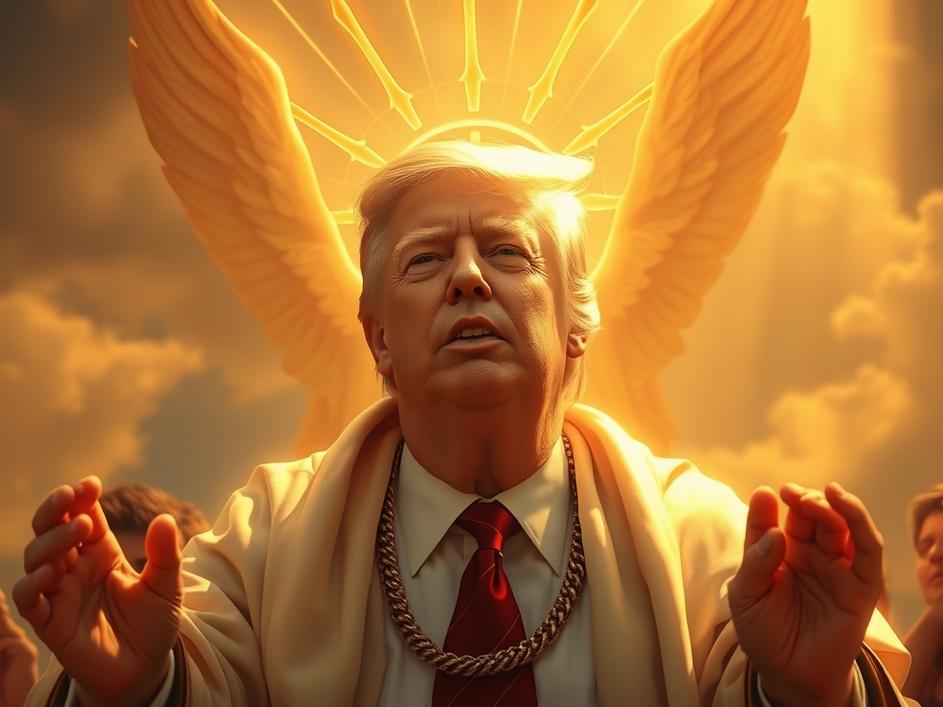
ToggleRecently, a stir arose from an image posted by former President Donald Trump on his Truth Social platform. It wasn’t just any picture; it was an AI-generated depiction of himself in what some might interpret as a Christ-like or doctor-like pose. During a subsequent appearance, Trump commented on the image, suggesting he saw it as portraying him ‘making people better.’ This sparked a wave of reactions, ranging from amusement to bewilderment, and fueled the ongoing debate about the role and implications of AI in shaping public perception.
The image itself is a fascinating artifact of our times. AI-generated art has rapidly evolved from a novelty to a potent tool for visual communication. This particular image seems to blend elements of religious iconography with the traditional imagery associated with healing professions. The result is a surreal and ambiguous portrayal that invites multiple interpretations. Was it intended as a tongue-in-cheek commentary, a genuine reflection of self-perception, or simply an experiment with AI’s creative capabilities? The answer, like the image itself, remains open to debate.
One of the most intriguing aspects of this episode is the way it highlights the blurring lines between reality and perception in the digital age. AI can now create images that are indistinguishable from photographs, making it increasingly difficult to discern what is real and what is fabricated. In the context of political discourse, this raises serious questions about the potential for manipulation and the erosion of trust in visual media. If an AI can generate an image of a political figure in a messianic pose, how can we be sure that other, more insidious forms of disinformation are not being disseminated through the same channels?
The reactions to Trump’s AI image also underscore the power of echo chambers in shaping public opinion. Depending on one’s existing political affiliations, the image was either embraced as a humorous meme or condemned as a narcissistic display. This polarization reflects the broader trend of individuals seeking out information and perspectives that reinforce their pre-existing beliefs, while dismissing or ignoring contradictory evidence. In such an environment, even a seemingly innocuous image can become a lightning rod for controversy, exacerbating divisions and hindering meaningful dialogue.
Beyond the immediate political implications, the Trump AI image serves as a reminder of the increasingly performative nature of contemporary politics. In an era defined by social media and 24-hour news cycles, political figures are constantly under pressure to cultivate a public image that resonates with their base and attracts new supporters. AI offers a powerful tool for crafting and disseminating such images, but it also raises ethical questions about the authenticity and transparency of political communication. Is it acceptable for politicians to use AI to create idealized versions of themselves, or should they be held to a higher standard of honesty and accountability?
Amidst the debate about the implications of AI-generated political imagery, it’s important to consider the role of humor. Many people found the Trump AI image to be genuinely funny, regardless of their political leanings. Humor can be a powerful tool for social commentary, allowing us to poke fun at the absurdities and contradictions of our world. In this case, the image’s over-the-top depiction of Trump as a divine healer may have resonated with some viewers precisely because it satirized the inflated egos and grandiose rhetoric that often characterize political discourse. But, did it help or hurt his image? It depends who you ask, but it certainly did add a strange and interesting moment to the digital landscape.
As AI continues to evolve and permeate every aspect of our lives, it’s crucial that we develop the critical thinking skills necessary to navigate this new frontier. We must be able to distinguish between real and fake, to evaluate information objectively, and to resist the temptation to fall prey to echo chambers and partisan narratives. The Trump AI image is just one example of the challenges and opportunities that AI presents. By engaging with such issues thoughtfully and critically, we can ensure that AI serves as a force for good, rather than a tool for manipulation and division. The future of how we perceive reality may depend on it.
Ultimately, the image, regardless of its creator’s intentions, forces us to confront our own biases and perceptions. It’s a mirror reflecting not just a political figure, but our own anxieties and aspirations in an increasingly digital world. In a time when technology blurs the lines between reality and fiction, perhaps the most valuable skill is the ability to question everything we see – even the images that seem to confirm our deepest beliefs.



Comments are closed