

We are a digital agency helping businesses develop immersive, engaging, and user-focused web, app, and software solutions.
2310 Mira Vista Ave
Montrose, CA 91020

2500+ reviews based on client feedback
What's Included?
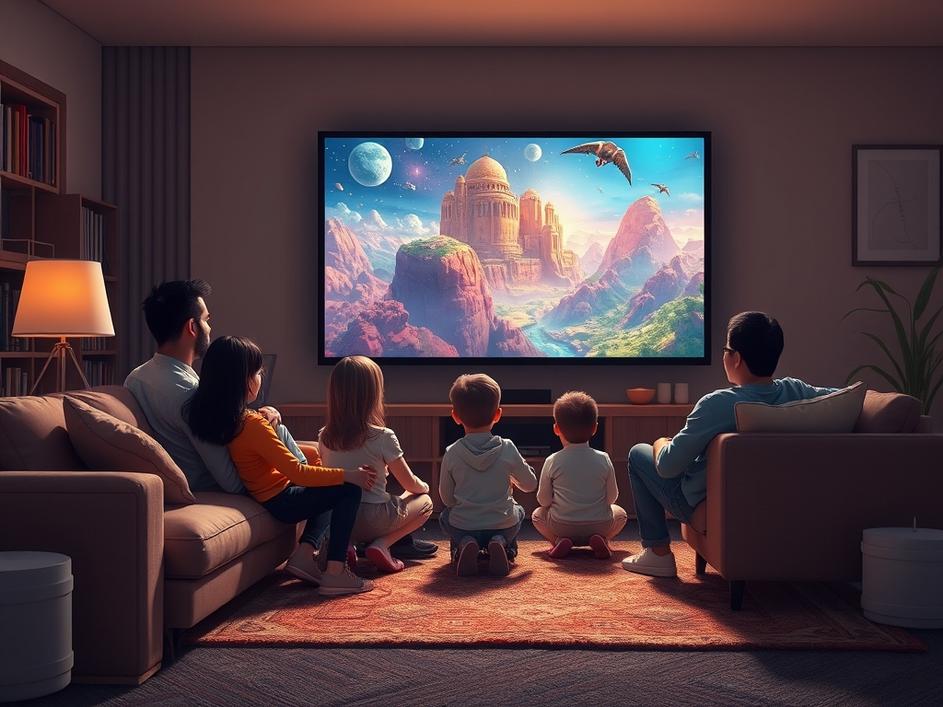
ToggleImagine turning on your TV and finding a story that’s never been told before, one that unfolds based on, not just what you choose, but how the system creates it. That’s the promise of Simia World, a new platform powered by Transitional Forms and Family Playland. It brings generative storytelling to over 23 million homes via connected TVs, including VIZIO devices and Walmart’s onn. brand.
Forget passively watching a show. Generative storytelling means the narrative isn’t fixed. Instead, a system uses algorithms and data to create a unique story experience each time. It is like having a TV show that adapts and evolves based on various factors. Transitional Forms holds a patent on this platform, indicating they’ve developed a distinct approach to making this happen.
Simia World seems aimed at families, perhaps with younger children. Details are scarce, but the partnership with Family Playland suggests content appropriate for that audience. Because it’s available on VIZIO and Walmart’s onn. devices, accessibility is definitely a key factor. Getting onto those platforms immediately gives Simia World a huge potential reach. It will be interesting to see how well their generative storytelling platform performs in the real world.
The core of this is Transitional Forms’ patented technology. Their generative storytelling platform analyzes user data and choices to weave tales that feel both fresh and personalized. Instead of a pre-written script, the system builds the story in real-time. It will be interesting to see how well the narratives hold up. Is it a gimmick, or can algorithms truly create compelling stories?
This move highlights a trend: the blurring lines between gaming and traditional media. Generative storytelling has roots in interactive fiction and video games, where player choices shape the narrative. Now, that concept is coming to TV. If Simia World is successful, expect other companies to follow suit. It could mean a whole new category of entertainment emerges, where viewers become active participants in the stories they watch.
Several questions remain. How engaging are these generative stories, really? Can an algorithm capture the nuances of human emotion and drama? Will audiences embrace this new form of entertainment, or will they prefer the comfort of familiar, pre-packaged narratives? And what about the quality control? Will these stories always be appropriate for all viewers, especially given that this is aimed at families?
There’s always hype surrounding new technology, and generative storytelling is no different. But beneath the buzzwords lies real potential. If Simia World can deliver truly engaging and personalized stories, it could revolutionize how we consume entertainment. The key will be balancing the power of algorithms with the art of storytelling. It is about creating something new and compelling, not just something different.
The decision to launch on VIZIO and Walmart’s onn. devices is smart. It instantly puts Simia World in millions of homes. These platforms are known for being affordable and accessible, which means a wider audience can experience this new technology. It is not about being exclusive; it is about bringing generative storytelling to the masses. This strategy could be what sets Simia World apart from other experimental entertainment platforms.
For now, it’s a wait-and-see game. Simia World is an interesting concept with a lot of potential, but its success will depend on execution. If they can create genuinely engaging and personalized stories, they might just be onto something big. But if the stories feel generic or predictable, it could be a flop. It is all about how well the technology can tell a story. Only time will tell if Simia World can deliver on its promise.



Comments are closed