Introduction to a New Era
The world of aviation is on the cusp of a significant change. With the Federal Aviation Administration (FAA) now accepting bids for an AI system to assist air traffic controllers, it’s clear that technology is about to play a much bigger role in keeping our skies safe. This move is not just about embracing innovation; it’s about enhancing the efficiency and accuracy of air traffic control. But what does this mean for the future of aviation, and how will AI actually assist in this critical task?
Understanding the Challenge
Air traffic control is one of the most demanding and complex jobs in the world. Controllers must make quick, precise decisions, often in high-pressure situations. The current system relies heavily on human judgment, which, while excellent, is not immune to errors. The introduction of AI is aimed at supporting these professionals, not replacing them. By analyzing vast amounts of data quickly and accurately, AI can help controllers make better decisions, reducing the risk of human error. This is particularly important in today’s aviation environment, where the number of flights is increasing, and airspace is becoming more congested.
The Role of AI in Air Traffic Control
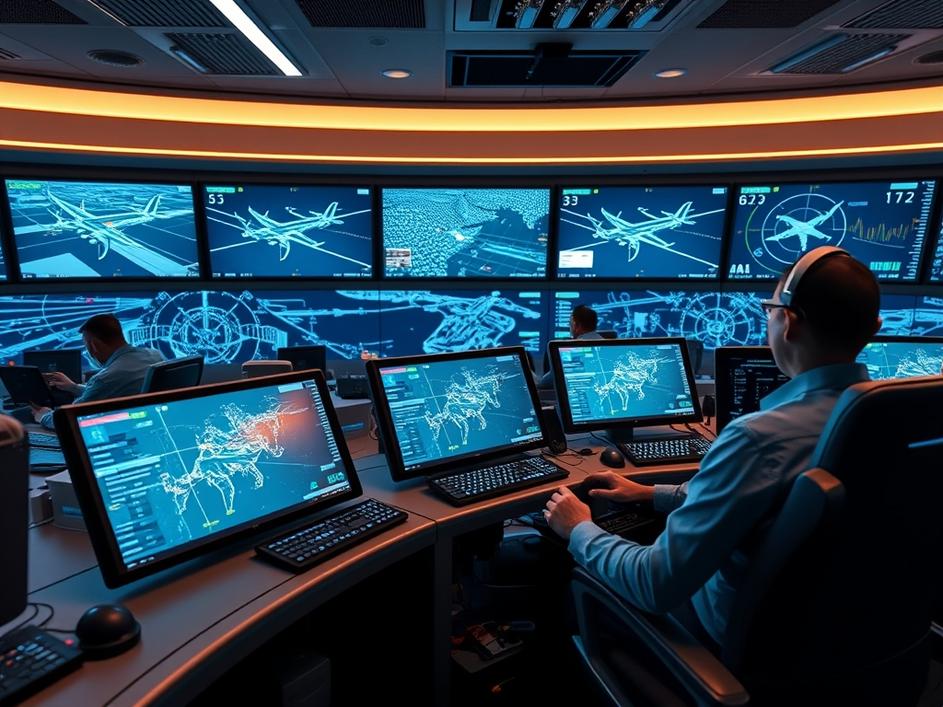
So, how exactly will AI be used in air traffic control? The system being developed will use machine learning algorithms to analyze data from various sources, including radar, weather forecasts, and flight plans. This analysis will provide controllers with real-time recommendations and alerts, helping them to manage traffic more effectively. For instance, AI can predict potential conflicts between aircraft and suggest alternative routes to avoid them. It can also help in managing flight delays by optimizing traffic flow and reducing congestion in the airspace.
Benefits and Concerns
The potential benefits of AI in air traffic control are significant. It can lead to safer skies, reduced delays, and more efficient use of airspace. However, there are also concerns that need to be addressed. One of the main challenges is ensuring that the AI system is reliable and can perform under all conditions. There’s also the issue of data privacy and security, as the system will be handling sensitive information. Moreover, the integration of AI into the current system will require significant training for air traffic controllers, to ensure they can work effectively with the new technology.
Looking to the Future
As the FAA moves forward with the implementation of AI in air traffic control, it’s exciting to think about what the future might hold. Could we see a time when AI is not just assisting controllers, but also playing a more autonomous role in managing air traffic? While that’s a long way off, it’s clear that the introduction of AI is just the beginning of a new era in aviation. The key will be to ensure that technology is developed and implemented in a way that complements the skills of human controllers, enhancing safety and efficiency without replacing the judgment and experience that only a human can provide.
Conclusion
The decision by the FAA to introduce AI into air traffic control is a significant step forward. It reflects a recognition of the potential for technology to improve safety and efficiency in aviation. As we move into this new era, it will be important to monitor the progress of these systems closely, addressing any challenges that arise and ensuring that the benefits of AI are realized. With careful development and implementation, AI could become a vital tool in the pursuit of safer, more efficient skies.






Comments are closed