

We are a digital agency helping businesses develop immersive, engaging, and user-focused web, app, and software solutions.
2310 Mira Vista Ave
Montrose, CA 91020

2500+ reviews based on client feedback
What's Included?
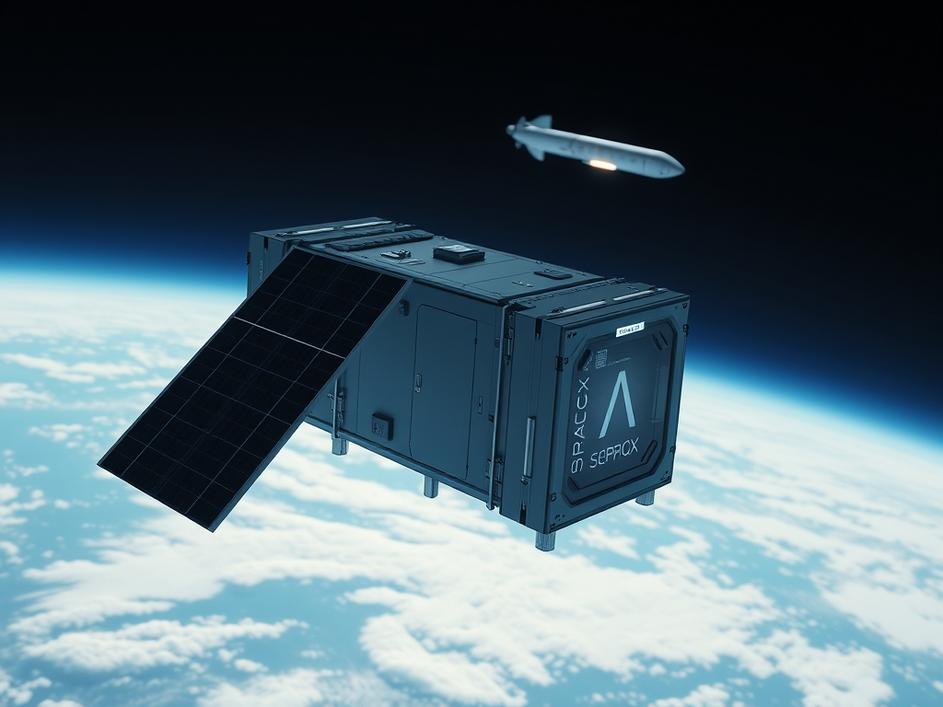
ToggleA recent talk between Google and SpaceX isn’t about a normal data center build. It’s about moving some computing into space. The idea sounds far out, and likely years away from real use. Still, it raises big questions about how tech giants think about data, power, and reliability. If a rocket company can deliver a payload that also does cloud work, what does that mean for our idea of a data center in a box on the ground?
The lure is resilience and new reach. In theory, you could place compute near where data is created or consumed—near satellites, rockets, or ground stations—so data doesn’t have to travel far to be processed. A space module might be powered by solar and cooled by radiators that shed heat into space. It could be designed to handle mission-critical tasks while riding along with launches or sitting in a low Earth orbit. In practice, this isn’t about swapping out every data center on Earth; it’s more about exploring a complementary, space-based node that can handle specific workloads or serve remote networks with fewer terrestrial hops.
There are big technical obstacles. Space means radiation, temperature swings, and microgravity, all of which complicate hardware and software design. Hardware would need heavy shielding and redundancy, and cooling systems must work in vacuum. Maintenance is another headache: swapping parts in orbit isn’t as simple as a data center reboot on Earth. Then there’s power, propulsion scheduling, and the risk of debris or a failed launch disrupting service. The cost is another barrier. Building, launching, and sustaining space-based compute would require a clear, long-term plan and proof that the benefits justify the price tag.
For Google, a cloud business thrives on speed, reliability, and reach. Space-based compute could offer a different kind of edge—resilience during natural disasters, or a way to process data from satellite constellations with lower backhaul. SpaceX brings a heavy launch cadence and expertise with rapid deployment. Together, they could pilot modules that handle specific workloads, like initial data filtering from satellites or cache for time-sensitive AI tasks. But it’s not about replacing data centers on land. It’s about expanding where and how compute happens, and who pays for the risk and the upgrade cycle.
Right now, it reads more like a cautious exploratory step than a concrete plan to shutter Earth-based facilities. Cloud providers are already pushing edge computing closer to users, and some companies are experimenting with space assets for data collection and communications. If this idea gains traction, it could push the industry to rethink architecture, standards, and safety norms for in-space computing. The real test will be whether pilots can show a clear ROI, not just buzz from headlines.
If space-based data centers ever take off, customers could see new options for redundancy and latency tuning. It might open doors for services that need near-continuous uptime in areas prone to outages, or for processing big satellite data streams without loading every bit to ground networks. Yet the user experience would still depend on the entire end-to-end chain—from launch cadence and orbital maintenance to ground segment efficiency. For most businesses, the practical path remains incremental: strengthen terrestrial data centers, push smarter edge solutions, and watch how space concepts mature before committing to a space-based compute tier.
Google and SpaceX exploring space-based data centers signals a shift in how we think about computing infrastructure. It’s not a promise of overnight change, but a sign that the tech world wants to push boundaries. The future might include space assets working alongside ground networks in new, carefully designed ways. For now, it’s a story about curiosity, risk, and long-term thinking. If it moves forward, it could quietly reshape the way we plan resilience, data flow, and the geography of the cloud.

Comments are closed