

We are a digital agency helping businesses develop immersive, engaging, and user-focused web, app, and software solutions.
2310 Mira Vista Ave
Montrose, CA 91020

2500+ reviews based on client feedback
What's Included?
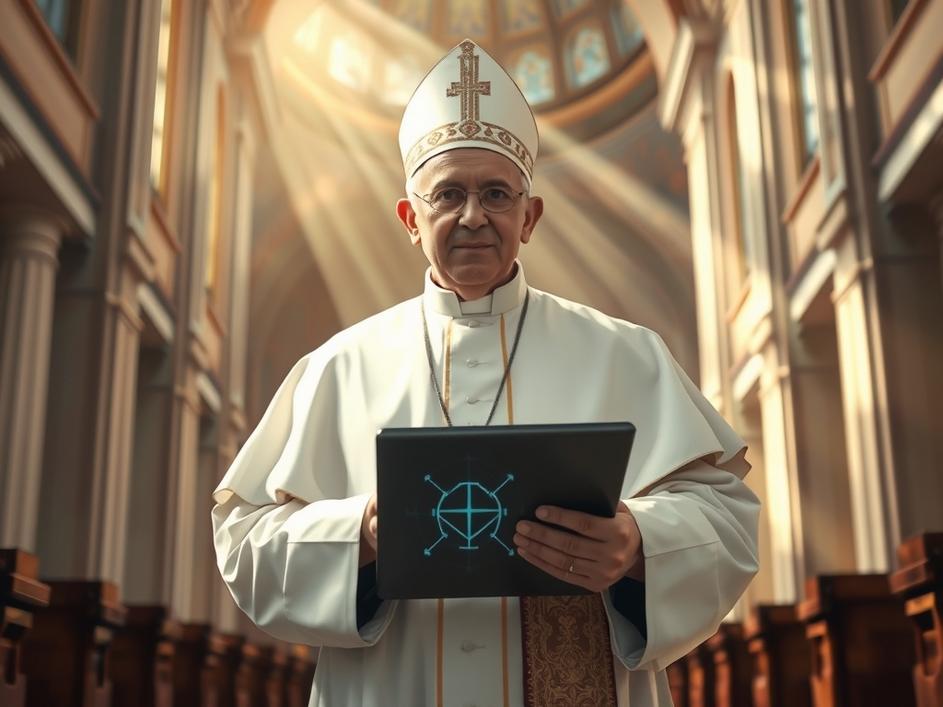
ToggleOn May 17, 2026, Pope Leo addressed a crowd of journalists, tech leaders, and believers, urging the world to steer artificial intelligence toward the “truth of humankind.” It was a moment that felt oddly familiar – a religious figure stepping onto the stage of a modern tech debate. The Pope’s words were not a vague blessing; he asked that AI be used as a tool that respects human dignity, history, and the moral compass that guides societies. In a world where algorithms can shape opinions faster than any newspaper, his call sounded like a reminder that we still need a moral anchor. The Vatican’s message was simple: technology should serve people, not replace the deeper values that define us.
The phrase “truth of humankind” is broad, but the Pope tried to narrow it down. He spoke about the collective memory of humanity – the stories, the lessons, the ethical standards that have been built over centuries. In practice, that could mean ensuring AI does not erase minority voices, does not amplify falsehoods, and does not turn people into data points. He hinted that truth is more than factual accuracy; it includes empathy, context, and the ability to see beyond the numbers. By framing AI as a steward of this truth, he placed a responsibility on developers to embed humility and care into their code.
From my perspective, the Pope’s warning hits a nerve that many tech insiders have felt but rarely vocalized. AI systems can generate convincing text, deep‑fake videos, or biased hiring recommendations in seconds. Without a moral framework, these tools can reinforce stereotypes, spread misinformation, or even manipulate elections. The danger isn’t just a technical flaw; it’s a societal one. When algorithms start deciding what we believe, we risk losing the human conversation that has always been the engine of progress. A set of guardrails – transparency, accountability, and a respect for human dignity – can act like a safety net, catching the worst outcomes before they become reality.
The Catholic Church has a long, sometimes uneasy, relationship with new inventions. From the printing press to the internet, the Church has often acted as a cautious observer, sometimes a reluctant adopter. Yet it has also championed literacy, education, and the spread of knowledge. Pope Leo’s stance fits this pattern: he is not rejecting AI outright, but he is asking for a thoughtful integration. History shows that when institutions pause to reflect, they can shape the direction of technology in ways that benefit the broader public. The Pope’s call can be seen as a modern echo of past debates about how to keep humanity at the heart of progress.
If we take the Pope’s message seriously, there are concrete actions we can start today. Developers should embed bias‑detection tools into their pipelines and conduct regular audits of AI outputs. Companies can publish clear documentation about how their models are trained and what data sources they rely on. For users, the lesson is to stay skeptical of AI‑generated content and to verify information through multiple channels. Educational programs that teach digital literacy, especially in schools, can empower the next generation to ask the right questions. In short, the responsibility is shared: creators must build responsibly, and citizens must engage critically.
The Pope’s appeal is a reminder that technology is not destiny; it is a choice. By framing AI as a servant of the “truth of humankind,” he asks us to keep our moral compass calibrated as we navigate uncharted digital seas. It is easy to get swept up in the excitement of new capabilities, but the real challenge is to align those capabilities with the values that have kept societies together for millennia. If we manage to do that, AI can become a partner in the human story rather than a rival. The conversation has just begun, and the Pope’s voice adds a crucial note of humility and hope to the chorus.
Source: Original Article


Comments are closed