

We are a digital agency helping businesses develop immersive, engaging, and user-focused web, app, and software solutions.
2310 Mira Vista Ave
Montrose, CA 91020

2500+ reviews based on client feedback
What's Included?
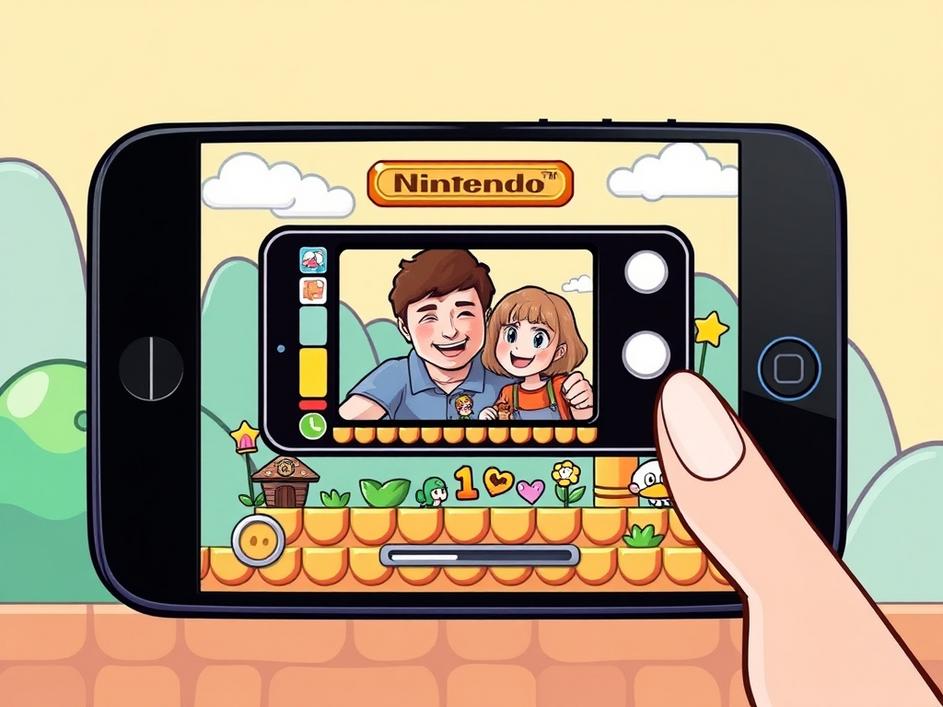
ToggleWhen you hear that Nintendo is letting you use your own pictures to power a game, the first thing that comes to mind is curiosity. It’s not every day a major console maker decides to blend personal media with casual play. The idea feels like a natural extension of the company’s long‑standing love for simple, accessible fun. Instead of scrolling through endless menus, you get to watch a snapshot of your cat or a vacation selfie become the backdrop for a quirky challenge. That mix of familiarity and surprise is what makes the concept stand out in a crowded app market.
The new application, currently rolling out on iOS and Android, asks for permission to scan your photo library. Once you grant access, it pulls random images and runs them through a lightweight AI that identifies the main subjects – people, pets, objects, even scenery. Those elements are then turned into tiny obstacles or targets in a series of short, self‑contained games. For example, a picture of a birthday cake might become a platform where you have to stack frosting layers without letting them fall. Each mini‑game lasts under a minute, making it easy to pop in a quick session between texts or coffee breaks.
Any time an app asks to read personal photos, privacy questions pop up. Nintendo assures users that all processing happens locally on the device, meaning no images are uploaded to a cloud server. The company also promises that the AI model does not store any identifiable data after the game session ends. While that sounds reassuring, it’s still wise to read the permissions carefully and perhaps limit the app’s access to a specific album instead of the entire gallery. In an era where data misuse is common, Nintendo’s approach feels cautious, but users should stay alert and revoke access if they feel uneasy.
Trying out the first few challenges is oddly satisfying. The controls are simple – tap, swipe, or tilt – and the graphics keep the signature Nintendo charm: bright colors, exaggerated expressions, and a touch of humor. Because the games are built around your own pictures, there’s a personal connection that standard levels lack. Seeing your own dog chase a pixelated ball or your own face become a goofy avatar adds a layer of novelty that keeps you engaged. The difficulty ramps up gradually, but never to the point where it feels frustrating. It’s the kind of light‑hearted distraction that fits well into a lunch break.
Nintendo has always been good at finding niches that larger developers overlook. By turning private photos into game material, they are tapping into a desire for personalization that many mobile titles ignore. This move could signal a broader strategy to blend the company’s beloved IPs with everyday digital habits. If the app gains traction, we might see similar concepts that incorporate other personal data, like music playlists or text messages, while still respecting privacy. It also shows that Nintendo is willing to experiment beyond its traditional consoles, perhaps paving the way for more cross‑platform experiences.
Overall, the new Nintendo app offers a playful twist on the usual photo‑gallery experience. It manages to be both entertaining and respectful of user data, at least on paper. The games are short enough to fit into any busy day, and the personal touch makes each round feel unique. That said, anyone uneasy about granting photo access should consider limiting the app’s permissions or using a separate album for testing. As a casual gamer, I appreciate the novelty and the gentle reminder that fun can be found in the most ordinary moments – even a blurry selfie from last summer.
Source: Original Article


Comments are closed