

We are a digital agency helping businesses develop immersive, engaging, and user-focused web, app, and software solutions.
2310 Mira Vista Ave
Montrose, CA 91020

2500+ reviews based on client feedback
What's Included?
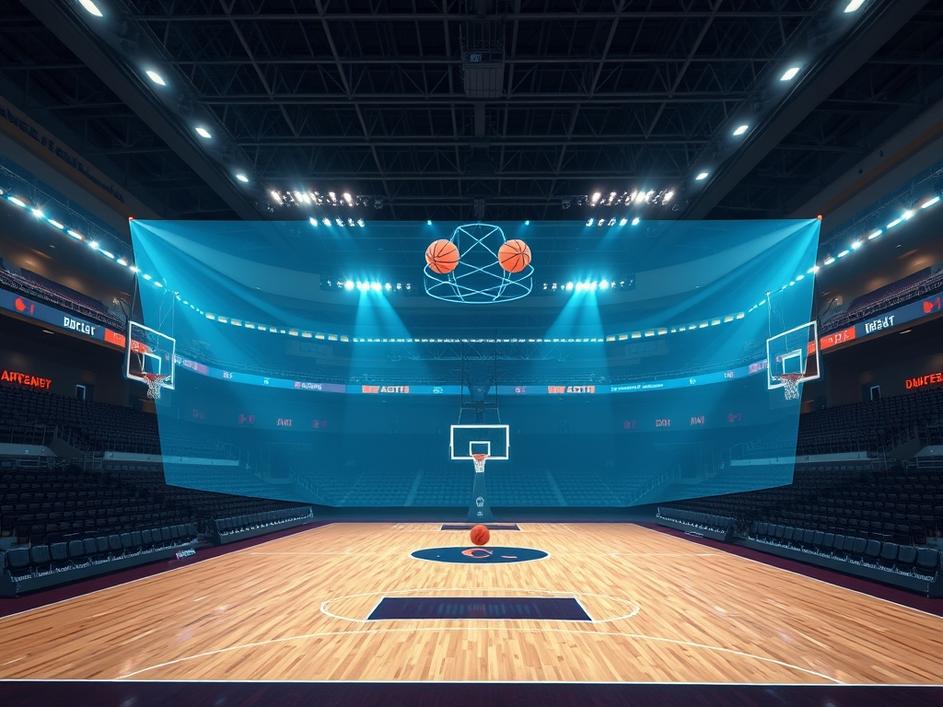
ToggleWhen Adam Silver talked about bringing an AI‑driven review system to the NBA, it felt like another piece of tech was finally getting a seat at the table. Fans have been hearing about instant replay for years, but out‑of‑bounds calls have always been a gray area. The human eye can miss a footstep in a split second, and that tiny mistake can swing a game. Silver’s announcement on The Pat McAfee Show put a spotlight on the fact that the league is ready to let machines help with those moments. It’s not about replacing referees; it’s about giving them a safety net when the margin is razor thin. The idea is simple: let a computer double‑check a call that’s already been made, and let the game move on faster.
The technology behind the plan is an adaptation of Hawk‑Eye, the same tracking system that cricket and tennis use to call lines. Cameras around the arena capture every angle, and sophisticated algorithms map the ball’s trajectory in real time. When a play ends near the sideline, the system can instantly calculate whether the ball crossed the boundary. If the AI’s confidence level is high enough, it will automatically overturn a wrong call or confirm a correct one without needing a full‑court review. The whole process takes a fraction of a second, keeping the game’s rhythm intact. Silver said the league will start testing the system this season, with a full rollout expected next year.
For players, the biggest win is fairness. Imagine missing a buzzer‑beater because a referee thought the ball stepped out a millisecond early. With AI in the mix, that kind of error should become rare. Fans also stand to benefit. Nobody likes a controversial call that drags on for minutes, especially during a close playoff game. An automated review can settle the dispute quickly, letting the crowd stay focused on the action. And because the system logs every decision, analysts can later study patterns and see if any bias ever creeps in. In short, the technology promises a smoother experience for everyone watching, whether they’re in the arena or at home.
Even the best tech can stumble, and there are legitimate worries. First, the AI is only as good as the data it receives. If a camera angle is blocked or lighting is poor, the system might misinterpret the play. There’s also the question of how much authority the machine should have. Some purists argue that a human touch is essential for the flow of the game, and that too many automated calls could turn basketball into a series of stoppages. Finally, there’s the cost factor. Installing and maintaining a high‑resolution camera network across every arena will not be cheap, and smaller markets might feel the pinch. The league will need to address these concerns before fans fully embrace the change.
Other sports have already walked this path. The NFL uses a system called “Instant Replay Review” for many types of calls, and the NHL relies on video review for goals and penalties. Those leagues have learned that clear guidelines and a transparent process are key to keeping trust. The NBA’s approach seems to be taking those lessons and applying them to a specific, high‑impact scenario. By limiting the AI’s role to out‑of‑bounds calls, the league can test the waters without overhauling the entire officiating structure. If the pilot runs smoothly, we might see similar tools appear for other close calls, like go‑altitude violations or charge‑block determinations.
Personally, I think the move is a step in the right direction. Basketball is fast, and every possession matters, so removing a source of error feels logical. The key will be keeping the technology as a helper, not a replacement for human judgment. If the league can strike that balance, the AI could become a quiet backstage partner that lets the players and fans enjoy the game without second‑guessing every line call. In the long run, I can see a future where the NBA uses similar tools for things like foul detection or shot‑clock verification, but only after the out‑of‑bounds system proves its worth. For now, the focus should be on perfecting this first rollout and making sure the experience stays fluid. If they get it right, the next few seasons could feel a little more fair and a lot more exciting.
Source: Original Article
Comments are closed