

We are a digital agency helping businesses develop immersive, engaging, and user-focused web, app, and software solutions.
2310 Mira Vista Ave
Montrose, CA 91020

2500+ reviews based on client feedback
What's Included?
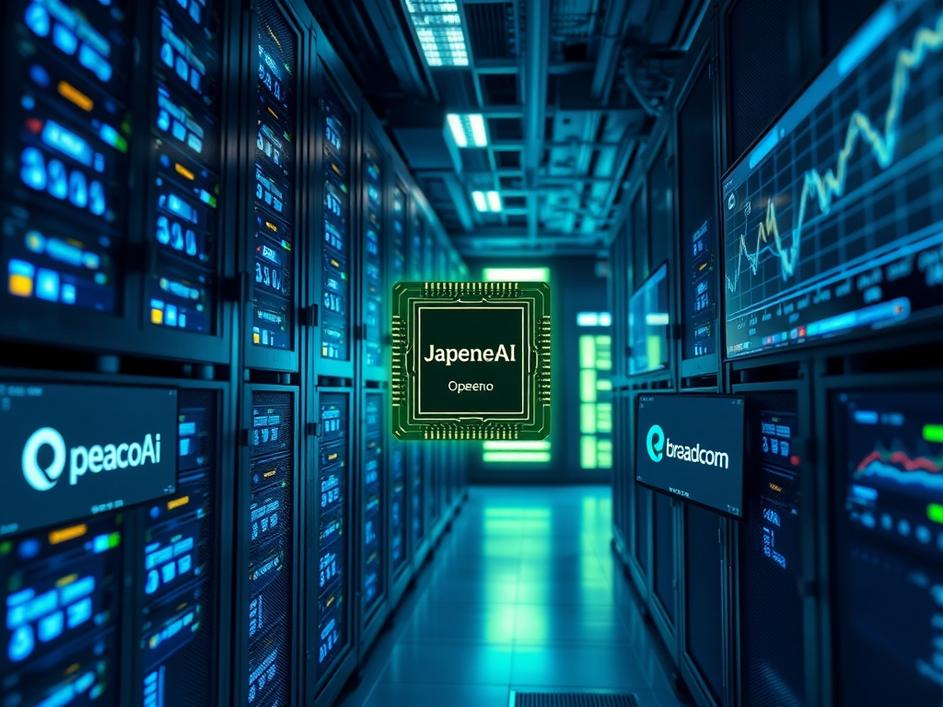
ToggleBroadcom’s shares climbed about 3.4% in early trading after news that OpenAI had introduced a custom chip codenamed Jalapeño. The reaction isn’t a slam dunk for the company, but it does send a message: big AI players are leaning more into tailored hardware and the ecosystem that supports it. The market often treats hardware news as a glimpse into future demand, margins, and relationships. This move is modest, yet it creates a notch in the ongoing story of how AI workloads might be served more directly by targeted silicon. It’s not a full product roll-out, but it’s enough to spark questions about who the main beneficiaries will be as OpenAI sharpens its hardware edge—and whether Broadcom sits at the center of that shift.
Details are light, but Jalapeño appears to be a chip aimed at specific AI workloads, likely for inference or tight data-center operations. The naming hints at speed and compact design, a common theme when teams push to cut latency and energy use. If Jalapeño helps run certain neural networks more efficiently than general chips, it could lower the cost per inference and squeeze more performance out of a data-center under OpenAI’s control. Even without the full spec, the idea signals a move toward more integrated, purpose-built hardware in AI stacks, which could ripple through procurement choices and partnerships across the sector.
Broadcom isn’t just a name you see on a price chart. Its expertise covers connectivity, controllers, switches, and other components that keep dense servers humming. In a setup where OpenAI leans on a custom chip like Jalapeño, Broadcom could be in the mix as the provider of the supporting tech—the network paths, storage interfaces, and secure elements that let the system scale without bottlenecks. A deeper tie-up could translate into more predictable orders or longer-term commitments for Broadcom’s data-center backbone products. Yet the true impact hinges on the scale of OpenAI’s rollout and how many layers of the stack Broadcom can credibly serve without stepping on the toes of rivals or incumbents in the market.
The AI hardware scene is crowded and fast-moving. Nvidia remains a powerhouse in GPUs, while other players push into specialized silicon and system-level designs. OpenAI’s move toward a custom chip hints at a broader trend: firms want more control over performance, power, and integration. This can widen the field for partners who can deliver quickly and blend well with the rest of a data-center stack. The flip side is risk. If Jalapeño doesn’t scale as hoped or if procurement becomes a quagmire, early enthusiasm can fade. For now, the signal is constructive: enterprises are continuing to invest in bespoke hardware as part of their AI roadmaps, and Broadcom’s mix of products could help manufacturers knit these pieces together smoothly.
Short-term moves like today’s stock blip are interesting, but they don’t predict long-term outcomes on their own. Investors will want to see concrete signs of demand, pricing power, and durable contracts. For Broadcom, the question is whether Jalapeño translates into more repeatable orders rather than a one-off windfall. Look for commentary on revenue mix, contract timing, and any capex guidance tied to data-center upgrades. The broader takeaway is that AI hardware plans are slowly becoming a real revenue engine for select suppliers, not just a rumor in a technology notebook. If this collaboration deepens, Broadcom could benefit from a steadier stream of data-center gear demand, but the path won’t be a straight line.
Jalapeño’s reveal should be read as a datapoint, not a verdict. OpenAI’s willingness to explore deeper hardware ties shows the company’s ambition to steer more of its stack. Broadcom’s involvement would be a natural fit given its data-center know-how, yet the ultimate outcome will depend on volume, pricing, and how the hardware roadmap unfolds over time. For investors, the prudent stance is to watch for follow-up details—what the chip actually does, how OpenAI plans to deploy it, and how Broadcom positions its other data-center products around this trend. The AI hardware market is not about a single chip or a single deal; it’s about a steady capability to deliver faster, more efficient systems at scale. In that sense, today’s move is a early chapter in a longer play—and a reminder that the AI era will be shaped as much by hardware discipline as by software breakthroughs.



Comments are closed