

We are a digital agency helping businesses develop immersive, engaging, and user-focused web, app, and software solutions.
2310 Mira Vista Ave
Montrose, CA 91020

2500+ reviews based on client feedback
What's Included?
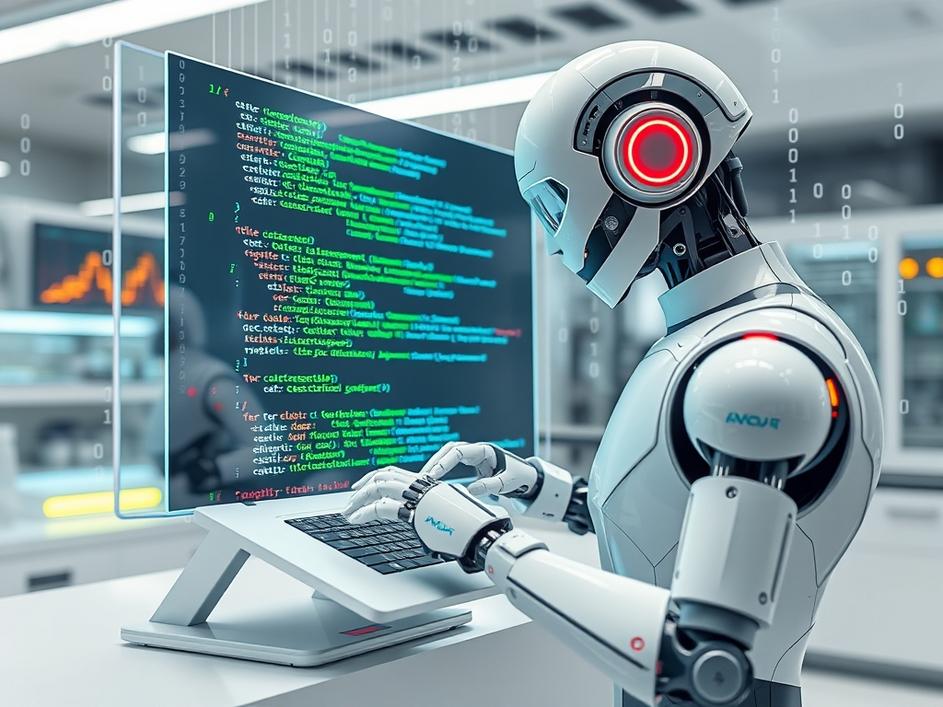
ToggleOrnith has just landed on the open‑source scene, and it feels like a fresh breeze for the world of autonomous software agents. Unlike the usual code‑completion models that are built for human programmers, Ornith is designed from the ground up to talk to other AIs. Its creators at DeepReinforce say the goal was to give agents a language they can understand without the extra layers of human‑centric formatting. In practice that means the model spits out raw syntax trees, execution plans, and even environment‑specific hooks that a human would normally have to write by hand. The result is a tool that can be plugged directly into a larger AI system, letting the whole thing reason about code as if it were another piece of data. For anyone who has tried to make a chatbot write a function and then parse the output, Ornith promises to skip that messy middle step.
Under the hood Ornith follows a transformer‑style architecture similar to other large language models, but the training set is heavily weighted toward machine‑readable code. The team collected millions of snippets from open‑source repositories, but they filtered out any comments, docstrings, or natural‑language explanations. Instead they kept the abstract syntax trees (ASTs) and the corresponding bytecode where possible. By feeding the model paired representations of source and compiled forms, Ornith learns to predict the next node in a tree rather than the next word in a sentence. This shift lets it generate code that is already syntactically valid and ready for immediate execution. The model also supports a lightweight binary interface that other agents can call without having to decode a string first.
The reason Ornith is described as “built for agents, not humans” is more than a marketing tagline. Human‑focused models aim for readability, style guidelines, and helpful comments. Ornith, on the other hand, drops all of that. Its output is compact, often omitting whitespace and variable names that a programmer would care about. It can also embed hints about the runtime environment, like which library version to load or which container to spin up. Because the model speaks the same language that the surrounding orchestration system uses, the latency drops dramatically. An agent can request a code fragment, receive a binary‑compatible block, and run it in a sandbox in a matter of milliseconds.
What does this mean for the broader AI ecosystem? First, it lowers the barrier for building self‑maintaining bots that can patch their own code. Imagine a monitoring agent that detects a memory leak, asks Ornith for a fix, and applies the change without a human ever looking at the diff. Second, toolchains that rely on code generation—like low‑code platforms or automated testing suites—can become more modular. They can hand off a task to Ornith, get back a ready‑to‑run snippet, and move on. Finally, the open‑source nature of the project invites community contributions, so specialized extensions for niche languages or hardware can appear quickly. In short, Ornith could become the glue that holds together many independent AI services.
Of course, the new model also brings fresh worries. Because Ornith learns from publicly available code, it inherits any licensing or security flaws present in that data. A malicious actor could try to poison the training set with backdoors, and the model might reproduce them unknowingly. The lack of human‑readable comments also makes it harder to audit the generated code for hidden behavior. Moreover, the speed advantage comes at the cost of flexibility; if an agent needs a more expressive, well‑documented function for later maintenance, Ornith’s terse output may not suffice. Developers will need to build safety nets—static analysis, sandboxing, and version control—to keep the system trustworthy.
All things considered, Ornith is a bold step toward letting machines write and understand code without constantly translating it for us. It shifts the conversation from “can AI help me code?” to “can AI maintain itself?” While the approach is still early and the community will have to address the security and transparency gaps, the open‑source license gives everyone a chance to shape its future. If the project lives up to its promise, we may soon see AI agents that not only suggest fixes but actually implement them, test them, and roll them out—all on their own. That would change how we think about software development, making it a more collaborative dance between humans and autonomous coders.
Source: Original Article



Comments are closed