

We are a digital agency helping businesses develop immersive, engaging, and user-focused web, app, and software solutions.
2310 Mira Vista Ave
Montrose, CA 91020

2500+ reviews based on client feedback
What's Included?
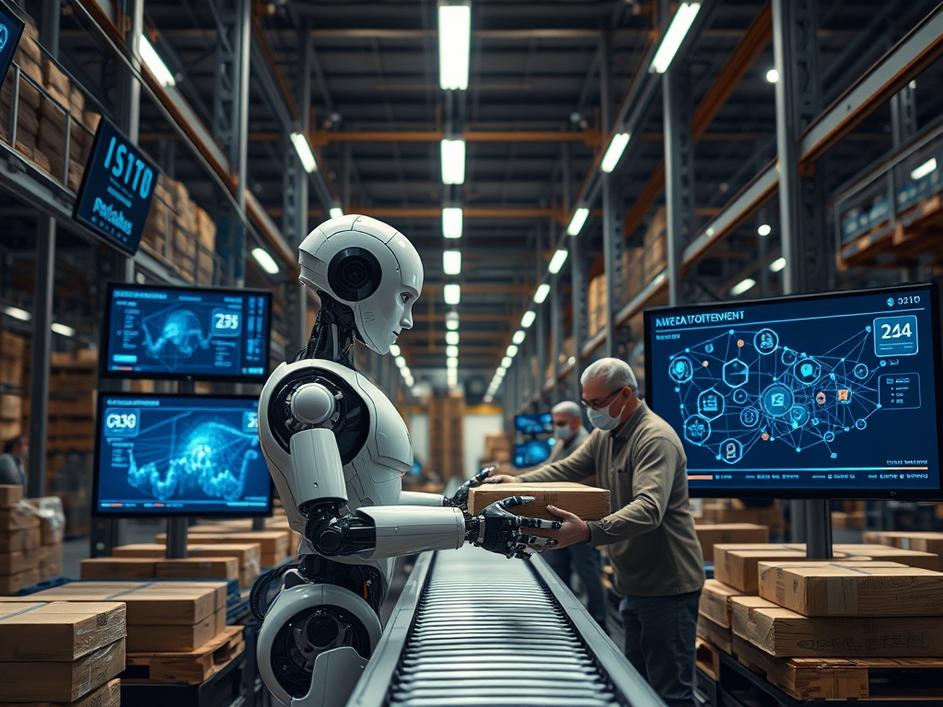
ToggleIn any real packing line, things don’t go as planned. A tangle of cables, a last-minute order change, a human mistake. The news story about someone interrupting a mid-pack operation is more than drama. It highlights a core challenge for AI systems that sit in the wild, not in a lab. Embodied models try to act in a physical space. They move, touch, and adjust. They also have to understand a changing world where rules shift with every shift of staff, light, or weather. The lesson here isn’t that the tech failed. It’s that the world is messy. The test is whether the model can stay calm, keep doing the job, and not crash when a corner case appears. That resilience is what companies want when they decide to put AI on the factory floor.
In simple terms, a model that works across ideas needs to handle different kinds of tasks without retraining. Imagine a robot that packs boxes but also knows how to sort by weight, color, and destination. It handles signals that come from many sources: cameras, weight sensors, even human cues. If you switch the task a bit, it should still do well. The idea of cross-domain robustness is about making AI that can bend without breaking. It’s not about magic. It’s about solid design: modular systems, shared representations, and rules that make sense under noise. When a model can keep its behavior steady across changes, it earns trust from the people who will use it daily.
Disruptions aren’t rare. They arrive as soon as the line starts moving. A supervisor changes a setting, a pallet shifts, or a sensor momentarily misreads. Humans may adjust, or a software glitch might happen. In short, the environment is a moving target. This is exactly where embodied AI must cope. The success metric is not always perfect accuracy but steady operation under varying lighting, noise, and human actions. The story reminds us that the real test is resilience, not just capability in clean tests.
Generalization means the model doesn’t rely on a fixed setup. It adapts to new packaging sizes, different line configurations, and unseen products. Practically it means transferable skills, robust representations, and simple adaptation mechanisms. Teams should test with edge cases, simulate noisy conditions, and measure beyond training data. The aim is to reduce retraining, improve explainability, and keep safety. Real-world success favors systems that stay close to consistent behavior across real changes. It’s not about perfect numbers; it’s about reliable performance across a range of real situations.
What does this mean for companies? Build with modularity. Decouple sensing, planning, and action so you can swap parts without breaking the whole. Use safety checks and human oversight. Set clear performance metrics for edge cases. Invest in synthetic data and robust testing across distributions. Also, culture matters: operators must trust the AI, understand its decisions, and know how to step in when needed. The promise isn’t a magic robot. It’s a tool to take dull tasks off human hands while staying dependable when things change. The payoff comes only when these systems run smoothly over time, not just in good days.
My view is simple. Real progress lies in resilience. If a system can keep working when something unexpected happens, that is a win. The world is not tidy. Our AI should reflect that. I am watching how teams blend human judgment with machine speed. The best setups give people control without slowing them down. The overall goal is a smoother flow, fewer stoppages, and a clear path from prototype to production. If generalized models become the norm, these tools stop being curiosities and become reliable partners in daily work. The rest is about steady practice and honest measurement.



Comments are closed