

We are a digital agency helping businesses develop immersive, engaging, and user-focused web, app, and software solutions.
2310 Mira Vista Ave
Montrose, CA 91020

2500+ reviews based on client feedback
What's Included?
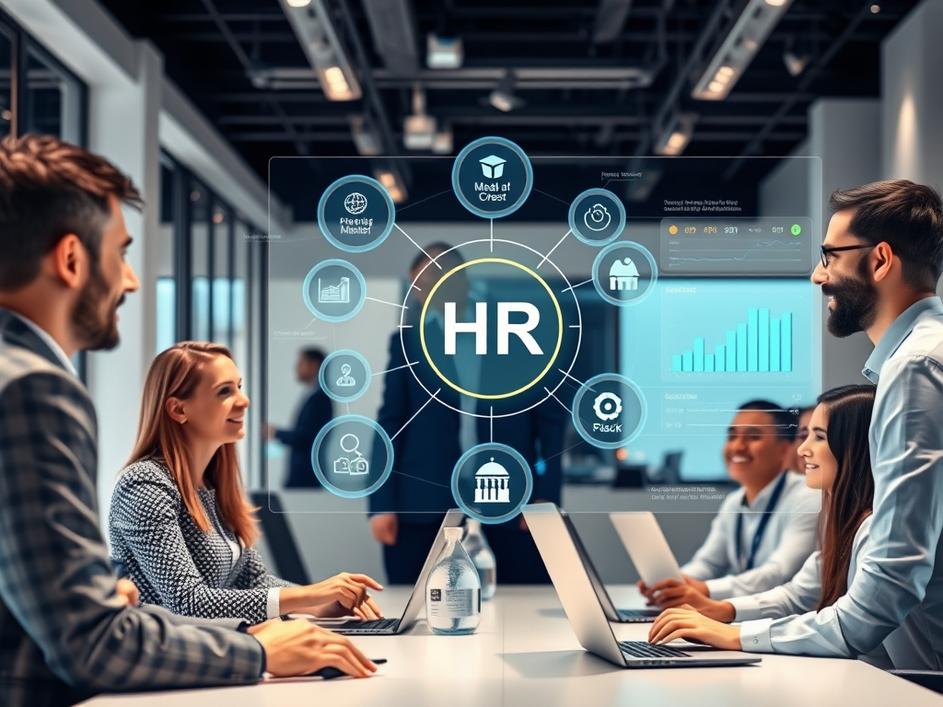
ToggleArtificial intelligence is no longer a buzzword for HR teams. It is showing up in daily tasks, from sorting resumes to answering employee questions. Companies that ignore it risk falling behind. Oracle, a long‑time player in enterprise software, is trying to make the shift smoother. Shailesh Singla, a senior leader at Oracle India, talks about how the firm is wiring its HR suite to work with AI from day one. The goal is simple: let HR people focus on people, not on manual data work. By building AI readiness into the core of their products, Oracle hopes to give businesses a clear path forward without a steep learning curve.
One of the biggest hurdles for AI in HR is getting the right data together. Most organisations have talent data scattered across payroll, performance, recruiting and learning systems. Oracle’s approach is to create a single, connected data layer that pulls all those pieces into one place. When the data lives in one spot, AI models can see the whole picture and make better suggestions. It also means HR managers spend less time hunting for information and more time acting on insights. The connected data model is the foundation; without it, any AI effort feels like a guess.
With clean data, AI can move beyond automation to strategic support. Oracle is building tools that help managers spot skill gaps, predict turnover risk and even design career paths for employees. The idea is to give HR a partner that can run scenarios quickly. For example, a manager can ask the system what would happen if a certain team grew by 10 %. The AI can pull in historical data, market trends and internal skill maps to suggest hiring needs or training programs. This kind of assistance turns HR from a reactive function into a proactive planner.
All the clever models in the world mean little if employees don’t trust them. Oracle is putting privacy and fairness at the centre of its design. Data is encrypted, access is logged and the AI’s decisions are explainable. When a recommendation shows up, the system can point to the exact data points that led to it. This transparency helps HR leaders explain choices to staff and reduces fear of hidden bias. Trust also means complying with local regulations, something Oracle’s global reach helps with. By building trust into the technology, the company hopes employees will feel comfortable with AI‑driven HR.
Oracle isn’t just talking; it is already rolling out features to customers. A mid‑size tech firm in Bangalore used Oracle’s AI‑ready suite to cut its hiring cycle by 30 %. The system screened applicants, matched them to role requirements and even scheduled interviews automatically. Another client, a manufacturing group, used the predictive turnover model to identify a group of engineers likely to leave. They offered targeted up‑skilling and retention bonuses, which lowered the actual turnover rate by half. These stories show that when data, strategy and trust line up, AI can deliver measurable results.
The journey to an AI‑ready HR function is still early, but Oracle’s roadmap gives a clear direction. Connected data will keep expanding, strategic tools will get more nuanced and the focus on trust will grow stronger. For HR leaders, the message is clear: start cleaning up data, experiment with small AI projects and keep an eye on ethics. If they do, they can turn AI from a novelty into a daily ally. In the end, it’s not about replacing people; it’s about giving them better information to make human decisions. That balance may be the most important lesson from Oracle’s approach.
Source: Original Article


Comments are closed