

We are a digital agency helping businesses develop immersive, engaging, and user-focused web, app, and software solutions.
2310 Mira Vista Ave
Montrose, CA 91020

2500+ reviews based on client feedback
What's Included?
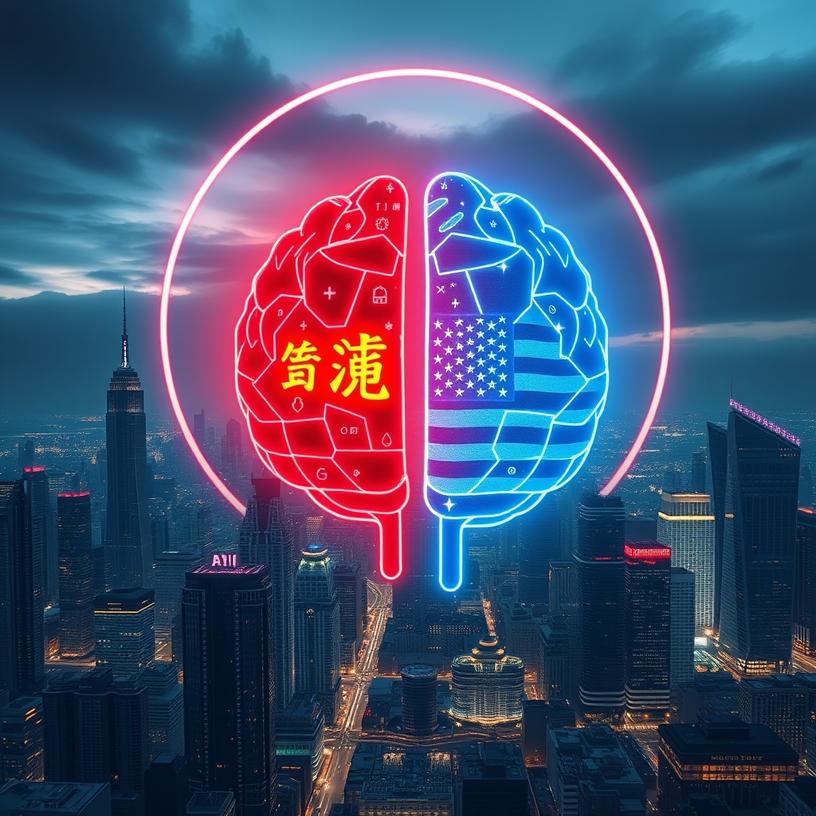
ToggleWhen you hear the word “race” you picture a marathon. In the AI world the competition looks more like a short, furious sprint. China has turned the idea of “moving fast” into a national priority. The government, big tech firms, and a wave of start‑ups are all pushing the same button: get a new model out of the lab and into the market before anyone else can react. The speed of that push is now catching the attention of policymakers in Washington. It isn’t just about bragging rights; it’s about who controls the next wave of software that will shape everything from search to medicine.
Moonshot, a relatively young AI start‑up, released its Kimi K3 model in July. Within two days the demand for compute blew the company’s servers to the brink. The model attracted interest from developers, researchers, and even hobbyists who wanted to test the newest Chinese language model. Alibaba, a heavyweight in cloud services, stepped in to lend extra capacity, but even that was stretched thin. The surge showed how hungry the market is for alternatives to the US‑based models that dominate most APIs today. It also proved that a well‑timed launch can create a wave that lifts the whole ecosystem, forcing rivals to scramble for resources.
What makes the Chinese push possible is a three‑part playbook. First, the state has poured money into semiconductor fabs that can churn out the GPUs needed for AI training. Second, firms like Alibaba, Baidu, and a host of start‑ups receive subsidies and tax breaks for building large language models. Third, the government sets standards and sometimes guides research directions, making sure the effort stays coordinated. This combination of hardware, funding, and direction creates a feedback loop: more chips mean bigger models, which attract more data and talent, which in turn justify more chip investment. The result is a self‑reinforcing engine that can accelerate faster than a market‑only approach.
Across the Pacific, the United States is watching closely. Policy makers have tightened export controls on high‑end chips, hoping to slow China’s hardware buildup. At the same time, big American AI labs are racing to release newer versions of their own models, but they face a different set of constraints, such as public scrutiny and tighter data‑privacy rules. Some US companies are also looking to partner with overseas chip makers to keep their own pipelines full. The tension is clear: the US wants to keep its lead in AI research, but the rapid scaling seen in China forces a rethink of how to stay ahead without stifling innovation at home.
The ripple effects reach far beyond the two superpowers. Smaller countries that rely on cloud services now have more choices. Developers can pick a Chinese model that may be cheaper or better suited to certain languages. At the same time, the competition pushes standards bodies to work faster on interoperability and safety guidelines. Talent flows also start to shift; engineers who once headed to Silicon Valley are now considering opportunities in Beijing, Shanghai, or Shenzhen, attracted by big budgets and fast‑moving projects. The market is becoming more pluralistic, but it also raises questions about fragmented regulations and the risk of a “model arms race”.
In the end, the speed of China’s AI rollout is a reminder that technology races are rarely won by a single country alone. The world will likely see a mix of models, hardware, and policies emerging from different corners. That can be a good thing if it leads to healthier competition, lower prices, and more diverse tools for users. But it also means that governments need to think about safety, ethics, and fairness on a global scale. If the right balance is found, the next few years could bring a richer AI landscape for everyone. If not, we risk a fragmented world where the best technology is locked behind geopolitical borders.
Source: Original Article


Comments are closed