

We are a digital agency helping businesses develop immersive, engaging, and user-focused web, app, and software solutions.
2310 Mira Vista Ave
Montrose, CA 91020

2500+ reviews based on client feedback
What's Included?
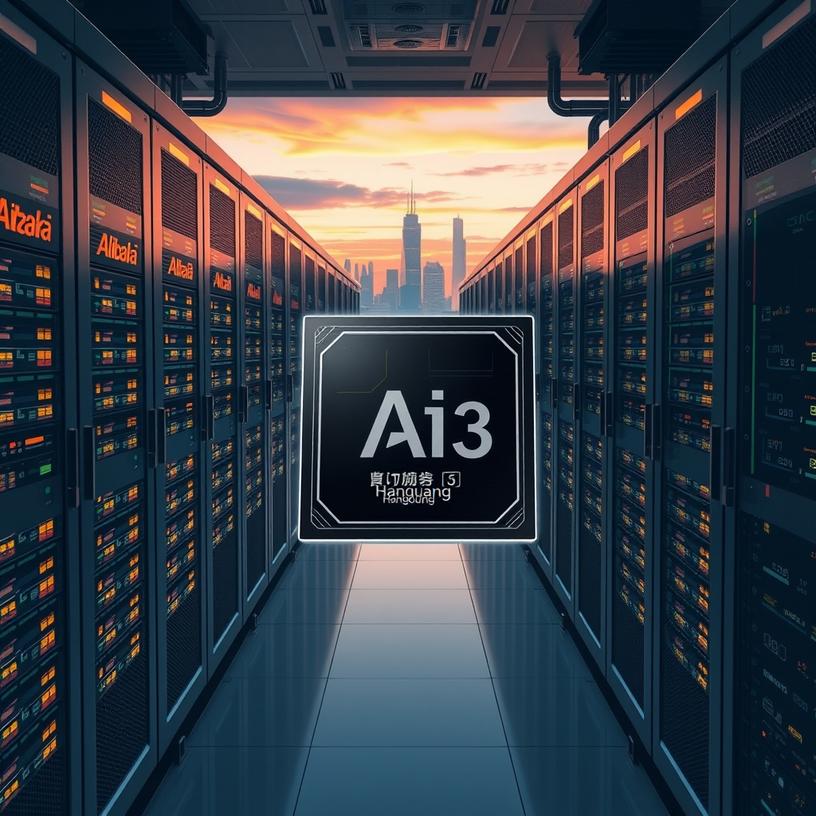
ToggleAlibaba is stepping up its AI game. The company announced a new language model that is much bigger than anything it has run before. At the same time it is rolling out a custom chip designed to run that model efficiently. On top of that, Alibaba says it will add a lot more servers to its data centers so the model can be used by customers across the world. All of this looks like a clear signal that the Chinese tech giant wants to control more of the AI stack, from the silicon up to the software that people interact with. For investors and tech watchers this move is worth a closer look because it could change how Alibaba competes with other cloud providers and with the big AI labs in the US and elsewhere.
Why does moving up the stack matter? In simple terms, owning the hardware that runs a model gives a company more freedom to cut costs and to tweak performance. Alibaba’s new model, which the firm says has dozens of billions of parameters, will need a lot of compute power. By designing its own chip, the group can avoid paying high fees to third‑party silicon makers and can shape the chip to match the model’s quirks. This mirrors what other big players have done, but Alibaba is doing it in a market where access to cutting‑edge chips has been limited. The result could be lower prices for cloud users and faster response times for applications like product search, recommendation engines, and even financial risk analysis.
The chip itself is being called the “Hanguang 3” and it is built on a process that promises high density and low energy use. Alibaba’s hardware team says the silicon can run the new model with a fraction of the power that typical GPUs need. If the claim holds up, it could make it cheaper for small businesses in China to add AI features to their online stores. The chip also supports mixed‑precision computing, which lets the model keep accuracy while using fewer bits for calculations. That kind of flexibility is useful when you have to serve millions of requests per second and still stay within a tight budget.
Adding more servers is only part of the story. Alibaba is also expanding the amount of data it can feed into the model. The company runs some of the biggest e‑commerce platforms on the planet, which means it has a constant stream of product listings, customer reviews, and transaction logs. By pulling that data into a central training pipeline, the model can learn patterns that are specific to Chinese shoppers. At the same time, the firm says it will respect privacy rules and will anonymize personal information before it ever reaches the training stage. This balance between data richness and compliance could become a template for other firms that want to build large language models without running afoul of regulators.
What does this mean for Alibaba’s business units? The cloud arm, Alibaba Cloud, will get a new selling point: a native AI service that runs on its own silicon. That could attract enterprises that are tired of paying for third‑party AI credits. The e‑commerce side can embed the model into search bars, chat assistants, and logistics planning tools, making the shopping experience smoother. Even the financial technology division can use the model for fraud detection and credit scoring, tasks that traditionally need a lot of manual tuning. By keeping the technology in‑house, Alibaba can experiment faster and roll out updates without waiting for external partners.
In the end, Alibaba’s push shows that the company is not content to sit on the sidelines while others race ahead in AI. By building a bigger model, a custom chip, and more data capacity, it is trying to own the whole pipeline. That could give it a cost advantage and let it offer services that feel more local to Chinese users. The gamble is not without risk – hardware development is expensive and the AI field moves quickly. If the model does not meet performance expectations, or if regulatory pressure tightens, the investment could take longer to pay off. Still, the move is a clear sign that Alibaba wants to stay relevant in the next wave of AI‑driven services, and it will be interesting to see how competitors respond.
Source: Original Article



Comments are closed