

We are a digital agency helping businesses develop immersive, engaging, and user-focused web, app, and software solutions.
2310 Mira Vista Ave
Montrose, CA 91020

2500+ reviews based on client feedback
What's Included?
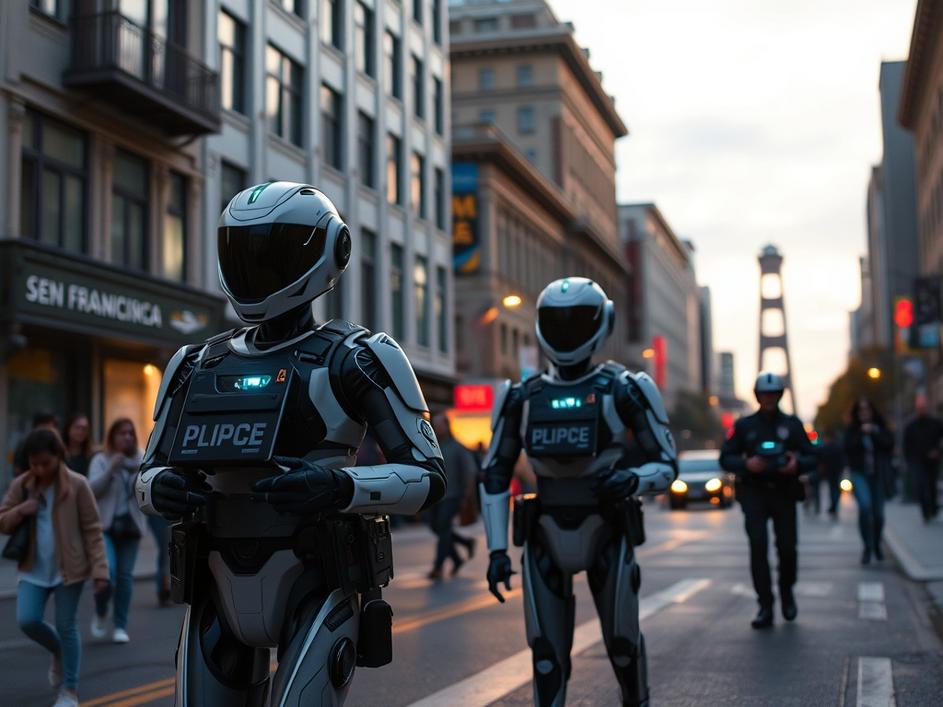
ToggleSan Francisco has been grappling with growing crime issues for years—everything from property theft to violent incidents. Against this backdrop, Marc Benioff, CEO of Salesforce, recently suggested a new solution: AI-powered “robo-cops” to assist law enforcement in keeping the streets safer. His pitch comes right after he made waves by supporting some politically controversial ideas. This proposal of integrating advanced robotics into policing is certainly unexpected, especially from a business leader better known for cloud computing than crime fighting.
Law enforcement agencies all over the world are increasingly experimenting with technology to improve their effectiveness. From body cameras to data analysis tools, police work is slowly changing. Benioff’s idea builds on that trend, suggesting that AI-driven robots could help patrol neighborhoods, respond to incidents, or even act as first responders in dangerous situations. The hope is that they can reduce human risks and increase efficiency. The idea sounds straightforward: let robots handle routine or hazardous tasks so human officers can focus on complex interactions.
However, this proposal isn’t without its problems. AI comes with well-documented risks like bias, errors, and lack of accountability. Introducing robots into policing raises tough questions around ethics and civil rights. Would these machines be able to make nuanced judgments? How would privacy be protected when AI can record and analyze huge amounts of data? There’s also the concern over escalating the militarization of the police with automated enforcers patrolling the streets. San Francisco, known for activism and skepticism toward authoritarian measures, might resist such a push.
Benioff’s pitch puts lawmakers and city officials in a tricky spot. On one hand, crime rates are a pressing issue demanding solutions. On the other, deploying robo-cops could further alienate parts of the community already wary of law enforcement. Policymakers will have to carefully weigh the potential benefits against public trust and safety concerns. Successful adoption would require transparent oversight, clear rules of engagement, and community input. Without that, the idea risks becoming a headline-grabbing experiment rather than a workable solution.
The conversation sparked by Benioff’s proposal illustrates how technology continues to disrupt traditional systems, including policing. It reminds us that new tools are double-edged—they can improve lives but also create new problems. For San Francisco and other cities, finding the right balance between human judgment and technological assistance is key. Robo-cops might be part of the future, but only with thoughtful implementation grounded in respect for rights and equality. For now, it’s a debate worth watching as we ask whether machines can or should play a bigger role in keeping communities safe.
Marc Benioff’s robo-cop idea throws a fresh and controversial concept into an ongoing struggle with public safety. While AI-driven robots could bring some advantages in managing certain crime-related duties, the risks and ethical questions mean this isn’t a simple fix. If San Francisco explores this path, it must do so carefully, involving citizens and experts to make sure technology supports justice rather than undermining it. Ultimately, crime prevention is about people, and no machine can replace the judgment and empathy human officers bring. The future of policing will likely blend tech tools with human care, not toss one aside in favor of the other.



Comments are closed