

We are a digital agency helping businesses develop immersive, engaging, and user-focused web, app, and software solutions.
2310 Mira Vista Ave
Montrose, CA 91020

2500+ reviews based on client feedback
What's Included?
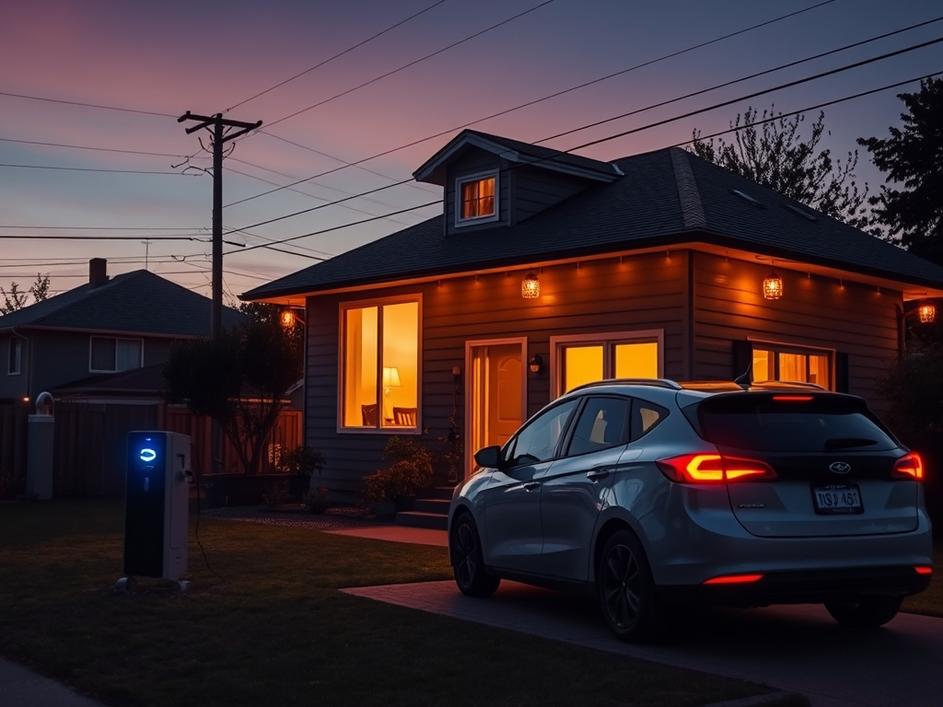
TogglePower outages are becoming a fact of life for many Americans. With one in four homes experiencing at least one blackout every year, it’s clear the electric grid is under increasing pressure. Between extreme weather events, aging infrastructure, and rising electricity demand, keeping the lights on consistently is a serious challenge. I wanted to see firsthand if using an electric vehicle (EV) as a temporary power source during an outage could really be a practical backup. So, I powered my home using the battery of my EV for a full week. Here’s what I learned.
At first glance, it sounds simple: just plug your house into your car and use that stored energy. But the reality is a bit more complicated. Most EVs aren’t designed for this kind of bidirectional energy flow. You need special equipment—a power inverter or a dedicated system—that can safely convert the car’s DC power to usable AC electricity for your home. The setup in my case was a bit of a hassle, requiring some technical help and a few extra components. It’s not yet plug-and-play for the average driver, but it’s getting closer as car manufacturers and tech companies develop more user-friendly solutions.
Once connected, I began running essential appliances—refrigerator, lights, some charging for devices, and a small heater. The energy stored in my EV could power these basics for roughly a day or two, depending on how much I used. It’s important to understand that an EV battery is big but not unlimited. Using a car as a home power source means making tough choices about what to prioritize. I quickly realized that while you can keep food cold and lights on, streaming movies or charging multiple phones at once has to be put on hold.
The broader question is whether EVs could help ease strain on the grid if many people had the ability to send energy back during outages or high-demand times. In theory, if millions of EVs were connected and ready, they could act as a vast, distributed battery storage system. This could provide critical support when the grid is at its weakest. However, there are hurdles: the technology, infrastructure, and smart grid management systems need to catch up. Also, incentives are required for people to participate. Still, my week using an EV to power my home showed me that the concept works on a small scale and has real potential.
Using my EV as a temporary power source gave me a glimpse into a more self-reliant way to manage electricity. It feels empowering to know you’re not completely at the mercy of the grid during outages. That said, it’s not a silver bullet. For most, having an EV is just one part of a bigger energy resilience plan that might include solar panels or a standalone generator. Governments and utilities should see this as a signal to invest more in supporting home-based energy storage solutions. As outages grow more frequent, being prepared isn’t just smart—it could be necessary.
My experiment revealed the strengths and limitations of powering a home with an EV during an outage. It works well for short-term, essential needs and can ease some of the burden on the grid if widely adopted. But currently, it requires technical know-how, extra equipment, and compromises on power usage. The future looks promising as technology advances, but widespread adoption will need support from car makers, utilities, and policy makers. For now, if you have an EV, it’s worth exploring how it can add an extra layer of security during outages. Just don’t expect it to replace the grid or a dedicated backup system anytime soon.


Comments are closed