

We are a digital agency helping businesses develop immersive, engaging, and user-focused web, app, and software solutions.
2310 Mira Vista Ave
Montrose, CA 91020

2500+ reviews based on client feedback
What's Included?
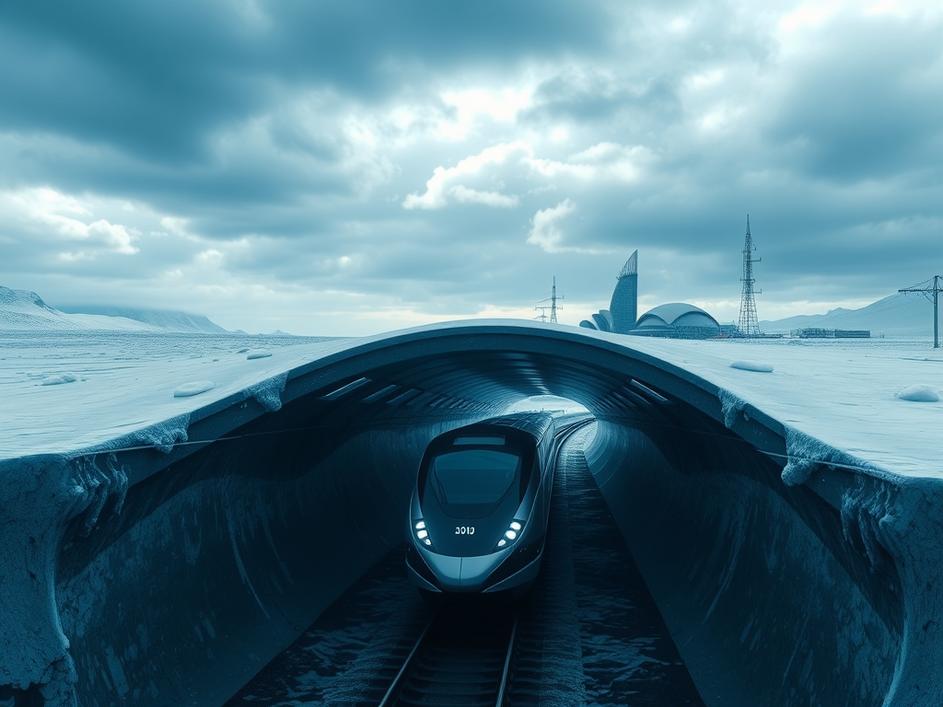
ToggleRecently, some surprising news came out of Russia — an envoy representing President Putin has pitched Elon Musk and his Boring Company with a wild idea: build a tunnel beneath the Bering Strait to connect Russia directly with Alaska. This isn’t just any infrastructure proposal. It’s an ambitious plan to create an undersea rail link linking two continents that are currently separated by a stretch of ocean more than 80 kilometers wide. At first glance, it sounds like something straight out of a sci-fi movie, but the Kremlin wants Musk’s tunneling company to explore the possibility seriously.
Thinking about building a tunnel from Russia to Alaska raises tons of questions. For one, the distance and conditions are extremely challenging. Undersea tunnels are tricky even in more temperate environments, and the Bering Strait is known for its harsh weather, thick ice cover for much of the year, and seismic activity. Building something beneath ocean water in such a remote place would push engineering to its limits, even with Musk’s track record of bold projects.
Then there’s the cost. Such a tunnel would require massive financial investments just to lay the groundwork. Considering Musk’s companies tend to rely on cutting-edge tech but also on profitability and vision, it’s not clear if this tunnel fits into his current business framework. Even if the Boring Company is equipped to handle the engineering side, the ongoing maintenance and operation in such an isolated, extreme environment would also be risky and very expensive.
From a political perspective, this proposal carries extra weight. The “Putin-Trump” tunnel label mainly comes from the idea that Russia and the US might want to strengthen ties through infrastructure, pushing past decades of tension. The tunnel would literally link two countries that have long had rocky relations but share a border only about 85 kilometers across the Bering Strait. It could symbolize cooperation, perhaps even new trade routes or faster transportation links between Asia, Russia, and North America.
But looking closer, the political reality makes this seem more complicated. Amid ongoing geopolitical tensions, large infrastructure projects like this are often not just about transportation or economics—they’re statements of influence and power. Whether Musk would want to take on a project so tightly tied to Russian interests is another matter. Musk’s businesses straddle global markets and US interests, so engaging deeply with a Kremlin-backed infrastructure initiative might bring significant scrutiny.
Elon Musk is known for chasing massive, futuristic ideas that others shy away from—space travel, electric cars, high-speed Hyperloops, and underground tunnels. Yet, he’s also in the business of practicality and market demand. The Boring Company has done well with urban tunnels that ease traffic congestion, but a cross-ocean tunnel is a huge leap.
It’s fair to imagine Musk listening out of curiosity but also weighing the political, technical, and financial risks. His recent ventures focus heavily on projects that align with clear market needs or technological breakthroughs. The Bering Strait tunnel has strategic and symbolic value but may be too speculative or politicized for immediate interest. Furthermore, with Musk juggling Tesla, SpaceX, Neuralink, and Starlink, picking up a project with geopolitical overtones isn’t a light decision.
If, against the odds, something like the Bering Strait tunnel became feasible and funded, it could open new frontiers in international transportation and trade. Think about how the Channel Tunnel between the UK and France transformed European travel. An Alaska-Russia tunnel could similarly transform the movement of goods, energy resources, and even people between Asia and North America.
But equally, the risk of failure, political challenges, or shifting priorities means this remains a high-concept idea for now. Even if Musk or someone else took it on, this kind of megaproject would take decades and massive international collaboration. It forces us to ask, how do engineering marvels fit into complicated global politics? And does infrastructure still act as a bridge for peace, or just a chess piece of power?
The Kremlin’s offer to Elon Musk to build an undersea rail tunnel connecting Russia to Alaska is a bold vision blending engineering ambition with political symbolism. While Musk is no stranger to ambitious projects, this one comes with enormous technical challenges and geopolitical complications. Whether the tunnel ever moves beyond a proposal remains uncertain. But it highlights how infrastructure and technology continue to mirror the world’s deeper alliances and rivalries. At the very least, this proposal reminds us that some ideas—while seemingly far-fetched—can push us to think differently about connection, both in the literal and metaphorical sense.



Comments are closed