A New Era in Education Technology
In the world of education, technology continues to evolve, offering new ways to enhance learning experiences. South Dakota Mines, a notable institution in the field of engineering, has recently made headlines with an exciting development in artificial intelligence. Assistant Professor of Electrical Engineering, [Professor’s Name], has created a new AI system that promises to augment traditional teaching methods. This initiative not only showcases the potential of AI in education but also reflects the growing trend of integrating advanced technology into academic settings.
Crafting a Personalized Learning Experience
The new AI system aims to provide personalized learning pathways for students. Traditional education often employs a one-size-fits-all approach, which can leave some students struggling to keep up while others may find the material unchallenging. By developing an AI-driven system, [Professor’s Name] hopes to adapt educational content to each student’s pace and learning style. This could be a turning point in how education meets the diverse needs of students, making learning more accessible and efficient.
Bridging the Gap between Theory and Practice
Another intriguing aspect of this AI system is its potential to bridge the gap between theoretical knowledge and practical application. Often, students grapple with grasping complex engineering concepts without real-world context. The AI system could incorporate simulations and interactive scenarios that allow learners to apply what they’ve studied in meaningful ways. By making the learning process more hands-on, students might retain information better and feel more engaged in their studies.
Encouraging Collaborative Learning Environments
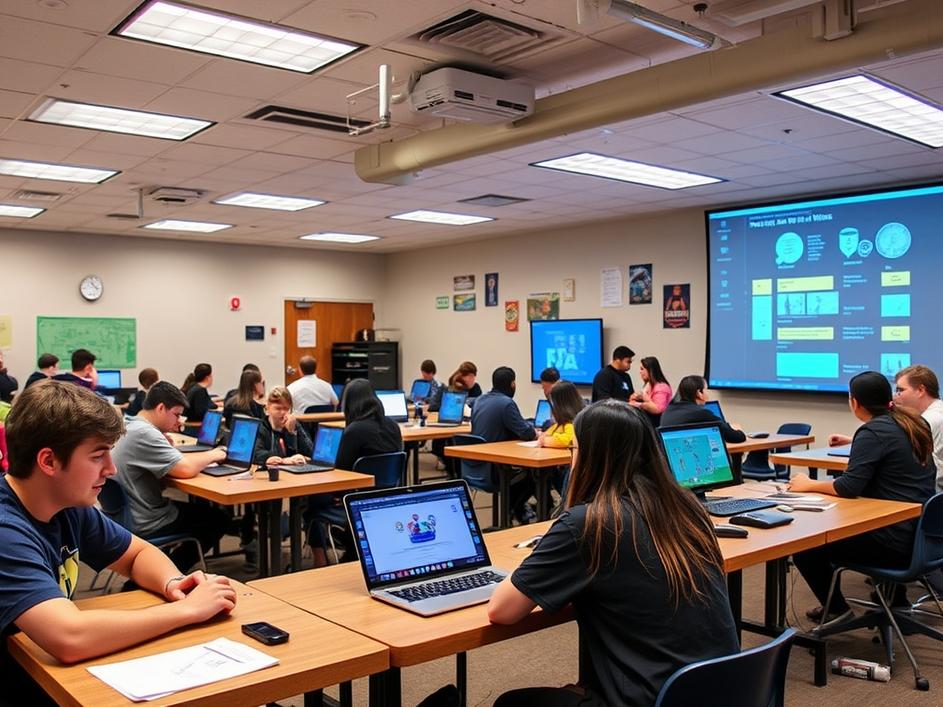
Collaboration is a critical component of effective education. The AI system is designed to encourage students to work together on projects, fostering a sense of community and teamwork. By facilitating peer-to-peer learning, students not only benefit from the knowledge of their classmates but also learn how to communicate and collaborate effectively—skills that are increasingly important in the modern workforce. This approach aligns perfectly with the educational ethos at South Dakota Mines, where teamwork is often emphasized.
The Future of AI in Academia: Challenges and Opportunities
While the prospects of this AI system are exciting, it’s important to consider the challenges that accompany it. Implementing new technologies can be met with resistance from both faculty and students accustomed to traditional methods. Additionally, there may be concerns about data privacy and the overall impact of AI on academic integrity. However, the benefits—such as enhanced engagement, personalized learning, and improved outcomes—might outweigh these challenges. With careful consideration and planning, South Dakota Mines could lead the way in incorporating AI smoothly into their curriculum.
A Bright Path Ahead
In conclusion, the development of this new AI system at South Dakota Mines represents a significant step forward in the realm of education technology. As we witness the increasing role of artificial intelligence in various sectors, it’s encouraging to see academia embracing these advancements. By enhancing the learning experience, fostering collaboration, and bridging the gap between theory and practice, this initiative could position South Dakota Mines at the forefront of educational innovation. The success of this program may encourage other institutions to follow suit, ultimately reshaping how we think about teaching and learning in the digital age.




Comments are closed