

We are a digital agency helping businesses develop immersive, engaging, and user-focused web, app, and software solutions.
2310 Mira Vista Ave
Montrose, CA 91020

2500+ reviews based on client feedback
What's Included?
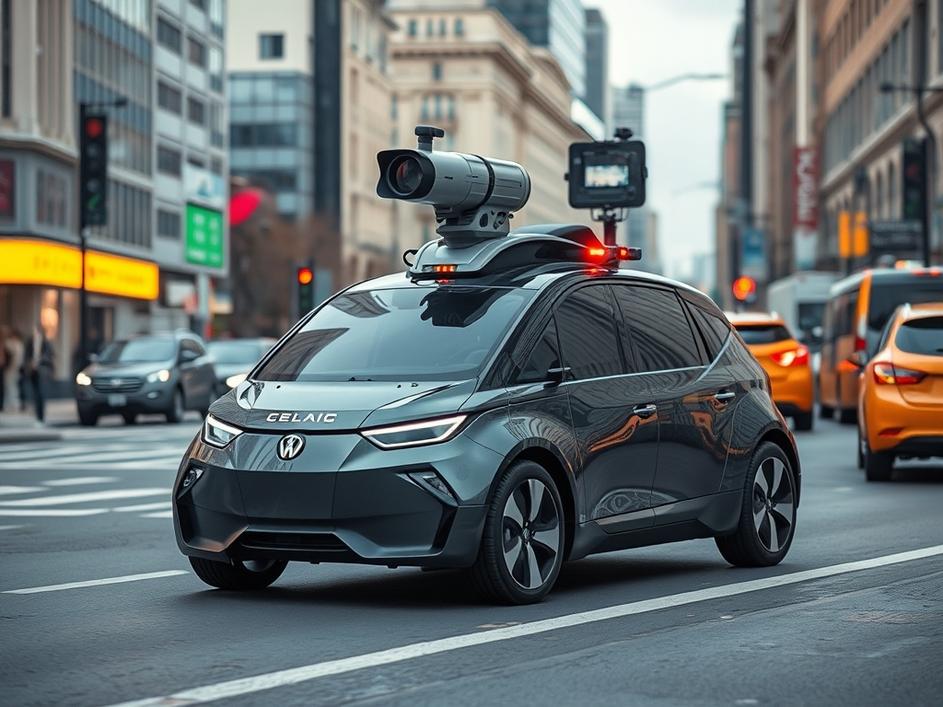
ToggleIn recent years, the race to develop functional self-driving technology has captured the attention of both the automotive industry and tech enthusiasts alike. Many companies are vying for the title of leader in autonomous vehicle technology, but the approach to achieving this goal varies significantly between companies. A noteworthy discussion emerged recently when Steven Qiu, founder and chief scientist of RoboSense, weighed in on Elon Musk’s vision-only strategy for self-driving cars. Qiu presented a strong argument in favor of a multi-sensor approach over relying solely on camera data, reinforcing the importance of safety in this evolving sector.
Qiu emphasizes that combining various types of sensors—such as LiDAR, radar, and cameras—provides a more comprehensive understanding of a vehicle’s surroundings. This multi-sensor strategy strengthens safety measures, as it allows for redundancy in data collection. If one sensor fails or is compromised, others can still provide necessary information. In contrast, a vision-only approach, like that championed by Musk for Tesla’s self-driving cars, runs the risk of encountering serious difficulties in challenging environments. Poor weather conditions, low visibility, or unexpected obstacles can severely hamper a camera’s effectiveness, while LiDAR systems maintain performance under a broader range of circumstances.
Elon Musk’s drive for a vision-centric system primarily stems from his belief in the power of artificial intelligence and deep learning to interpret visual data. Musk argues that human drivers rely heavily on their vision, so a system that mimics this could be sufficient. However, critics—including Qiu—argue that this oversimplifies the richness of human perception. Humans don’t just use their eyes; they rely on a combination of senses, including spatial awareness and environmental cues. It seems that Musk’s approach, while innovative, might be ignoring some essential elements of road safety.
As we think about the future of autonomous vehicles, we must consider the risks involved in relying solely on cameras. While Tesla has made significant strides in self-driving capabilities, incidents involving its vehicles raise concerns. Some Tesla drivers have reported misinterpretations of road signs or failure to detect pedestrians due to limited data from the cameras. These failures not only endanger the lives of drivers and pedestrians but also jeopardize public trust in autonomous technologies overall.
What’s important here is not necessarily choosing sides but understanding the value each perspective brings to the table. Both the vision-only approach and the multi-sensor framework have merits, and an ideal self-driving system may eventually blend these technologies. A hybrid model could emphasize the strengths of both methodologies, drawing on the advanced object recognition capabilities of AI while also incorporating LiDAR’s spatial awareness. Innovation will likely come as partnerships and cooperation between companies like Tesla and RoboSense become more common, allowing for advancements that prioritize safety without sacrificing technological progress.
As we stand on the brink of a new age in transportation, discussions like those led by Steven Qiu are invaluable. They challenge existing norms and encourage us to think critically about the technologies we’re adopting. While the ambition to create fully autonomous vehicles is commendable, it’s essential to prioritize safety across all facets of development. As the industry evolves, finding a balance between different technologies might pave a clearer path toward the widespread adoption of self-driving vehicles. The future of driving shouldn’t just be about innovation; it should also be about keeping people safe.
Comments are closed