

We are a digital agency helping businesses develop immersive, engaging, and user-focused web, app, and software solutions.
2310 Mira Vista Ave
Montrose, CA 91020

2500+ reviews based on client feedback
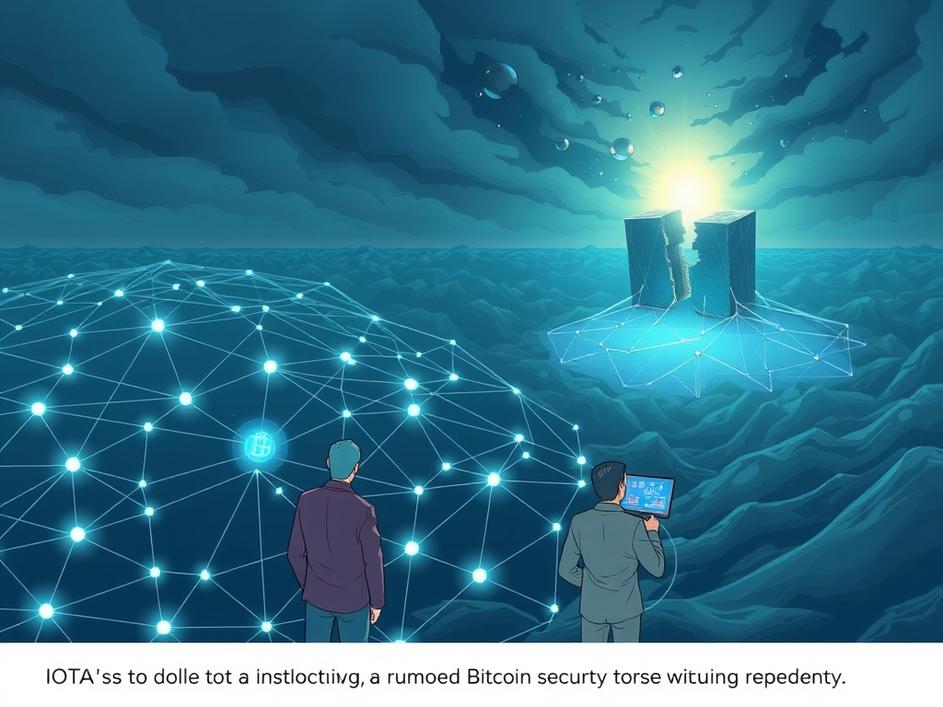
The crypto market, for all its dazzling highs and gut-wrenching lows, often feels like a ship sailing through unpredictable waters. Just when you think you’ve got your bearings, a new wave hits, sometimes a rogue one that makes even the most seasoned sailors clutch the rails. Lately, there’s been a fresh tremor rippling through the digital asset space, one born from whispers of security vulnerabilities affecting some of the oldest and biggest players. When the bedrock of the crypto world – specifically, Bitcoin – seems to face a new kind of threat, even if it’s just a rumor, investors start looking for safer havens. This recent unease has put a spotlight on an interesting alternative: IOTA, and its unique approach to securing digital transactions and offering potential returns.
Imagine hearing that the very foundation of something you trust might have a crack. That’s pretty much how it felt for many when rumors started circulating about a potential breakthrough in quantum computing that could, theoretically, pose a threat to Bitcoin’s cryptographic security. Now, let’s be clear: this isn’t a confirmed hack or a sudden collapse. It’s more like a distant rumble of thunder on a sunny day. But in the fast-paced, often anxious world of cryptocurrency, even a rumor can trigger a significant shift in investor sentiment. Bitcoin relies on complex math that, for now, is virtually impossible to crack with current technology. However, the idea that super-powerful quantum computers could one day break this encryption is a long-standing, if theoretical, concern. When this theoretical threat suddenly feels a little closer to reality, even just in the news cycle, people naturally start to wonder: where else can I put my digital eggs? What other systems might be more resilient to future technological advances, or at least offer a different kind of security?
This is where IOTA steps into the conversation. Unlike Bitcoin and most other cryptocurrencies that use a blockchain, IOTA is built on something called the Tangle, which is a type of Directed Acyclic Graph (DAG). Think of it like this: instead of a single chain of blocks, the Tangle is more like a web where every new transaction helps confirm two previous ones. What’s really cool about this is there are no ‘miners’ in the traditional sense, solving complex puzzles to add blocks. Instead, every user who sends a transaction helps secure the network. This means no transaction fees, and it’s designed to be highly scalable. So, when people talk about ‘IOTA mining’ in the news, they aren’t talking about power-hungry computers churning out new coins. They’re likely referring to participating in the network, possibly through staking or running nodes that contribute to its operation and potentially earn rewards, but through a fundamentally different, and some argue, more future-proof method.
The motivation behind this shift is pretty straightforward: security and steady income. The crypto space can be a wild ride, and investors are always looking for ways to reduce risk while still getting some kind of return. When the largest cryptocurrency faces a security scare, even a speculative one, it naturally makes people consider diversification. They want to find projects that offer a different security model, perhaps one that isn’t as vulnerable to the same kinds of threats. They also want protocols that offer ways to earn passive income, which is what ‘mining’ or participating in a network often implies. IOTA, with its unique Tangle architecture and emphasis on feeless transactions and scalability, presents itself as an interesting candidate for those seeking an alternative approach to digital asset security and the potential for consistent rewards, separate from the traditional Proof-of-Work systems.
From my perspective, this isn’t just a knee-jerk reaction to a rumor; it’s a sign of a maturing market. Investors are getting smarter. They’re no longer just chasing the next big pump. They’re starting to look deeper into the underlying technology, the different consensus mechanisms, and the long-term viability of various projects. The idea that one day quantum computing might challenge current encryption is a real, albeit distant, scientific concern. So, exploring alternatives like IOTA, which offers a completely different architectural paradigm, makes a lot of sense. It’s about building resilience and not putting all our eggs in one basket, especially when that basket is facing theoretical challenges. This kind of thoughtful diversification, moving beyond just Bitcoin and Ethereum, indicates a growing sophistication among crypto participants. It shows a willingness to explore different solutions to fundamental problems like security, scalability, and decentralization.
The recent interest in IOTA, fueled by unsettling news about Bitcoin’s potential vulnerabilities, highlights a crucial point: the cryptocurrency landscape is constantly evolving, and so too should our understanding and investment strategies. While Bitcoin remains a titan, the search for robust, secure, and yield-generating alternatives is a healthy sign of innovation and investor diligence. IOTA’s unique Tangle technology offers a fresh perspective on how digital value can be secured and transferred. As the world progresses, and new technological challenges emerge, protocols that offer distinct approaches to security and utility will continue to attract attention. It’s a reminder that truly understanding the tech behind the coin, and not just the headlines, is more important than ever. So, whether you’re a long-time crypto enthusiast or just getting started, keeping an eye on these shifting tides and exploring diverse projects like IOTA could be a very smart move.


Comments are closed