

We are a digital agency helping businesses develop immersive, engaging, and user-focused web, app, and software solutions.
2310 Mira Vista Ave
Montrose, CA 91020

2500+ reviews based on client feedback
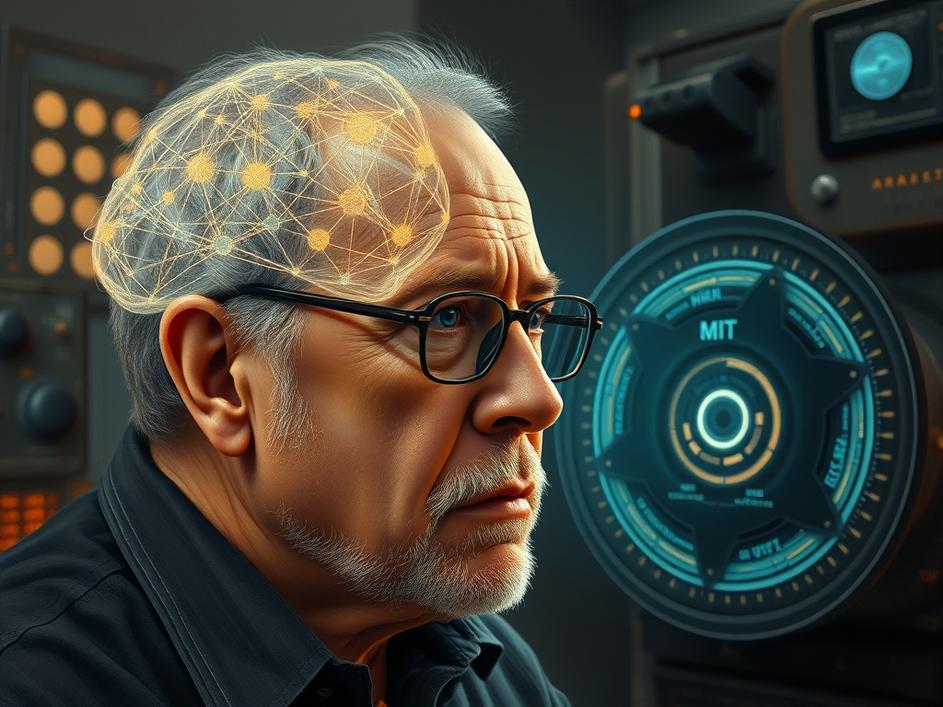
Remember when artificial intelligence felt like something out of a sci-fi movie? Something for robots in space or super-computers taking over the world? Well, it’s not just for those stories anymore. AI is knocking on the door of the creative world, and surprisingly, one of cinema’s most acclaimed, and often most challenging, voices is ready to let it in. Paul Schrader, the legendary writer behind films like “Taxi Driver,” has dropped a bombshell that has a lot of people in Hollywood and beyond scratching their heads: he believes the first full AI feature film is just two years away, and he claims to have the perfect script for it. This isn’t just a casual observation; it’s a statement that redefines the conversation around technology and art. It makes you wonder, if someone with such a deep understanding of human struggle and complex characters sees this as the future, what does that future actually look like?
Paul Schrader isn’t known for being conventional. He’s built a career on raw, unflinching portrayals of damaged souls and moral ambiguity. He explores themes of alienation, obsession, and the search for grace in a gritty world. So, for *him* to not just acknowledge AI, but to actively embrace it as a creative tool, is a big deal. It’s not like a tech guru or a fresh film school graduate saying this; it’s a seasoned filmmaker, someone who has literally written the book on cinematic style. When Schrader talks about having a “perfect script to do all AI,” it sounds less like hype and more like a deliberate, thought-out path. What kind of story would fit this description? Is it a story so visually complex that only AI could render it? Or perhaps a narrative that benefits from a non-human perspective, stripping away traditional emotional cues? His statement suggests a fundamental shift in how we might define authorship and execution in film. It implies that certain stories might be better told *by* AI, or at least *with* AI as a primary creative force, rather than just a special effects tool.
Two years. That’s a blink of an eye in the world of feature film production, even for traditional movies. For something as groundbreaking as the first truly AI-driven film, it feels incredibly fast. But maybe Schrader, with his finger on the pulse of storytelling, sees something the rest of us are missing. Think about how fast AI has evolved in the last year alone, generating art, writing text, and even creating synthetic voices. If AI can now craft convincing images and dialogue, the leap to stringing together an entire narrative, complete with character consistency and a coherent plot, might not be as far-fetched as it once seemed. The challenge isn’t just generating content, though. It’s about achieving emotional resonance, delivering unexpected moments, and crafting a story that truly moves an audience. Can an algorithm truly capture the nuances of human experience? Or will these early AI films be more experimental, pushing boundaries in form rather than emotion? Schrader’s timeline forces us to consider that the tools are developing at an exponential rate, and the questions we thought were decades away are suddenly right here.
This whole idea raises a massive question: if AI can write a script, generate visuals, and even direct, what’s left for human artists? Will directors become curators of AI output, guiding the machine’s creative decisions? Will actors perform against AI-generated characters, or will AI create the performances too? The fear, of course, is job displacement. But another way to look at it is as a new frontier for creativity. Imagine the possibilities for independent filmmakers, able to produce complex visual narratives without massive budgets, democratizing filmmaking in an unprecedented way. Or think about entirely new genres that could emerge, blending human imagination with AI’s ability to process and generate on a scale we can’t. The fear of art becoming sterile or losing its soul is real, but so is the potential for new forms of expression. Maybe AI won’t replace human artists, but instead become a powerful co-creator, pushing the limits of what’s possible and freeing humans to focus on the truly unique, human elements of storytelling.
When I hear about someone like Paul Schrader, a true artist, welcoming AI into his creative process, it’s both thrilling and a little unnerving. On one hand, the potential for innovation is mind-blowing. Imagine stories that are impossible to film with traditional methods, brought to life through AI. Think of highly personalized viewing experiences, or narratives that adapt in real-time. But on the other hand, there’s a quiet worry. What happens to the accidental brilliance, the spontaneous collaboration, the genuine human connection that comes from people working together on a film set? Can AI truly replicate the messy, beautiful process of human creation, with all its flaws and unexpected triumphs? I think Schrader’s “perfect script for all AI” might be less about a story a human couldn’t tell, and more about a story that *leans* into the strengths of AI – perhaps something highly structured, highly symbolic, or even intentionally emotionless, allowing the machine to excel where human emotion might clutter the message. It makes me believe that the future of film isn’t a simple replacement, but a complex, evolving landscape where humans and algorithms learn to dance together, sometimes awkwardly, sometimes in perfect harmony, creating something truly new. We’re not just watching the future unfold; we’re about to see what it *creates*.
So, Paul Schrader believes the AI film era is almost here, and he’s ready to lead the charge. This isn’t just a quirky statement from an elder statesman of film; it’s a serious indicator of where we’re headed. The conversation needs to shift from ‘if’ AI will be in films to ‘how’ it will shape them, and what kind of art will emerge from this new partnership. Will it be soulless, technically perfect images, or will it be something entirely new, pushing the boundaries of what storytelling can be? We’re on the cusp of an exciting, terrifying, and undeniably fascinating journey. The next two years in cinema won’t just be about the stories on screen, but about the very nature of how those stories come to be. And if Paul Schrader has anything to say about it, it’s going to be a wild ride, perhaps even a *perfect* one, at least for the machines.
Comments are closed