

We are a digital agency helping businesses develop immersive, engaging, and user-focused web, app, and software solutions.
2310 Mira Vista Ave
Montrose, CA 91020

2500+ reviews based on client feedback
What's Included?
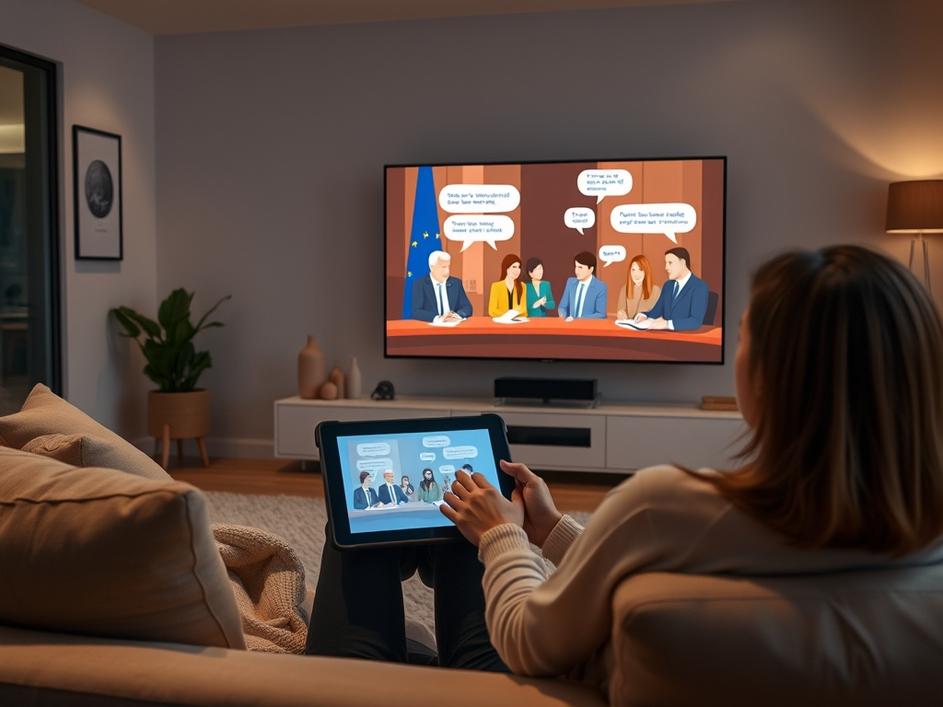
ToggleIt’s easy to feel disconnected from the people who make big decisions for our countries, or for a whole continent. Think about the European Parliament in Brussels or Strasbourg. For many of us, it might as well be on a different planet. We read headlines, maybe catch a news report, but actually seeing the debates, understanding the back-and-forth, or witnessing the votes firsthand? That usually feels out of reach. We often imagine grand halls filled with hushed voices, or maybe heated arguments we can only guess at. But what if that distance wasn’t as vast as it seems? What if you could pull up a chair and watch it all unfold, right from your kitchen table?
When you see a simple phrase like “Streaming agenda – Multimedia Centre” for a date in the future, like October 25, 2025, it might not sound like much. But this isn’t just a dry calendar entry. It’s a quiet but powerful promise of transparency. For an institution as complex and influential as the European Parliament, that agenda is a doorway. It signals a day, like any other, where the crucial work of governing Europe – the debates, the committee meetings, the press conferences, the votes – will be made public, live, and direct. It’s a commitment to show the inner workings of a body that crafts laws affecting everything from your food safety to your digital rights. This isn’t about a single, isolated event; it’s about a continuous, ongoing effort to open up a government that serves millions of people across dozens of countries, making its processes available for anyone who wants to look.
Why does this matter so much? Because transparency is the bedrock of a healthy democracy. When government decisions are made behind closed doors, it breeds suspicion and disconnect. When citizens can see how laws are discussed, how different viewpoints clash, and how compromises are forged, it builds trust. It helps us understand the ‘why’ behind the policies that shape our lives. Imagine a debate on climate change, or new regulations for technology companies. Instead of just reading a summary, you can hear the arguments, see the passion, or even the tedious negotiation firsthand. It makes our representatives more accountable because they know their words and actions are on public display. It makes it harder for misinformation to take root when the primary source is just a click away. It might not always be exciting – political debates can often be long and detailed – but the option to tune in is incredibly important.
Now, think about the European Parliament specifically. It’s a unique place where twenty-seven different countries, with twenty-four official languages, come together. The idea of a “streaming agenda” for such a body isn’t just about putting a camera in a room. It implies a massive, sophisticated system of interpretation and translation. When the source description for the streaming service lists languages like English, Bulgarian, Spanish, Czech, Danish, German, and so many others, it’s a nod to an incredible logistical effort. It means that whether you speak Portuguese in Lisbon or Finnish in Helsinki, you can likely follow the proceedings in your own tongue. This isn’t just a technical detail; it’s a profound statement about inclusion and accessibility. It ensures that the vital discussions happening in Brussels or Strasbourg aren’t just for a select few, but for every European citizen, regardless of their native language.
So, what does this mean for you, the everyday person? You might not have the time or the inclination to watch hours of parliamentary sessions. And that’s totally fine. But knowing that this window into European democracy exists changes things. It means that when a topic important to you comes up – perhaps agricultural policy, or digital privacy – you have the option to seek out the source material. It empowers you to be more informed, to understand the nuanced discussions, and to question your local representatives with greater context. It transforms you from a passive recipient of news into a potential participant, even if just by being an educated observer. This isn’t about turning everyone into a political pundit, but about giving everyone the tools to be a more engaged and aware citizen.
This commitment to live streaming and archiving parliamentary proceedings is part of a larger trend towards greater government openness worldwide. It sets a standard for other institutions and governments. In a world where information spreads rapidly, and sometimes inaccurately, providing direct access to official proceedings is more crucial than ever. It fosters a culture where accountability is expected, and engagement is encouraged. This isn’t just about a single future date like October 25, 2025; it’s about a continuous evolution of how governments connect with their people. It’s a quiet but significant step towards a more informed, connected, and ultimately stronger democracy, bringing the complex world of European politics a little closer to your living room.

Comments are closed