

We are a digital agency helping businesses develop immersive, engaging, and user-focused web, app, and software solutions.
2310 Mira Vista Ave
Montrose, CA 91020

2500+ reviews based on client feedback
What's Included?
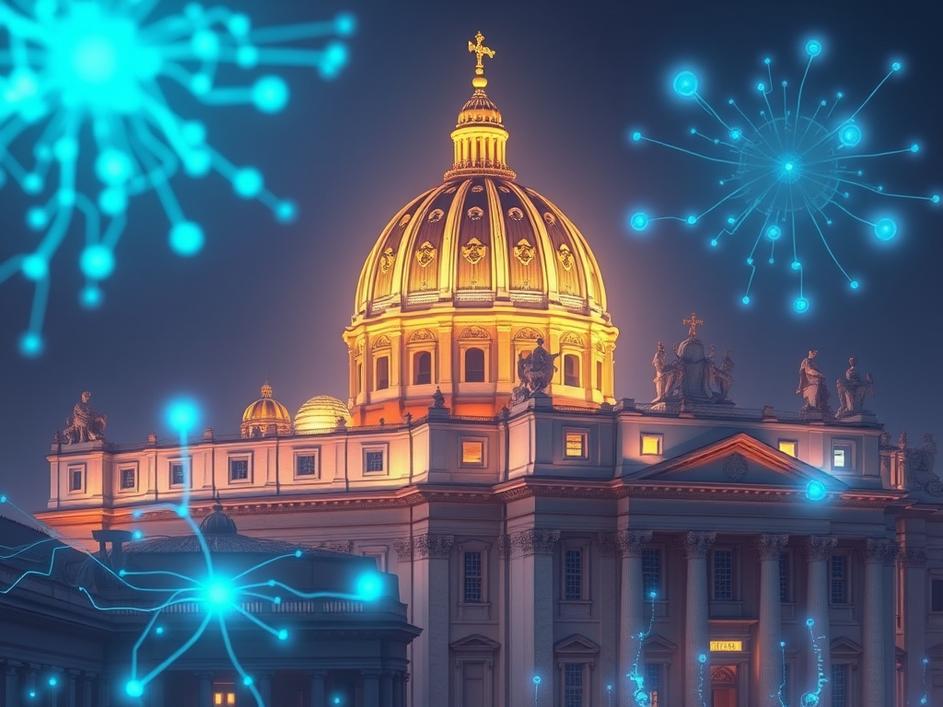
ToggleImagine a global summit on artificial intelligence. You’d expect to see tech titans, government officials, maybe some brilliant academics, and a handful of worried futurists. But what if I told you one of the most significant voices in shaping how AI should be built – its very ethics – is coming from the Vatican? Yes, that Vatican. The spiritual heart of the Catholic Church, a place known more for ancient traditions and theological debates than for silicon chips and algorithms. It sounds like something straight out of a movie, doesn’t it? Yet, this isn’t fiction. The Vatican has been quietly, but firmly, stepping into the buzzing, sometimes chaotic, world of AI ethics, and their involvement is both surprising and incredibly important for how we build our future with smart machines. It’s a move that makes you pause and think, because it bridges worlds that usually seem far apart: deep faith and cutting-edge technology. And in a world rapidly changing because of AI, this unexpected voice might be exactly what we need.
So, why would an institution like the Vatican care so much about something as technical as artificial intelligence? It’s not about trying to stop progress or impose religious beliefs on scientific development. Instead, their interest stems from a fundamental concern that has always been at the core of their mission: human dignity. AI, with its vast capabilities, has the power to change nearly every aspect of our lives – from healthcare and work to privacy and warfare. If not guided by strong ethical principles, it could easily undermine human rights, deepen inequalities, or even cause harm on a massive scale. The Vatican sees AI not just as a technical tool, but as something that profoundly impacts human beings and the common good of society. They believe that technology, while amazing, should always serve humanity, not the other way around. This perspective isn’t about dogma; it’s about protecting the value and worth of every person in a world increasingly shaped by machines that can think and learn.
The Vatican isn’t just talking about these issues; they’re actively working on them. They’ve launched initiatives, the most notable being the “Rome Call for AI Ethics.” This document isn’t a church law; it’s a plea to governments, companies, and international organizations to commit to developing AI that is transparent, inclusive, responsible, and works for the good of all. It champions principles like fairness, accountability, and the idea that humans should always be in control. What makes their contribution unique is their long history of ethical thought, spanning thousands of years. They’re not just reacting to new technology; they’re applying centuries of thinking about human nature, justice, and morality to a brand-new challenge. They bring a deeply humanistic lens, reminding us that while AI can be incredibly smart, it lacks empathy, consciousness, and the moral judgment that makes us human. Their focus is on ensuring AI respects our fundamental human rights and doesn’t just chase efficiency or profit without considering the human cost.
The fact that the Vatican is stepping into this space also highlights a crucial point: ethical discussions about AI shouldn’t just be left to engineers, CEOs, or even just governments. The questions AI raises are universal, touching on what it means to be human, how societies should be organized, and what kind of future we want to build. Therefore, having a wide range of voices at the table is absolutely essential. Religious institutions, like the Vatican, represent billions of people globally and bring a perspective that often emphasizes values beyond purely economic or technical metrics. They can act as a bridge between different cultures and belief systems, advocating for a universal set of ethical guidelines that resonate with people from all walks of life. This kind of broad, inclusive dialogue is vital for making sure AI development doesn’t become a narrow, self-serving project, but a truly global endeavor focused on shared human flourishing.
My take on this is simple: the Vatican’s involvement in AI ethics is not just unexpected; it’s genuinely valuable. In a world often driven by rapid technological advancement without enough foresight, having a strong, consistent voice advocating for human dignity and the common good is incredibly important. They’re not asking us to stop innovating, but to innovate wisely, with a deep respect for humanity. This isn’t about imposing a religious viewpoint; it’s about advocating for universal ethical principles that many people, regardless of their faith, can agree on. They remind us that powerful tools demand powerful ethics. As AI continues to evolve at lightning speed, questions about fairness, accountability, and human control will only become more urgent. The Vatican’s presence in this critical conversation ensures that a deeply human and morally grounded perspective remains front and center, pushing us to build a future where technology truly serves people, not the other way around. It’s a powerful and refreshing addition to a discussion that needs all the wisdom it can get.
Ultimately, the Vatican’s engagement in shaping AI ethics offers a compelling vision for the future of technology. It’s a call for AI that isn’t just smart, but also wise; not just powerful, but also benevolent. By advocating for principles that prioritize human dignity, justice, and the common good, they are helping to lay a moral groundwork for artificial intelligence that aims to uplift humanity, rather than diminish it. This unexpected alliance between ancient wisdom and future tech serves as a powerful reminder that while technology can change the world, our shared human values must always guide its path. As we continue to navigate the exciting and sometimes daunting landscape of AI, the Vatican’s voice acts as a crucial moral compass, encouraging us all to build a future where innovation and ethics walk hand-in-hand.

Comments are closed