

We are a digital agency helping businesses develop immersive, engaging, and user-focused web, app, and software solutions.
2310 Mira Vista Ave
Montrose, CA 91020

2500+ reviews based on client feedback
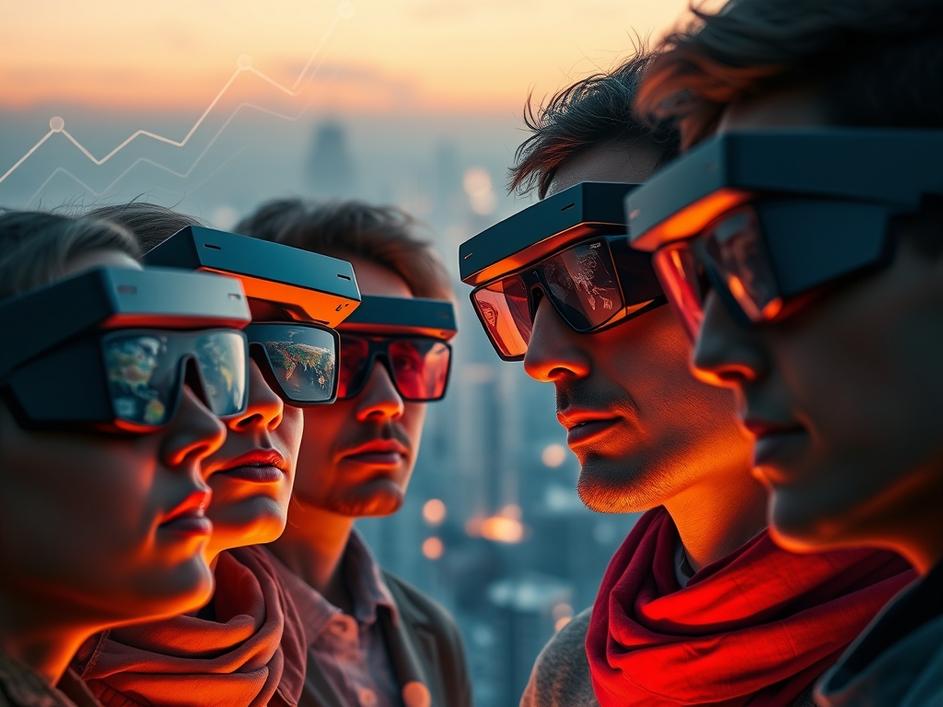
Remember all those sci-fi movies where people just looked around and information popped up in front of their eyes? Well, that future isn’t so far off anymore. For a long time, smart glasses felt like a gimmick or something only tech enthusiasts would touch. Google Glass tried, and while it broke ground, it didn’t quite stick. But things have changed. Suddenly, it feels like we’re at a tipping point. One big reason is that companies like Meta have proven that there’s a real hunger for well-designed, useful smart glasses. They’ve shown that when you make something that looks good, works pretty well, and solves a problem (even a small one like hands-free photos), people will actually buy it. This isn’t just about showing off fancy tech anymore; it’s about making our everyday lives a little bit easier and more connected. And because of this shift, a lot of big players, especially from China, are now jumping into the race to put the next big screen right on your face.
So, why are smart glasses suddenly a big deal? It’s more than just cool factor. Think about how much we rely on our phones. We pull them out constantly for directions, messages, taking pictures, or just to check the time. Smart glasses aim to free us from that constant pocket-diving. Imagine walking down the street, and a discreet direction arrow appears right in your line of sight. Or being able to quickly snap a photo of a cool moment without fumbling for your phone. It’s about a more natural, less interrupted way of interacting with digital information and the world around you. This isn’t about replacing your phone entirely, at least not yet. Instead, it’s about creating a new layer of convenience and presence, allowing us to stay connected without being glued to a screen in our hands. The real appeal comes down to seamless integration into our daily lives, making technology feel less like a tool you pick up and more like an extension of yourself.
When a new tech trend catches fire, you can bet that Chinese companies will be right there, often with a vengeance. And that’s exactly what we’re seeing with smart glasses. With Meta showing that there’s a market, giants like Alibaba (and likely many others) are reportedly throwing their hats into the ring. This isn’t surprising if you look at China’s track record in tech manufacturing and their huge domestic market. They have the talent, the infrastructure, and a massive consumer base eager for new gadgets. Plus, there’s often a strategic push to lead in emerging technologies. What’s interesting is how they might approach this. Will they focus on more affordable options to reach a broader audience? Will they integrate these glasses deeply into existing ecosystems like WeChat or Alipay? Their entry doesn’t just add more competition; it hints at a future where smart glasses might become as common as smartphones, with diverse options catering to different needs and price points. This fierce competition is good for us consumers because it means more innovation and potentially better products, faster.
When Wall Street heavyweights like Goldman Sachs start paying close attention to a tech trend, it’s a strong signal that something significant is brewing. Their interest isn’t just about selling a few more gadgets; it’s about seeing the bigger picture – the potential for new industries, massive market shifts, and significant investment opportunities. They’re likely looking at several things. First, the sheer size of the potential market. If smart glasses become a mainstream device, the sales figures could be enormous, rivaling smartphones. Second, the potential for new revenue streams: think about augmented reality apps, premium services, advertising opportunities within the glasses’ interface, and even entirely new business models that haven’t even been invented yet. Third, they’re probably assessing which companies are best positioned to win this race, not just the hardware makers, but also the software developers, component suppliers, and content creators. Goldman’s focus tells us that smart glasses aren’t just a niche gadget anymore; they’re seen as the next major platform, with the potential to reshape how we interact with technology and the world around us. Their involvement adds a layer of serious financial backing and validation to this evolving tech space, suggesting that the smart money believes this trend is here to stay and grow.
Even with all this excitement, the path for smart glasses isn’t perfectly clear. There are still big hurdles to overcome. Battery life is a huge one – nobody wants to charge their glasses multiple times a day. Design and comfort are also key; they need to look good and feel natural to wear for extended periods. Privacy concerns are another major topic. How do we ensure that these always-on cameras and microphones respect personal space? And then there’s the ‘killer app’ – that one must-have feature that makes everyone want a pair. Right now, it’s a mix of convenience features, but a true breakthrough application could really accelerate adoption. Despite these challenges, the rapid pace of innovation, especially with the influx of competition from diverse players, suggests that solutions are on the horizon. We’re likely to see advancements in miniaturization, power efficiency, and more sophisticated augmented reality experiences. It’s an exciting time, and while there might not be a single ‘winner,’ the diverse approaches from companies worldwide will likely lead to a rich and varied market, offering something for everyone.
The race for smart glasses is heating up, and it’s much more than just a tech trend; it’s a fundamental shift in how we might engage with the digital world. With Meta proving the concept and Chinese giants aggressively entering the market, we are witnessing the birth of a new computing platform. Goldman Sachs’ keen interest only underscores the monumental financial and technological stakes involved. We’re moving from holding our screens to wearing them, integrating digital information directly into our line of sight. This evolution promises greater convenience, more natural interactions, and entirely new ways to experience augmented reality. While challenges like battery life, design, and privacy remain, the sheer amount of innovation and investment pouring into this space suggests a future where smart glasses become an indispensable part of our daily lives. Keep an eye on this space; the way we see the world, quite literally, is about to change.



Comments are closed