

We are a digital agency helping businesses develop immersive, engaging, and user-focused web, app, and software solutions.
2310 Mira Vista Ave
Montrose, CA 91020

2500+ reviews based on client feedback
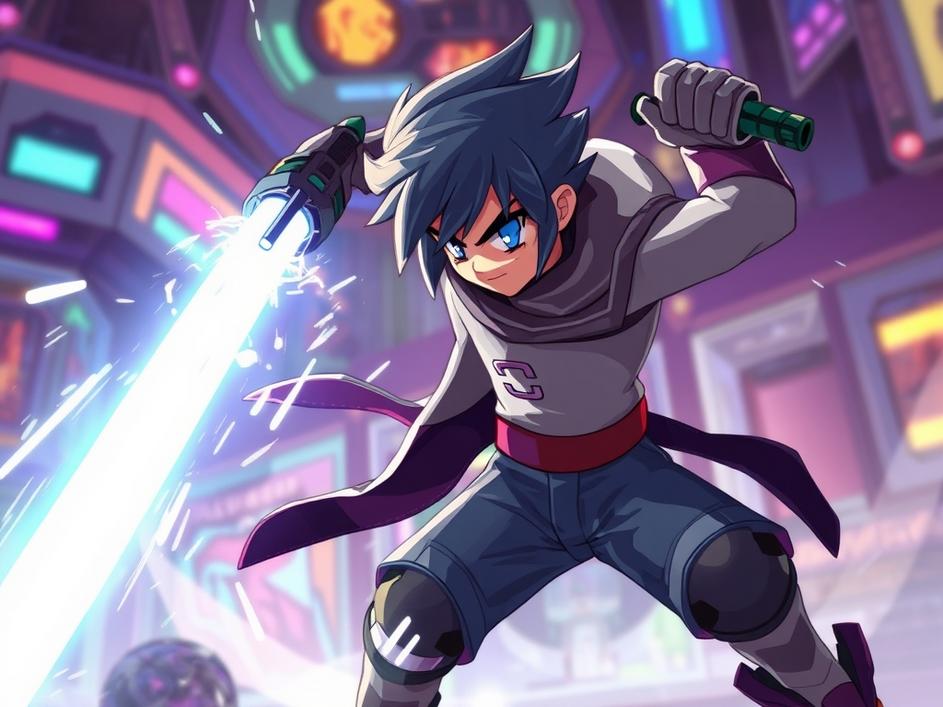
Imagine you’re in the heat of an intense online game. Your character unleashes a powerful, flashy attack, a whirlwind of energy meant to cleave through enemies. You expect to see that awesome visual effect burst forth, right in front of you, showing off your skill. But what if, instead, that cool effect – a shimmering slash, a burst of magic – suddenly appeared *behind* your character? It”s a bit like a magician revealing their trick before it even starts. This isn”t just a quirky visual; it”s a subtle glitch that can pull you right out of the immersive world the developers worked so hard to build. It shows how even tiny, unexpected issues can really mess with the player experience, turning a moment of triumph into one of confusion. These little digital hiccups are often the most frustrating for developers, because they”re not always obvious, and they pop up in the strangest ways, often just when you least expect them to.
This exact kind of weirdness is what some game creators are running into right now. They”re seeing a specific particle emitter – a tool that creates visual effects like sparks, smoke, or in this case, a dramatic slash – decide to do its own thing. Instead of rendering proudly in front of the player, where it belongs, it sometimes flips around, showing up behind them. Think about a sword swing; the impact effect should appear where the sword hits, not on your character”s back! What makes this even trickier is that it doesn”t happen all the time. It”s like a mischievous ghost in the machine, showing up inconsistently. And here”s the kicker: it seems to happen much more often when the player character is actively moving. This detail is really important because it points to a potential connection between player velocity, the game engine”s rendering logic, and how those particle effects are attached to the character. It adds another layer of complexity to an already baffling problem, turning a simple visual into a head-scratcher for anyone trying to fix it. It”s a real-world example of how game physics and visual effects can sometimes clash in unexpected ways, creating visual anomalies that break the game”s illusion.
You might think, “So what if a particle effect appears in the wrong spot? It”s not a game-breaking bug.” And you”d be right, it probably won”t crash your game. But for players, these visual glitches can be surprisingly annoying. They chip away at the game”s polish and realism. If you”re meant to feel like a powerful warrior, but your epic attacks keep appearing behind you, it takes away from that feeling. It breaks the sense of immersion, that magical feeling of being inside another world. For developers, this is a big deal. They pour countless hours into making every animation, every effect, just right. When something as fundamental as a particle effect misbehaves, it”s frustrating because it undermines all that hard work. It also raises questions about quality control and player trust. A smooth, glitch-free experience is what keeps players coming back, so even small visual errors can add up, impacting how a game is perceived, especially in competitive or high-fidelity environments. It”s about maintaining the illusion, ensuring that every visual cue contributes to, rather than detracts from, the overall experience.
So, why does a particle emitter decide to flip itself? This is where things get interesting, even if you”re not a coder. Game engines have to keep track of a lot of information: where your character is, which way they”re facing, how fast they”re moving, and where all the visual effects should appear relative to them. One common reason for these kinds of problems can be how the game handles “depth sorting” or “rendering order.” Essentially, the computer needs to decide what to draw first and what to draw on top. If the particle effect is somehow getting misidentified, or its position calculation is off by a tiny fraction, especially when the player is moving quickly, it might end up behind something it should be in front of. It could also relate to the “attachment point” of the particle system – where on the character it”s told to spawn from. If that point or its orientation isn”t correctly updated with player movement, you get these strange visual quirks. It”s like trying to accurately hit a moving target with a fast-moving projectile; sometimes, the calculations just don”t line up perfectly in the blink of an eye, leading to a momentary disorientation of the effect. This subtle interplay of coordinates, movement, and rendering layers is often the source of these frustratingly elusive bugs.
Solving these kinds of bugs is a true test of a developer”s patience and skill. It”s not always about finding a typo in the code; it”s often about understanding complex systems interacting in unexpected ways. Developers typically start by trying to reliably reproduce the bug. If it only happens “sometimes,” it”s much harder to pinpoint. They”ll try different characters, different speeds, different angles, all to get it to happen consistently. Then comes the process of elimination: is it the particle system itself? Is it how it”s attached to the character? Is it something in the rendering pipeline? This is where online communities and forums become goldmines. Other developers facing similar issues can share insights, workarounds, or even the “aha!” moment that leads to a solution. This collaborative problem-solving is a cornerstone of game development, turning individual frustrations into shared victories. It highlights how the collective knowledge of a community can often crack the toughest nuts that a single developer might struggle with for days, weeks, or even months.
The strange case of the backward particle effect might seem small on its own, but it tells a bigger story about game development. It”s a reminder that creating polished, immersive digital worlds is an incredibly complex task, full of tiny battles against glitches and unexpected behaviors. Every pixel, every sound, every animation has to work in harmony, and when one piece goes rogue, it disrupts the whole symphony. This constant fight for perfection, for that seamless player experience, is what drives developers. They”re not just building games; they”re crafting experiences, and even the smallest visual flaw can chip away at the magic. So, the next time you”re playing a game and an effect pops up exactly where it should, take a moment to appreciate the unseen effort that went into making that happen. It”s a testament to the dedication of creators who work tirelessly to ensure that the digital illusions they weave are as convincing and captivating as possible, free from any backward slashes or peek-a-boo particles.


Comments are closed