

We are a digital agency helping businesses develop immersive, engaging, and user-focused web, app, and software solutions.
2310 Mira Vista Ave
Montrose, CA 91020

2500+ reviews based on client feedback
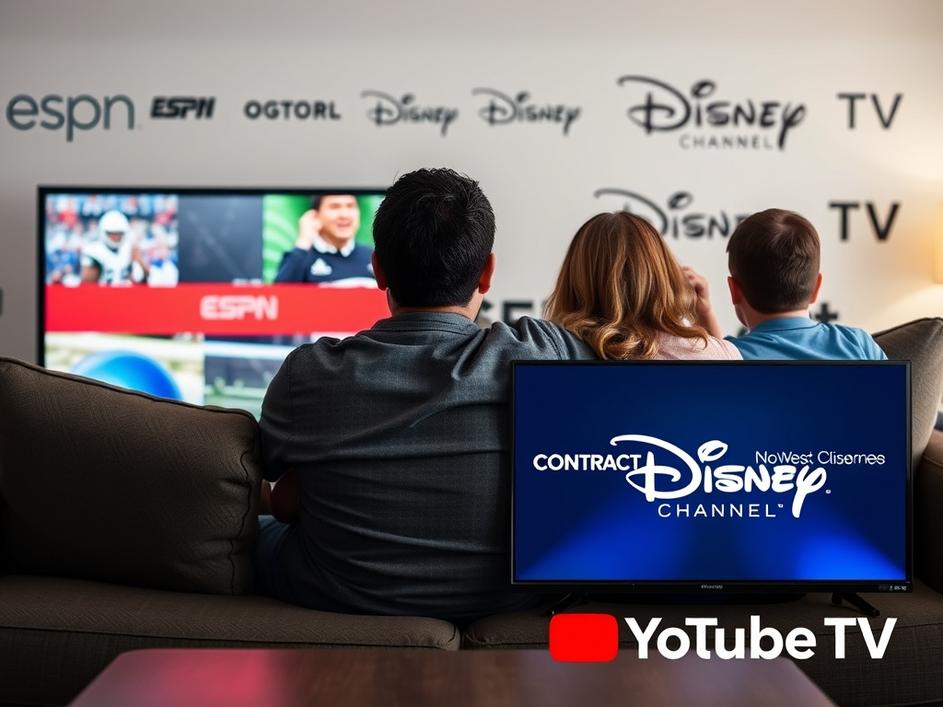
Imagine settling down on the couch, ready to watch a big game, your favorite show, or maybe put on something for the kids. You flip to ESPN or ABC, and… nothing. Just a message saying the channel is gone. That\’s exactly what happened to a lot of YouTube TV subscribers recently. Major Disney-owned channels, including popular ones like ESPN and ABC, suddenly went dark. It wasn\’t a small glitch or a temporary outage. It was the result of a big business fight. And for people who just want to watch their TV, it\’s a real headache.
What's Included?
ToggleOne day, they were there, part of the package you paid for. The next, poof! ESPN, ABC, FX, Freeform, Disney Channel – all the channels owned by Disney vanished from YouTube TV. This wasn’t some minor technical problem. This was the outcome of a massive contract dispute between two giant companies: Disney and Google, who owns YouTube TV. When these sorts of agreements expire without a new one in place, content providers often pull their channels. It\’s a strong-arm tactic used to put pressure on the other side, and it almost always affects millions of viewers caught in the middle. For die-hard sports fans, missing important games or analyses is a huge blow. For families, losing Disney Channel means unhappy kids and disrupted routines. And for everyone else, it just feels like an unfair punishment for something they have no control over.
If this whole situation feels familiar, that\’s because it is. These kinds of disputes happen all the time in the world of TV. It nearly always boils down to one thing: money. Content providers, like Disney, know their channels and shows are incredibly popular. They want more money for their content to be carried by service providers. On the other side, service providers, like YouTube TV, have to pay those fees, but they also want to keep their own subscription prices low enough to attract and keep customers. So, they go back and forth, trying to get the best deal for themselves. Sometimes, these talks break down, and that\’s when the channels disappear. It\’s a high-stakes game of chicken where the ordinary viewer is always the one who gets hit first. You\’d think these huge companies could figure out their differences without inconveniencing their shared customers.
Let\’s be very clear about something: while Disney and Google are battling it out, it\’s the subscriber who really suffers. You pay good money for a TV service, expecting to get everything you signed up for. Then, without warning, a big chunk of that service is suddenly gone. You\’re still paying your full monthly fee, but you\’re getting less for it. This is especially frustrating if you signed up for YouTube TV specifically because it carried ESPN for live sports, or ABC for network shows and local news. You don\’t care about the complex, behind-the-scenes negotiations. You just want your channels back, plain and simple. It really makes people question why they even bother with live TV streaming services when things can change so abruptly. It feels a bit like a bait-and-switch, even if it\’s not exactly intentional on anyone\’s part.
Disney owns some of the most sought-after content in entertainment. ESPN is a powerhouse in the sports world, a must-have for many fans. ABC carries major network programming, breaking news, and popular prime-time shows. This gives Disney a lot of power when it comes to negotiating distribution deals. They know that a service like YouTube TV needs these channels to keep its subscribers happy and prevent them from leaving. On the flip side, YouTube TV wants to offer a comprehensive package at a competitive price point that is often lower than traditional cable. If they give in to every demand from content providers, their service could become just as expensive as cable, which would defeat its main purpose for many budget-conscious users. Both companies are trying to protect their bottom line and their market share. It\’s a delicate balancing act, and sometimes that balance tips over into a frustrating blackout for all of us watching at home.
So, if you\’re a YouTube TV subscriber feeling the pinch of these missing channels, what are your options? For starters, YouTube TV usually offers some kind of credit or a reduced price while the channels are gone. It\’s a small gesture, but it can help offset the cost of losing content. You could also look into other live streaming services that still carry Disney channels, but that might mean paying for another separate subscription, which can quickly add up. Some frustrated people might even consider going back to traditional cable, though that seems unlikely for most who cut the cord years ago. The main thing many people do, however, is simply wait it out. These types of disputes usually do get resolved eventually, because neither company wants to lose a lot of customers or significant revenue in the long run. It just takes time, and a good deal of patience from the viewer.
These blackouts highlight a much bigger trend in how we consume television today. The old days of simple cable packages are slowly fading away. Now, we have a mix of live TV streaming services, on-demand platforms, and individual app subscriptions. Each company, whether a content creator or a distributor, wants a bigger piece of the pie and more control. This new landscape means more choices for consumers, but it also brings more complexity and a higher chance for these kinds of frustrating disputes. It forces viewers to constantly re-evaluate what they\’re paying for and if they\’re truly getting their money\’s worth. Will we eventually see a system where these blackouts are less common, or is this just the new, bumpy reality of watching TV in the digital age? It\’s hard to say for sure, but it definitely keeps things interesting, and sometimes quite frustrating, for all of us.
In the end, the YouTube TV and Disney channel dispute is yet another reminder of the ongoing tug-of-war in the entertainment industry. While the big corporations battle it out over dollars and cents, it\’s the everyday viewers who feel the immediate impact. We just want to watch our shows and games without interruption, unexpected changes, or having to jump through hoops. Hopefully, a deal will be reached quickly, and our screens will once again be filled with our favorite Disney-owned content. Until then, it\’s a waiting game, and for many, a really frustrating one at that.

Comments are closed