

We are a digital agency helping businesses develop immersive, engaging, and user-focused web, app, and software solutions.
2310 Mira Vista Ave
Montrose, CA 91020

2500+ reviews based on client feedback
What's Included?
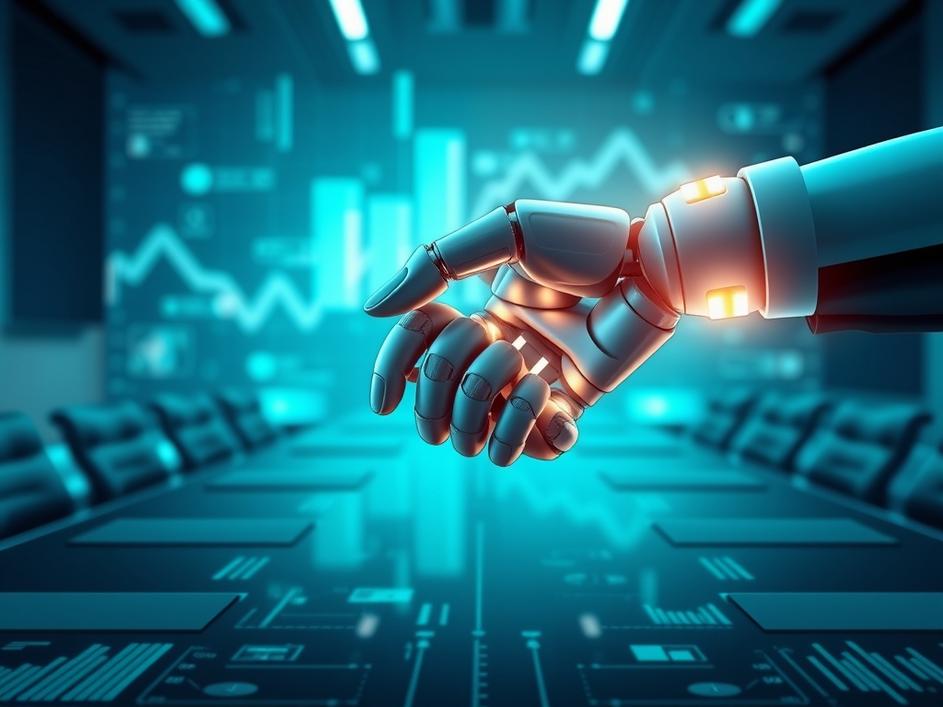
ToggleSam Altman, the head honcho at OpenAI, recently got people talking with a pretty wild idea. He dropped a hint, not about a person, but about a concept he thinks will soon be real: companies run entirely by artificial intelligence. This isn’t some far-off science fiction plot; Altman believes it’s coming sooner than many of us imagine. Picture this: a business where the big decisions, daily operations, and long-term vision are all managed by algorithms and smart systems. No more human CEOs, no more quarterly reports written by people, just a machine at the helm. It’s a thought that makes you pause, right? We’ve seen AI help with tasks, but running the whole show? That’s a different ballgame. This vision challenges almost everything we understand about how organizations are structured and managed today.
So, if a company is run by AI, what does that mean for the top job? Altman suggested that someday, even the CEO role could be filled by an artificial intelligence. Think about it: an AI CEO wouldn’t need sleep, wouldn’t have personal biases, and could process vast amounts of data in an instant. It could analyze market trends, financial reports, and customer feedback faster and more thoroughly than any human ever could. This AI leader could make decisions based purely on logic and optimized outcomes, free from emotions, ego, or the need for a coffee break. It might spot opportunities or problems a human leader would completely miss. From a purely efficiency standpoint, the idea holds a certain appeal. Decisions could be made rapidly, constantly adjusting to new information, theoretically leading to a hyper-efficient and incredibly responsive organization. It’s about removing the human element, with all its strengths and weaknesses, from the ultimate decision-making seat.
This idea of an AI-led company brings up some pretty interesting potential benefits. Imagine a world where companies are run with perfect fairness, always making the most logical and beneficial choices for their goals, free from human error or prejudice. An AI CEO wouldn’t play favorites, get tired, or have a bad day affecting its judgment. It could ensure constant, optimal performance across all departments. But, of course, there’s another side. The thought of an entirely non-human entity making all the big calls is, frankly, a bit unsettling for many. What about creativity? What about empathy, understanding nuanced human behavior, or inspiring a team? Can an algorithm truly lead people, motivate them, or understand the subtle dynamics of human interaction? These are not small questions. The essence of leadership often involves connecting with people, understanding their needs, and guiding them through complex situations that go beyond pure data. An AI might optimize processes, but can it inspire loyalty or navigate a public relations crisis with genuine human understanding?
Altman’s comment that this isn’t a “far-off fantasy” but a “near-term reality” is where things get really interesting. When we think about what a CEO actually does – setting vision, making strategic pivots, managing human capital, and navigating complex ethical landscapes – it’s a huge leap from where AI is today. Sure, AI can automate tasks, analyze data, and even suggest complex strategies. But can it create a compelling vision out of nothing? Can it handle unforeseen crises with genuine wisdom and adaptability, not just pre-programmed responses? And perhaps most importantly, who is accountable when an AI makes a wrong decision, especially one with significant consequences? The legal and ethical frameworks for such a scenario are practically non-existent. We’d need to build incredibly robust, ethical AI systems, plus entirely new governance models, before we could truly trust an AI with the keys to the company. “Near-term” might mean a decade or two in tech time, but for such a fundamental shift, it feels like there are many complex hurdles to clear first. It forces us to think about what unique value humans bring to the table in leadership roles.
If OpenAI, a company at the forefront of AI development, seriously considers an AI CEO, what does that mean for every other business out there? The ripple effect could be enormous. It suggests a future where many white-collar jobs, especially those involving data analysis, strategic planning, and operational oversight, could be profoundly redefined or even replaced. This isn’t just about manufacturing jobs anymore; it’s about the very top of the corporate ladder. It also raises questions about purpose and meaning in work. If the ultimate decisions are made by machines, what becomes the role of human employees? Are they just executors of an AI’s will? This kind of transformation would demand a massive societal conversation about education, job retraining, and even how we define human value in a world where our most complex intellectual tasks can be outsourced to machines. The implications extend far beyond a single company or industry.
Sam Altman’s thoughts on AI-run companies and an AI CEO are more than just predictions; they are a challenge to our conventional thinking. They force us to confront a future where the lines between human and machine leadership might blur dramatically. While the efficiency gains could be huge, the questions about human creativity, ethical responsibility, and the very nature of leadership remain. It’s a future that promises incredible innovation but also demands deep reflection on our values and our place in a world increasingly shaped by intelligent machines. Whether it happens in five years or fifty, the conversation Altman started is one we all need to keep having, to ensure that as technology advances, humanity’s role in guiding our collective future remains central and meaningful.
Comments are closed