

We are a digital agency helping businesses develop immersive, engaging, and user-focused web, app, and software solutions.
2310 Mira Vista Ave
Montrose, CA 91020

2500+ reviews based on client feedback
When we talk about Alzheimer’s, most of us picture memory loss, confusion, and the slow fading of a loved one’s personality. It’s a scary thought, a disease that seems to steal the very essence of who we are. For a long time, understanding and treating Alzheimer’s felt like trying to solve a puzzle with half the pieces missing. But what if some of those missing pieces were right in front of us all along – in our diet, or in a tiny part of our brain’s structure we didn’t fully appreciate? And what if something as advanced as Artificial Intelligence could help us finally put the whole picture together?
Think of your brain’s nerve cells, or neurons, like electrical wires. For these wires to send messages quickly and efficiently, they need insulation. In your brain, this insulation is called the myelin sheath. It’s a fatty layer that wraps around the ‘wires,’ making sure signals zip along without interruption. It’s what lets you think fast, react quickly, and remember things. But new ideas suggest that Alzheimer’s might not just be about sticky plaques in the brain, which has been the main focus for decades. Instead, a big part of the problem could be the breakdown of this crucial myelin sheath. If this insulation starts to decay, those vital brain signals get slower, weaker, and eventually, the whole system struggles. Imagine your home’s electrical wiring slowly losing its protective coating – things would start to short out. That’s a pretty powerful way to look at how this disease might really begin, and it opens up a whole new path for researchers to explore.
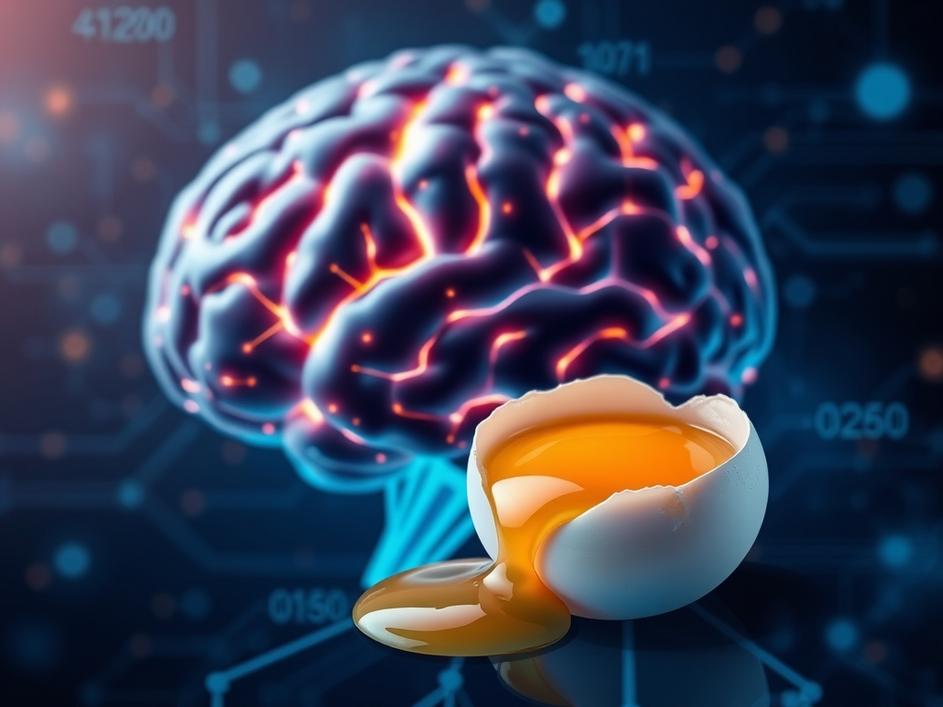
This understanding of myelin also brings us to some surprisingly simple truths about brain health. Did you know that something as ordinary as eating eggs regularly might actually help keep your mind sharp as you get older? Eggs are packed with choline, a nutrient that plays a role in brain function and communication. While no single food is a magic bullet, this highlights an important point: what we put into our bodies has a direct impact on our brain’s health, including the health of that vital myelin sheath. It’s not just about avoiding bad stuff; it’s about actively feeding our brains with good stuff. A balanced diet, regular exercise, enough sleep, and keeping our minds active – these aren’t just feel-good tips. They’re practical ways to protect our brain’s delicate structures and potentially slow down the decay that could lead to conditions like Alzheimer’s. It’s empowering to know that some power is in our hands, even as science looks for bigger solutions.
So, where does Artificial Intelligence fit into all of this? Well, studying a disease as complex as Alzheimer’s involves an overwhelming amount of information. We’re talking about genetics, lifestyle choices, brain scans, patient histories, drug trials – it’s an ocean of data. For human researchers, sifting through all of this to find patterns or connections can take years, even decades. This is where AI truly shines. AI programs can analyze vast datasets much faster than any human ever could. They can spot tiny, subtle patterns that might link a particular gene to myelin breakdown, or predict who might be at higher risk for Alzheimer’s years before symptoms even show up. Imagine AI helping to identify new drug targets by quickly testing millions of compounds in virtual simulations, or figuring out which combinations of diet and lifestyle changes have the biggest protective effects. It’s like having a super-powered detective that can find clues no one else even knew to look for, speeding up the entire research process in ways we never thought possible.
From my perspective, the exciting thing here isn’t just AI or just the new understanding of myelin or just the importance of a good diet. It’s how all these pieces are starting to connect. AI isn’t going to replace the fundamental human discoveries about how our brains work, nor will it lessen the importance of simple, healthy habits. Instead, it’s going to make those connections stronger and clearer. AI can help us understand *why* eating eggs might be good for your brain, or *how* physical activity protects your myelin. It can personalize advice, telling you what specific steps you should take based on your unique genetic makeup and lifestyle. This isn’t about science in a lab far away from our lives; it’s about bringing cutting-edge technology right into the heart of everyday health and personal choices. It gives us real hope that one day, Alzheimer’s won’t be a mystery that steals minds, but a condition we can understand, prevent, and maybe even cure.
The journey to truly conquer Alzheimer’s is still ongoing, but it’s now fueled by incredible new insights and tools. The idea that a protective sheath around our brain cells could be a key player changes how we think about the disease’s origins. And the fact that advanced AI can now help us make sense of this intricate biological puzzle, even identifying simple dietary factors like choline from eggs, is incredibly hopeful. It means we’re moving towards a future where managing brain health is a blend of smart personal choices and incredible scientific breakthroughs. We can all play a part in protecting our brains, while AI works behind the scenes, pushing us closer to a world where Alzheimer’s is a thing of the past.



Comments are closed