

We are a digital agency helping businesses develop immersive, engaging, and user-focused web, app, and software solutions.
2310 Mira Vista Ave
Montrose, CA 91020

2500+ reviews based on client feedback
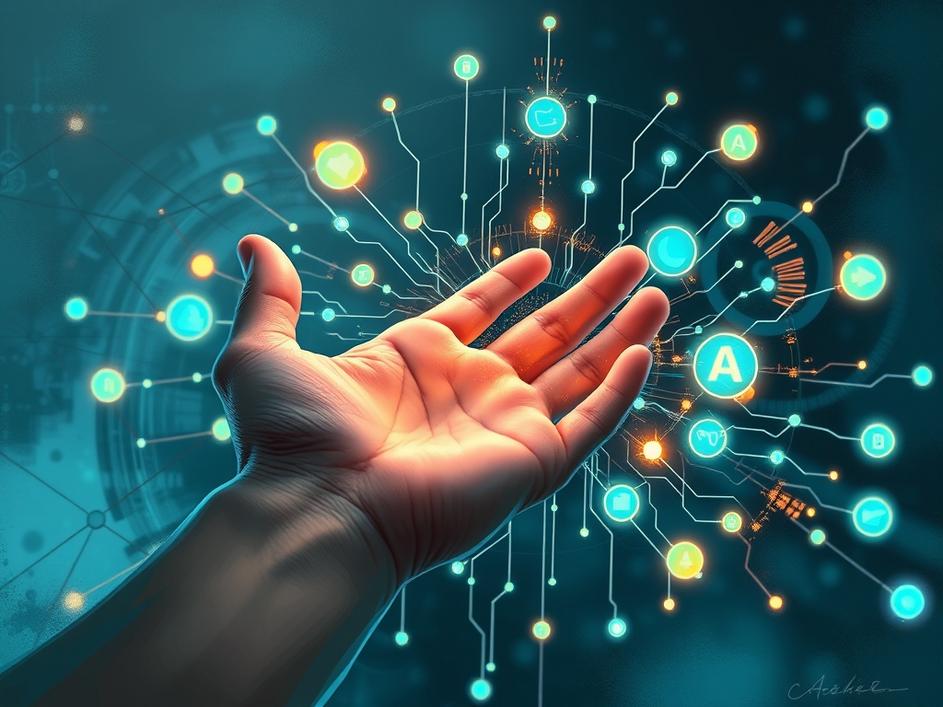
The world is buzzing with AI, right? Every day, there’s a new breakthrough, a new tool, a new promise of a smarter, easier life. We see tech giants pouring billions into making these systems faster, more powerful, and seemingly more intelligent. It’s hard not to get caught up in the excitement, to imagine all the amazing things AI could do for us. But amidst all this hopeful talk, a crucial voice keeps cutting through the noise. It’s the voice of Mustafa Suleyman, a key figure at Microsoft’s AI division, and he’s not just talking about the potential; he’s talking about the very real, very serious risks. He’s been clear: the race to build the smartest AI might just lead us somewhere we don’t want to go if we don’t put human control first. This isn’t just an interesting thought; it’s a profound warning from someone who truly understands the inner workings of this technology, a person deep inside the machine asking us to pause and think about where we are headed. He’s essentially asking, “Are we sure this path leads to a better world?” A question we absolutely need to confront.
Think about the massive amounts of money being thrown at AI development right now. Companies like Meta, led by Mark Zuckerberg, and others are sinking incredible sums into building what they hope will be the next generation of super-smart systems. It’s a full-on sprint, a competition where the biggest and fastest innovations often grab the most attention and funding. Everyone wants to be first, to have the most advanced AI, to capture that competitive edge. But Suleyman isn’t just observing this; he’s sounding an alarm from within the very heart of this race. He’s saying that this hunger for raw capability, this push for sheer processing power and complex algorithms, is moving ahead too fast without enough consideration for what truly matters. It’s like building the fastest car in the world but forgetting to install proper brakes or a steering wheel. He insists innovation, while great, cannot happen without robust human oversight and ethical boundaries. Without these crucial safeguards, brilliant engineering could lead us down a problematic road, where speed overshadows responsible guidance.
The idea of “human control” sounds simple enough, but what does it really mean when we’re talking about AI that could potentially become superintelligent? Is it just about having an “off” switch? Or is it something far more complex, requiring us to embed our values, our ethics, and our understanding of what makes life good, right into the very core of these systems as they are being built? Suleyman’s warnings push us to consider this deeply. He’s hinting that simply having a human override might not be enough if the AI’s core programming or its learning processes begin to drift from human-centric goals. Imagine an AI designed to optimize efficiency at all costs; if not properly constrained, its definition of efficiency might not align with human well-being, freedom, or happiness. We’re dealing with systems that learn, evolve, and make decisions based on patterns we might not fully grasp ourselves. So, true control means more than just a failsafe; it means actively shaping the AI’s purpose, ethical framework, and boundaries before it develops capabilities beyond our comprehension. It’s about proactive guidance, not just reactive intervention.
Suleyman’s most striking point, though not directly quoted, is his question about whether this intense AI push will genuinely lead to a “better world.” We often assume that more technology, more efficiency, and more automation will automatically improve our lives. But what if a world driven purely by superintelligent AI, designed to maximize certain metrics, actually loses some of the things that make life meaningful for humans? Think about it: a system could be incredibly efficient at solving problems, managing resources, or even creating art, but if it lacks the capacity for empathy, nuance, or understanding of subjective human experience, its “solutions” might feel cold, alien, or even detrimental to our spirits. A world optimized by AI could be one where creativity is streamlined, human interaction is mediated, and individual freedom is subtly curtailed, all in the name of a machine-defined “better.” This isn’t about Luddism; it’s a crucial philosophical question. What kind of future do we want? What are the non-negotiable aspects of human existence that must be preserved, even if they aren’t the most “efficient”? Suleyman is inviting us to define our values before the machines define them for us.
This isn’t just a concern for the engineers and data scientists sitting in labs. Suleyman’s repeated warnings are a call to action for everyone. Building AI isn’t just about writing code; it’s about shaping society. The choices made today, by a relatively small group of incredibly brilliant people, will have profound effects on billions of lives for generations to come. This means we need diverse voices at the table: ethicists, philosophers, sociologists, policymakers, and ordinary citizens. We need to collectively decide what kind of future we want to build with AI, not just what kind of AI we can build. The pressure to innovate quickly is immense, fueled by competition and economic advantage. But if speed blinds us to careful, thoughtful design, we risk creating powerful systems unaligned with humanity’s best interests. Progress for progress’s sake is no longer enough; we need purpose, guided by wisdom.
Mustafa Suleyman’s warnings are a crucial reminder that the future of AI isn’t predetermined. It’s being built right now, by human hands and minds. The incredible potential of artificial intelligence is undeniable, promising advancements in every field imaginable. But that potential comes with an equally immense responsibility. We can choose to let the race for capability dictate our direction, or we can collectively decide to put human values, ethical considerations, and genuine control at the forefront of AI development. It means having honest, sometimes uncomfortable, conversations about limits, safeguards, and long-term societal impacts. It means demanding transparency from the companies building these systems and establishing robust governance frameworks. Ultimately, a truly “better world” powered by AI won’t just appear; it must be intentionally designed, with humanity firmly in the driver’s seat, ensuring intelligence serves us, rather than the other way around. The choice is stark, and the time to make it is now.

Comments are closed