

We are a digital agency helping businesses develop immersive, engaging, and user-focused web, app, and software solutions.
2310 Mira Vista Ave
Montrose, CA 91020

2500+ reviews based on client feedback
What's Included?
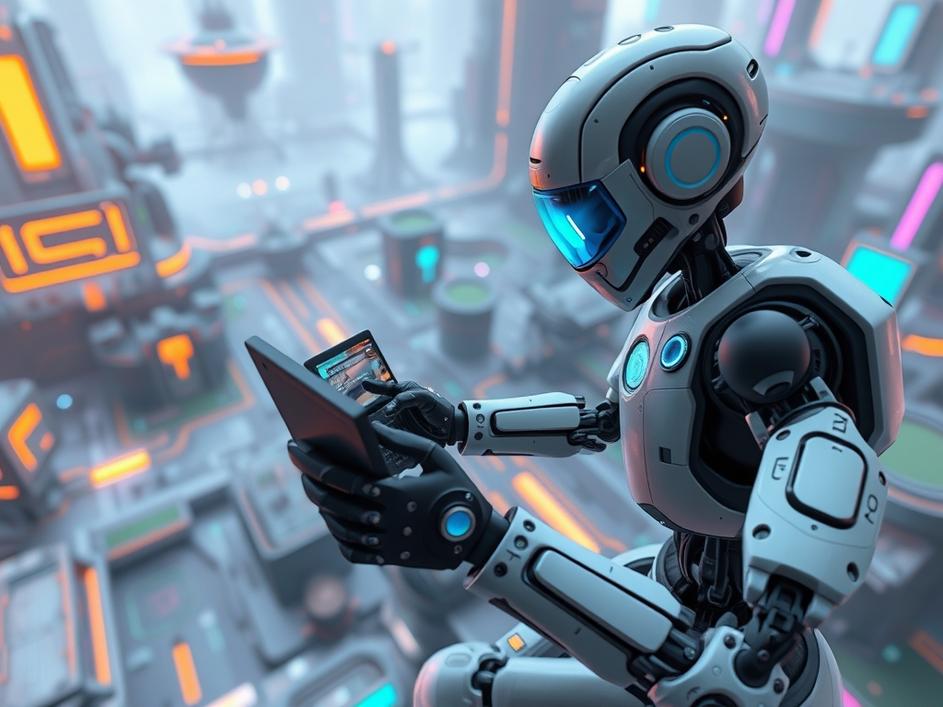
ToggleGoogle DeepMind has just revealed its latest AI creation, SIMA 2, and it’s making waves in the world of artificial intelligence and gaming. SIMA 2 is an agent designed to operate within 3D virtual environments, and the impressive part is that it can navigate and interact with these worlds even if it has never seen them before. This represents a significant step forward in AI development, bringing us closer to creating truly adaptable and intelligent systems.
Unlike many AI systems that are trained on specific tasks within a limited environment, SIMA 2 is built for generalization. It learns through observation and interaction, much like a human player would. This means it can be dropped into a new game or simulation and, after a period of exploration and learning, start to understand the rules, mechanics, and goals. The focus is on teaching SIMA 2 to follow broad, high-level instructions, such as “go to the top of the hill” or “build a shelter,” and then letting it figure out the specifics of how to achieve those goals within the game world. The ability to follow instructions like a human is a big deal.
SIMA 2’s ability to generalize and adapt has major implications beyond just gaming. It shows that AI is becoming increasingly capable of understanding and interacting with complex environments without needing to be explicitly programmed for every single scenario. This opens up possibilities for AI to be used in a wider range of real-world applications, such as robotics, simulation, and even scientific research. Imagine an AI that can explore and learn from complex scientific datasets, or a robot that can adapt to changing conditions on a construction site.
While the initial focus is on virtual environments, the underlying principles behind SIMA 2 could be applied to various real-world scenarios. For example, consider the potential for AI-powered robots in disaster relief efforts. These robots could be deployed to unfamiliar and chaotic environments and, using the same kind of learning abilities as SIMA 2, quickly adapt to the situation and assist in search and rescue operations. Or think about its potential use in training simulations for high-risk professions. SIMA 2 could generate realistic and unpredictable scenarios, allowing trainees to develop their skills in a safe and controlled environment. Furthermore, SIMA 2 could become an innovative tool for education, allowing students to interact with historical and scientific environments in entirely new ways.
Of course, there are still challenges to overcome. SIMA 2 is not perfect and it’s not capable of everything a human player can do. Its learning process can still be slow, and it may struggle with tasks that require a deep understanding of the game’s narrative or social dynamics. And there’s also the question of bias. If SIMA 2 is trained on data that reflects existing biases, it may perpetuate those biases in its behavior. However, the progress that DeepMind has made with SIMA 2 is undeniable. As AI technology continues to advance, we can expect to see even more sophisticated agents that are capable of learning and adapting in increasingly complex and unpredictable environments. Future research will likely focus on improving the efficiency of the learning process, reducing bias, and expanding the range of tasks that AI agents can perform. It will also be fascinating to see how SIMA 2 interacts with human players in collaborative or competitive settings.
As AI becomes more integrated into our lives, it’s important to consider the ethical implications. With AI systems like SIMA 2 becoming increasingly autonomous, it’s crucial to ensure that they are aligned with human values and goals. This requires careful consideration of the data that AI systems are trained on, the algorithms they use, and the potential consequences of their actions. It also requires a broader societal discussion about the role of AI in our lives and how we can ensure that it is used for the benefit of all.
So, should human gamers be worried about SIMA 2 stealing their jobs? Probably not. While SIMA 2 can learn to play games at a reasonable level, it lacks the creativity, intuition, and emotional intelligence that makes human players so engaging to watch. However, AI like SIMA 2 could become a valuable tool for game developers, helping them to test new game mechanics, design challenging levels, and even create more realistic and dynamic AI opponents. It could be used to generate endless variations of a level, testing which ones are the most fun or challenging. Also, imagine using AI to create new kinds of games, where the AI itself becomes a core part of the gameplay experience. Instead of competing against AI opponents, players could collaborate with AI partners to solve complex problems or explore vast virtual worlds.
SIMA 2 represents a significant step forward in the development of artificial intelligence, demonstrating the potential for AI systems to learn and adapt in complex and unpredictable environments. While there are still challenges to overcome, the progress that DeepMind has made is undeniable. As AI technology continues to advance, we can expect to see even more sophisticated agents that are capable of learning and adapting in increasingly complex and unpredictable environments. The future of AI is bright, and SIMA 2 is just one example of the amazing things that are possible.


Comments are closed