

We are a digital agency helping businesses develop immersive, engaging, and user-focused web, app, and software solutions.
2310 Mira Vista Ave
Montrose, CA 91020

2500+ reviews based on client feedback
What's Included?
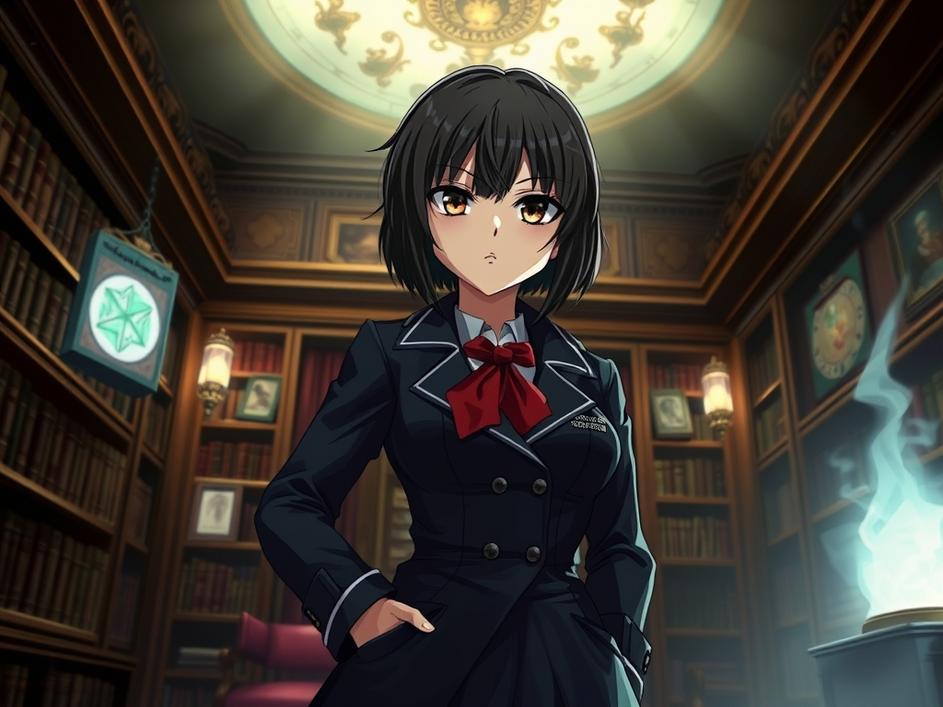
ToggleWe all know those characters. The ones that make you grit your teeth, the ones you love to hate. In the world of visual novels, and particularly within the sprawling mystery of *Umineko: When They Cry*, Furudo Erika often takes center stage as that figure. The self-proclaimed detective, with her abrasive personality and unwavering confidence, has captivated and infuriated fans in equal measure. But what is it about Erika that makes her such a compelling, albeit controversial, character? It’s definitely more than just her ‘worst girl’ status; it’s about how she challenges the core themes of the story itself.
Erika’s introduction in Episode 5 of *Umineko* is like a bomb going off in the already complex Ushiromiya family drama. Before her arrival, the story focuses on Battler’s struggle to deny the existence of magic and the witch Beatrice. But Erika arrives, armed with logic and a relentless desire to solve the mystery using only concrete evidence. She presents a stark contrast to Battler’s emotional and often desperate attempts to cling to reason. Her cold, calculating approach immediately throws the established dynamic into chaos, forcing both the characters and the readers to re-evaluate their understanding of the events on Rokkenjima. She’s not just solving a mystery; she’s deconstructing the very foundation upon which the narrative is built.
At the heart of *Umineko* lies the conflict between logic and belief. Erika embodies the extreme of logical reasoning, often to the point of absurdity. She twists and contorts evidence to fit her theories, disregarding any possibility that falls outside her narrow scope of understanding. This unwavering dedication to logic, while seemingly admirable, ultimately becomes her downfall. She becomes blind to the emotional and human elements of the mystery, viewing the Ushiromiya family as mere chess pieces in her grand game. And that is precisely the point the author is trying to make, I think: absolute devotion to logic without considering emotion and humanity can lead to monstrous outcomes.
In many ways, Erika serves as a dark mirror to Battler. Both characters are driven by a desire to uncover the truth, but their methods and motivations differ drastically. Battler, despite his initial skepticism, grapples with the possibility of magic and the emotional weight of the events on Rokkenjima. Erika, on the other hand, actively rejects anything that cannot be proven through empirical evidence. This contrast highlights the limitations of both approaches. Battler’s emotionality can cloud his judgment, while Erika’s rigid logic prevents her from seeing the bigger picture. Ultimately, the story suggests that true understanding requires a balance between reason and empathy. This is what makes *Umineko* such a fascinating story, these internal and external struggles between belief and reason.
Despite her flaws, Erika remains a captivating character. Her intelligence and determination are undeniable, even if they are often channeled in destructive ways. She challenges us to question our own biases and assumptions, forcing us to confront the uncomfortable truths about ourselves and the world around us. She embodies the dangers of unchecked ego and the importance of considering perspectives beyond our own. Further, she is written well, and, as a reader, you can appreciate how she moves the plot forward. It is rare that a character so thoroughly disliked by sections of the fanbase can be so essential to the experience.
Furudo Erika is more than just a villain or a plot device. She is a complex and multifaceted character who embodies the central themes of *Umineko*. Her unwavering logic, her abrasive personality, and her relentless pursuit of the truth make her a figure that is both infuriating and fascinating. While she may be considered the ‘worst girl’ by some, her impact on the story and her ability to provoke strong reactions from readers solidify her place as one of the most memorable characters in the *Umineko* universe. She reminds us that the truth is often more complex than we initially believe, and that sometimes, the most challenging characters are the ones that teach us the most. In the end, hating Erika might just be a testament to how well she was written, and how effectively she serves her purpose in the grand tapestry of *Umineko*.



Comments are closed