

We are a digital agency helping businesses develop immersive, engaging, and user-focused web, app, and software solutions.
2310 Mira Vista Ave
Montrose, CA 91020

2500+ reviews based on client feedback
What's Included?
ToggleThe European Union, known for its stringent approach to tech regulation, appears to be softening its stance on artificial intelligence (AI) and data privacy. Recent reports suggest that the EU is preparing to relax some of its proposed AI regulations and data privacy rules. This shift comes after mounting pressure from various sectors, including industry leaders, researchers, and even some member states, who argue that the current regulatory framework risks stifling innovation and hindering Europe’s competitiveness in the global AI landscape.
So, what’s driving this change of heart? Several factors are at play. First, there’s growing concern that overly strict regulations could put European companies at a disadvantage compared to their counterparts in the United States and China, where AI development is proceeding at a rapid pace with less regulatory oversight. Businesses have warned that excessive compliance costs and legal uncertainties could discourage investment in AI research and development within the EU. Second, some argue that the initial proposals were too broad and lacked the flexibility needed to adapt to the ever-evolving nature of AI technology. There are also concerns that regulations could inadvertently stifle beneficial AI applications in areas such as healthcare, education, and environmental protection.
While the specifics of the revised regulations are still under wraps, there are indications that the EU may be reconsidering some of the more stringent requirements related to data usage, algorithmic transparency, and the definition of “high-risk” AI systems. For instance, there might be a move towards a more risk-based approach, focusing on regulating AI applications that pose the most significant threats to fundamental rights and safety, while easing the burden on less risky uses of the technology. It is possible that stricter rules apply to facial recognition or autonomous weapons, but less strict rules for AI used to sort fruit on a conveyor belt.
Also, some voices push for clearer guidelines on how companies can use data for AI training purposes while still complying with GDPR (General Data Protection Regulation), Europe’s landmark privacy law. This could involve clarifying the legal basis for data processing, providing more flexibility for anonymization techniques, and establishing mechanisms for data sharing between organizations.
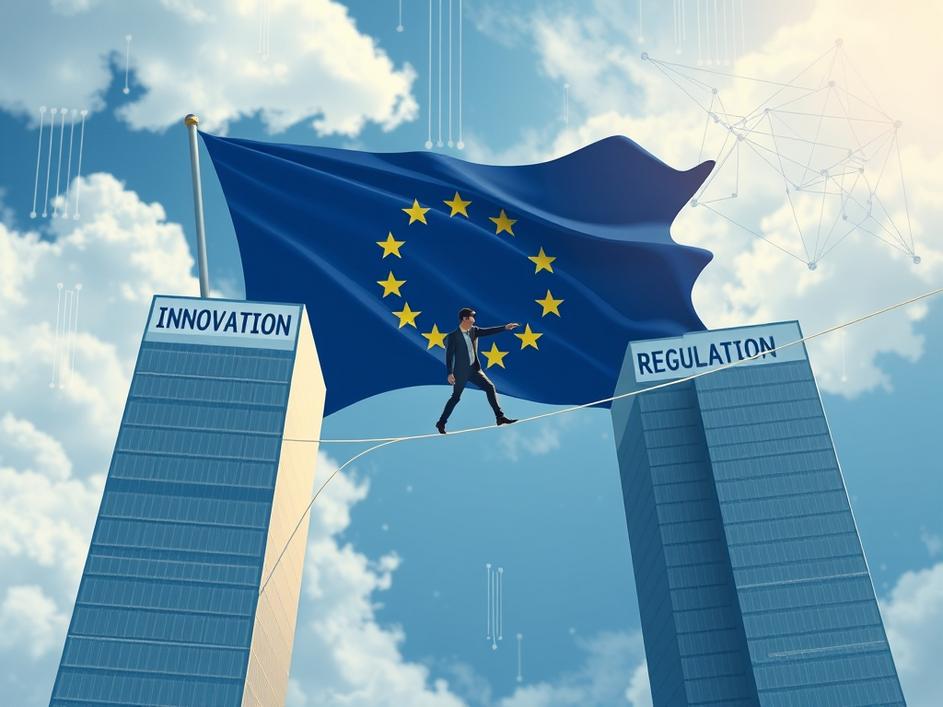
The EU faces a delicate balancing act. On the one hand, it wants to protect its citizens from the potential harms of AI, such as bias, discrimination, and privacy violations. On the other hand, it recognizes the immense potential of AI to drive economic growth, create jobs, and solve some of society’s most pressing challenges. Finding the right balance between regulation and innovation is crucial to ensure that Europe can reap the benefits of AI without compromising its values and principles.
It is also not clear how these changes will play out. It is possible that some member states will maintain stricter AI and privacy rules, which could create friction for EU businesses operating across national borders.
Relaxing AI and privacy regulations could usher in a new era for AI in Europe. It could incentivize more investment in AI research and development, foster a more vibrant AI ecosystem, and accelerate the adoption of AI technologies across various sectors of the economy. However, it also comes with risks. Looser regulations could make it harder to prevent the misuse of AI, protect individuals’ privacy, and ensure that AI systems are fair and unbiased.
Ultimately, the success of this shift will depend on whether the EU can strike the right balance between promoting innovation and safeguarding fundamental rights. It will require ongoing dialogue between policymakers, industry leaders, researchers, and civil society organizations to ensure that AI is developed and used in a responsible and ethical manner. The world will be watching as the EU navigates this complex landscape, seeking to create a regulatory environment that fosters both innovation and trust.
The EU’s decision to potentially relax its AI rules carries significant implications beyond its borders. As a major regulatory power, the EU often sets the standard for other countries when it comes to technology regulation. A shift in the EU’s approach to AI could influence how other nations regulate the technology, potentially leading to a global trend towards more flexible and innovation-friendly AI policies. However, it could also spark concerns among privacy advocates and human rights organizations, who fear that a weakening of AI regulations could undermine fundamental rights and protections worldwide.



Comments are closed