

We are a digital agency helping businesses develop immersive, engaging, and user-focused web, app, and software solutions.
2310 Mira Vista Ave
Montrose, CA 91020

2500+ reviews based on client feedback
What's Included?
ToggleThe buzz around artificial intelligence keeps getting louder, and it’s not just about chatbots writing poems anymore. Consulting firms are seriously considering how AI agents will reshape the workplace, specifically the organizational chart. Forget self-driving cars; we might be talking about self-managing AI teams soon. These firms are trying to figure out how companies will manage and integrate these AI agents into their existing structures.
For years, experts have predicted that AI and automation would take over routine tasks. Now, it seems that middle management could be next. Companies are exploring how these AI agents can handle tasks like project management, data analysis, and even employee training. This raises a big question: if AI can handle these responsibilities, what happens to the people currently in those roles?
An IBM senior VP suggested that human managers won’t directly manage AI agents but rather guide them. Think of it like coaching a sports team. The coach sets the strategy, provides feedback, and ensures everyone is working towards the same goal, but they don’t micromanage every player’s move. This approach implies a shift in the manager’s role. They would become more strategic, focusing on higher-level decision-making and ensuring the AI aligns with the company’s overall objectives. The human touch will be to provide a vision and moral compass, things machines struggle with. The question becomes: how do you measure value when the job is ‘guidance?’
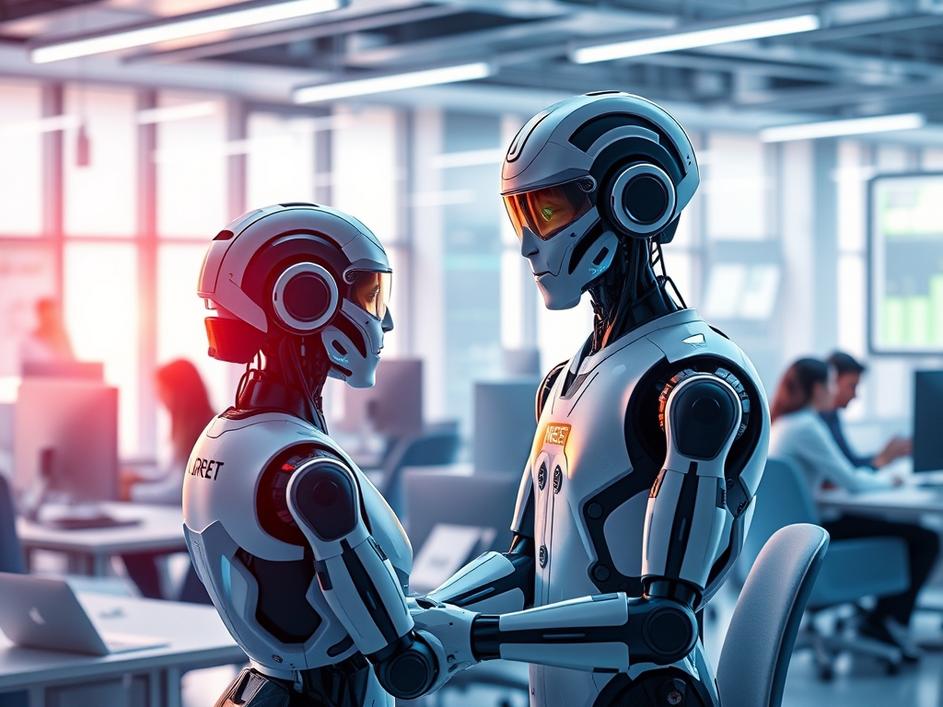
So, what might the new organizational chart look like? It probably won’t be a simple replacement of humans with AI. Instead, expect a hybrid model where humans and AI work together. AI agents might handle the day-to-day tasks, freeing up human employees to focus on more creative and strategic initiatives. This could mean a flatter organizational structure, with fewer layers of management and more emphasis on collaboration and cross-functional teams. The human advantage will be that of creative problem solving in the face of novel situations.
This shift presents both challenges and opportunities. On the challenge side, companies need to figure out how to train and integrate AI agents effectively. This includes developing new skills for employees and creating a culture that embraces AI. There will inevitably be resistance, especially from those whose jobs are directly affected. It also means that companies will be responsible to manage the AI, so that it behaves ethically. Bias is a huge risk here. The opportunity is that AI can drive efficiency, improve decision-making, and free up employees to focus on more meaningful work. This could lead to increased innovation, better customer service, and ultimately, a more competitive business.
The rise of AI agents also forces us to rethink what it means to be a leader. In a world where machines can handle many of the traditional management tasks, leadership becomes more about inspiring, motivating, and guiding people. It’s about creating a vision, fostering collaboration, and ensuring that everyone is aligned with the company’s values. Leaders will need to be excellent communicators, able to explain complex concepts and build consensus. They will also need to be adaptable, able to navigate the constantly changing landscape of AI and technology.
As we integrate AI agents into the workplace, ethical considerations become paramount. How do we ensure that these agents are used responsibly and fairly? How do we prevent bias and discrimination? How do we protect employee privacy? These are just some of the questions that companies need to address. It’s not enough to simply deploy AI and hope for the best. Companies need to have clear ethical guidelines and oversight mechanisms in place to ensure that AI is used in a way that benefits everyone.
The integration of AI agents into the workplace is not a one-time event, but rather an ongoing process of evolution. As AI technology continues to develop, we can expect even more profound changes in the way we work. The key is to be prepared for these changes and to embrace the opportunities that AI presents. This means investing in education and training, fostering a culture of innovation, and being willing to adapt to new ways of working. Ultimately, the future of work will be shaped by how we choose to use AI.
The concept of AI agents reshaping the company org chart is more than just a futuristic fantasy; it’s a very real possibility on the horizon. While it brings potential benefits like increased efficiency and innovation, it also raises crucial questions about the future of work, the role of human managers, and the ethical implications of AI. Companies that proactively address these challenges and embrace a human-centered approach to AI integration will be best positioned to thrive in the AI-augmented workforce. The time to plan for your AI colleagues is now.


Comments are closed