

We are a digital agency helping businesses develop immersive, engaging, and user-focused web, app, and software solutions.
2310 Mira Vista Ave
Montrose, CA 91020

2500+ reviews based on client feedback
What's Included?
ToggleFor years, we’ve heard the ominous predictions: robots taking our jobs, AI overlords ruling the workplace, humans becoming obsolete. But is this sci-fi scenario actually playing out? While AI is undoubtedly changing the landscape, some startup CEOs believe the narrative of complete human replacement is, at best, an exaggeration.
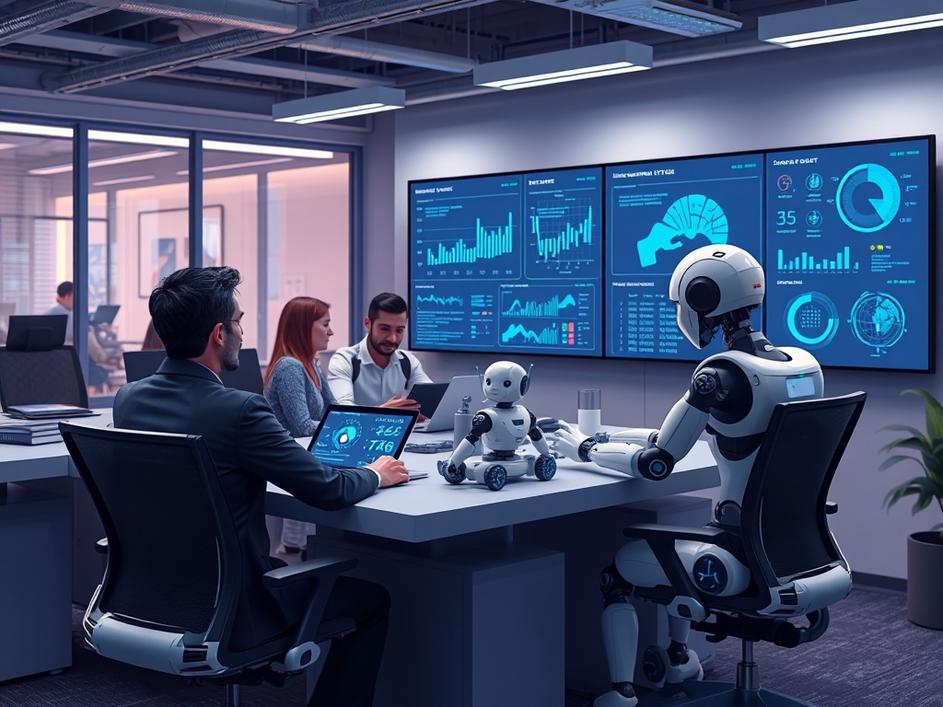
Several tech leaders recently weighed in on the topic, offering a more nuanced perspective. They argue that AI, while powerful, is more of a tool than a takeover artist. Instead of replacing humans, it’s augmenting our abilities, automating tedious tasks, and freeing us up to focus on more creative and strategic work. This idea of collaboration, rather than competition, seems to be the prevailing sentiment among these startup bosses.
Think of AI less as a replacement and more as the ultimate assistant. It can handle data entry, schedule meetings, answer basic customer inquiries, and even generate initial drafts of reports. These are all tasks that, while necessary, often bog down employees and prevent them from tackling higher-level challenges. By offloading these responsibilities to AI, companies can empower their human workforce to be more innovative, strategic, and customer-focused.
One key takeaway is that AI, for all its capabilities, still lacks certain essential human qualities. Empathy, critical thinking, complex problem-solving, and genuine creativity are areas where humans continue to excel. Customer service, for instance, may benefit from AI-powered chatbots, but ultimately, a human agent is needed to resolve complex issues and provide personalized support. The same goes for fields like marketing, where AI can analyze data and identify trends, but humans are still needed to craft compelling narratives and build meaningful connections with consumers.
The rise of AI is also creating new job opportunities. As companies implement and manage AI systems, they need skilled professionals to develop, maintain, and oversee these technologies. This includes roles like AI engineers, data scientists, AI trainers, and AI ethicists. Furthermore, existing roles are evolving to incorporate AI skills. Marketers need to understand how to use AI-powered tools to optimize campaigns, salespeople need to leverage AI insights to personalize interactions, and customer service representatives need to collaborate with AI chatbots to deliver seamless support. The key is to adapt and acquire the skills needed to thrive in an AI-driven world.
It’s important to remember that AI is still a relatively new technology, and we’re likely still in the early stages of understanding its full potential. There’s a natural tendency to either overestimate or underestimate the impact of emerging technologies, and AI is no exception. We need to move beyond the hype and focus on practical applications and realistic assessments of AI’s capabilities. This means acknowledging both the benefits and the limitations of AI, and developing strategies to harness its power in a responsible and ethical manner.
The future of work is not about humans versus AI; it’s about humans *with* AI. By embracing AI as a tool, rather than a threat, we can create a more efficient, productive, and fulfilling work environment. This requires a shift in mindset, a commitment to lifelong learning, and a willingness to adapt to the changing demands of the job market. Instead of fearing the robot uprising, we should be focusing on how to collaborate with AI to build a better future for everyone. We need to see AI as a force multiplier, amplifying human capabilities and unlocking new possibilities.
Ultimately, the success of AI implementation depends on investing in the human element. This means providing employees with the training and resources they need to acquire AI skills, fostering a culture of innovation and experimentation, and prioritizing ethical considerations. It also means recognizing the value of human qualities like empathy, creativity, and critical thinking, and ensuring that these skills are not overlooked in the rush to automate. The human touch remains essential, now more than ever. The most successful companies will be those that strike the right balance between AI and human intelligence, leveraging the strengths of both to achieve their goals.
So, is AI going to replace all our jobs? The startup CEOs don’t think so, and I’m inclined to agree. The narrative of complete human replacement seems overly pessimistic. The more likely scenario is one of collaboration, where AI augments our abilities and frees us up to focus on more meaningful work. It’s a future where humans and machines work together, not against each other, to create a better world. This means that the future of work, while inevitably changing, is not necessarily bleak. In fact, with careful planning and a focus on human development, it could be brighter than ever.


Comments are closed