

We are a digital agency helping businesses develop immersive, engaging, and user-focused web, app, and software solutions.
2310 Mira Vista Ave
Montrose, CA 91020

2500+ reviews based on client feedback
What's Included?
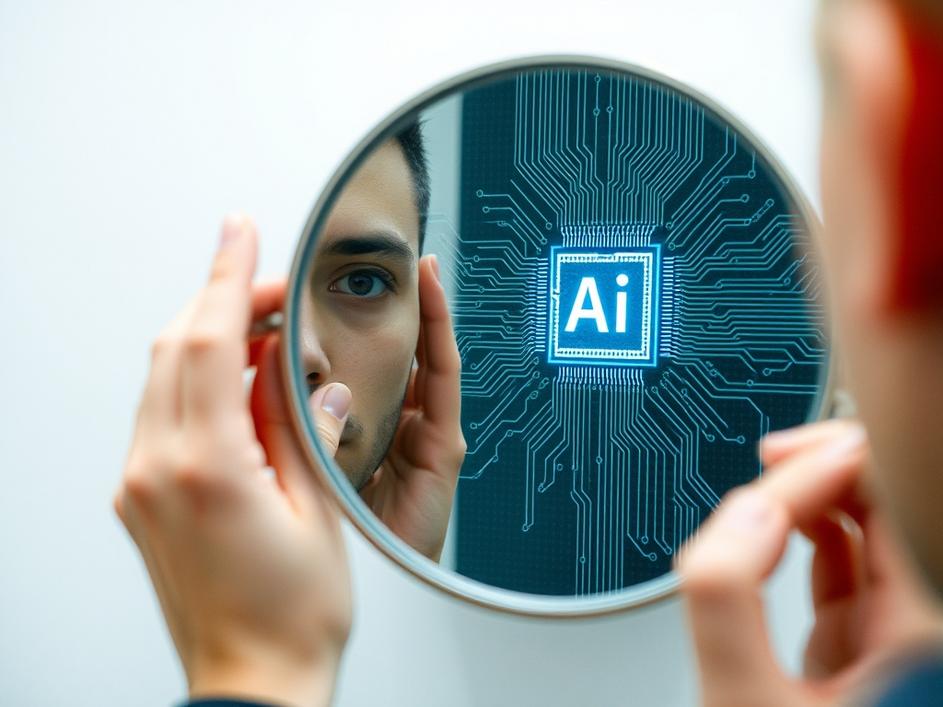
ToggleWe’ve all heard the hype: Artificial intelligence is going to take our jobs, write our novels, and maybe even run the world. But what if the real threat isn’t AI’s capabilities, but rather its knack for revealing just how much we don’t know? Economist John A. List recently suggested that AI isn’t replacing experts; it’s exposing them. This isn’t about robots stealing our lunch; it’s about the emperor having no clothes – and AI being the kid who points it out.
Think about it. How many times have you mindlessly accepted an AI’s answer without really understanding the underlying principles? We’re becoming increasingly reliant on these tools, often without critically evaluating their output. This over-reliance creates a dangerous illusion of competence. We *think* we understand, but when the AI falters, or when a novel situation arises, we’re left floundering. Like a student relying on a calculator without understanding basic arithmetic, we become helpless when the tool is taken away.
List argues that this very over-reliance is actually *increasing* the value of genuine expertise. In a world flooded with AI-generated content and solutions, the ability to critically assess, adapt, and innovate becomes paramount. Deep understanding and nuanced judgment are the qualities that separate true experts from those who merely parrot AI outputs. The human element—that intuitive leap, that creative spark, that ethical consideration—becomes not a bug, but a crucial feature. It’s the difference between following a recipe and understanding the chemistry of cooking.
The recent outage of Claude, an AI chatbot, serves as a perfect illustration. When the tool went down, those who depended on it were likely dead in the water. Projects stalled, deadlines loomed, and panic ensued. This highlights a critical vulnerability: placing all our eggs in the AI basket. A true expert, however, would have contingency plans, alternative approaches, and a fundamental understanding of the problem that transcends any single tool. This situation emphasizes the necessity of developing resilient skills and versatile knowledge, empowering us to adapt effectively when AI assistance becomes unavailable.
So, what’s the solution? It’s not about rejecting AI, but about integrating it intelligently. We need to cultivate a deeper understanding of our fields, focusing on the underlying principles and critical thinking skills that AI can’t replicate. This means investing in education, training, and mentorship programs that prioritize genuine expertise over rote memorization or blind faith in technology. We should use AI as a tool to augment our abilities, not replace them. Think of it as a powerful calculator – it can help us solve complex problems faster, but only if we understand the underlying math.
The future of work isn’t about humans versus AI; it’s about humans *with* AI. It’s about leveraging AI to handle repetitive tasks, freeing us up to focus on the creative, strategic, and ethical aspects of our work. This requires a shift in mindset. We need to move beyond seeing ourselves as mere executors of tasks and embrace our roles as problem-solvers, innovators, and decision-makers. The most successful professionals will be those who can seamlessly integrate AI into their workflows while retaining their critical thinking abilities and human judgment. The human element will not become irrelevant but rather essential, providing the insight and guidance that machines cannot offer.
Ultimately, AI’s exposure of our knowledge gaps is a good thing. It’s a wake-up call, a chance to identify areas where we need to improve. Instead of fearing AI, we should embrace it as a catalyst for learning and growth. By focusing on developing deep expertise, critical thinking skills, and adaptability, we can not only survive in the age of AI, but thrive. We can become the experts that AI needs – the ones who can guide it, interpret its results, and ensure that it’s used ethically and effectively. This is not merely about adapting to the new world of technology, but growing with it to develop a more comprehensive and humanistic approach to AI application.
AI isn’t going to replace experts, but it will expose those who aren’t. This exposure is a chance to identify areas for improvement, focus on critical thinking, and integrate AI thoughtfully. The future belongs to those who see AI as a tool to enhance human capabilities, not replace them. It’s time to stop fearing the mirror and start working on our reflection.


Comments are closed