

We are a digital agency helping businesses develop immersive, engaging, and user-focused web, app, and software solutions.
2310 Mira Vista Ave
Montrose, CA 91020

2500+ reviews based on client feedback
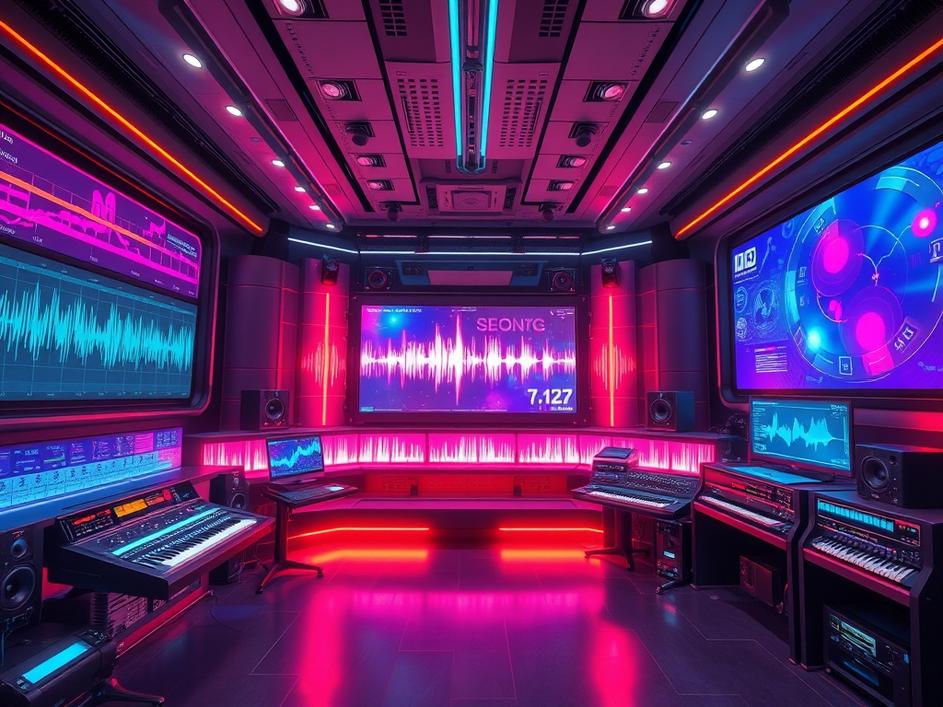
We’ve all heard the stories: artists locked away in studios for days, fueled by caffeine and sheer willpower, trying to get that perfect mix. The creative process can be brutal, especially when it comes to the technical aspects of audio production. But what if those endless nights could become a thing of the past? Well, according to recent news, Clinton Sparks and Johnny Gillespie might just have the answer. They’ve secured a patent for an AI-powered mixing tool that promises to streamline the process, while still keeping the artist in the driver’s seat.
Details are still emerging, but the core idea seems to be using artificial intelligence to handle the more tedious and technical elements of mixing. Think balancing levels, EQing, compression, and all those other tasks that can suck the life out of a creative session. This AI isn’t meant to replace the artist; instead, it functions as a super-powered assistant. It automates the groundwork, allowing artists to focus on the creative decisions that truly define their sound. It’s like having a seasoned mixing engineer at your beck and call, ready to execute your vision instantly.
This is a crucial point. Many artists are understandably wary of AI encroaching on their creative territory. The beauty of this system, as it’s being presented, is that it empowers the artist, rather than replacing them. You’re still in charge of the overall sound and artistic direction. The AI simply takes care of the technical heavy lifting, freeing you to experiment, refine, and ultimately craft the music you want to make. It’s about collaboration, not replacement.
The potential implications are huge. For independent artists and smaller studios, this kind of technology could be a game-changer. It levels the playing field, giving them access to mixing capabilities that were previously only available to those with significant resources. Imagine being able to produce professional-sounding tracks without having to spend countless hours tweaking knobs or hiring expensive engineers. It could also lead to a surge in creativity and experimentation, as artists are freed from the technical constraints that often stifle innovation.
That’s the million-dollar question. One of the biggest concerns about AI-driven tools is the potential for homogenization. Will all music start to sound the same if everyone is using the same AI to mix their tracks? The key, it seems, lies in the level of customization and control that the artist retains. If the AI is truly a tool that adapts to the artist’s vision, rather than imposing its own, then the risk of generic soundscapes is minimized. The challenge will be to strike the right balance between automation and artistic expression.
This patent secured by Sparks and Gillespie could very well represent a significant shift in the way music is made. It’s not about robots taking over the studio; it’s about harnessing the power of AI to enhance the creative process and empower artists. By automating the tedious aspects of mixing, this technology could unlock new levels of creativity and allow artists to focus on what truly matters: making great music. Of course, there will be challenges to overcome, and questions to answer. But the potential benefits are undeniable.
While the initial focus seems to be on studio mixing, the applications of this technology could extend far beyond. Imagine using AI-powered mixing in live performances, adapting the sound in real-time to the acoustics of the venue. Or consider the potential for personalized audio experiences, where music is dynamically mixed to suit the listener’s preferences. The possibilities are vast and exciting. The ability to analyze and adjust audio in real-time opens up a whole new world of sonic possibilities. Think of interactive music installations, adaptive soundscapes for gaming, or even AI-assisted audio restoration for historical recordings.
Even with the rise of AI in music production, the human element will always be paramount. Technology can enhance creativity, but it can’t replace it. The best music comes from the heart and soul of the artist, and that’s something that no algorithm can replicate. This AI mixing tool should be viewed as a partner, a collaborator that helps artists realize their vision, not a replacement for their talent and intuition. The future of music production is likely to be a blend of human creativity and artificial intelligence, working together to create sonic experiences that were previously unimaginable.
Clinton Sparks and Johnny Gillespie’s patent represents a promising step forward in the evolution of music production. By embracing the power of AI, they’re paving the way for a future where artists can focus on their craft, without being bogged down by the technical complexities of mixing. It’s a future where creativity is unleashed, and the possibilities are endless. It will be interesting to see how this technology develops and shapes the music landscape in the years to come.


Comments are closed