

We are a digital agency helping businesses develop immersive, engaging, and user-focused web, app, and software solutions.
2310 Mira Vista Ave
Montrose, CA 91020

2500+ reviews based on client feedback
What's Included?
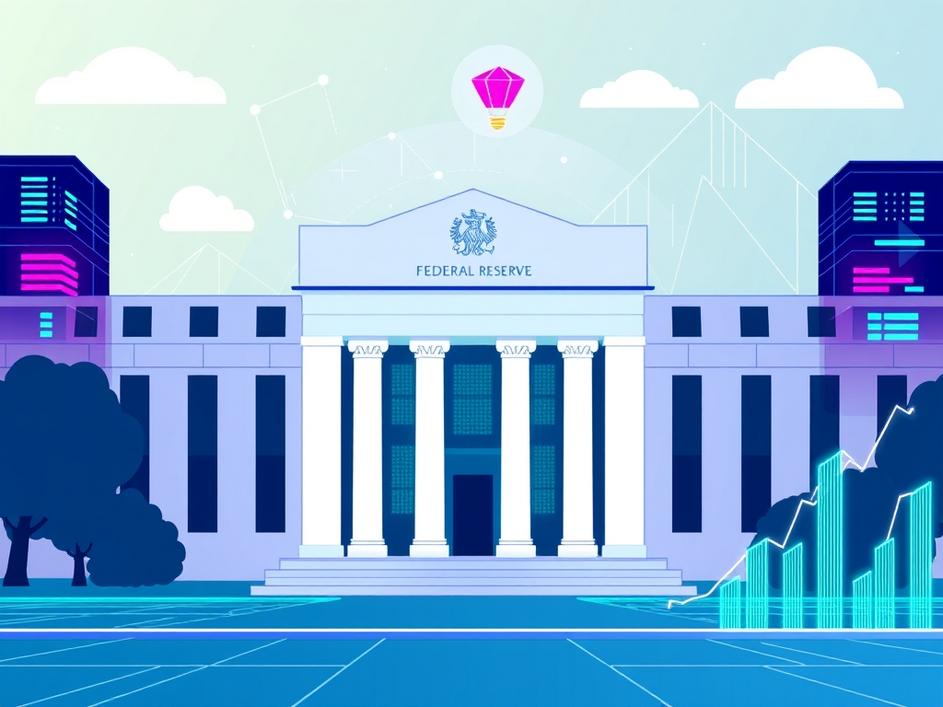
ToggleThe idea that artificial intelligence could significantly impact something as fundamental as interest rates might sound like science fiction. But the notion is gaining traction, even within the hallowed halls of the Federal Reserve. The central bank is grappling with persistent inflation and trying to navigate an uncertain economic landscape, so the allure of AI as a potential solution is understandable. The core argument is that AI could boost productivity, making the economy more efficient and ultimately easing inflationary pressures. If companies can produce more goods and services with the same amount of resources (or even fewer), prices could stabilize, giving the Fed room to lower interest rates without triggering runaway inflation.
Kevin Warsh, a prominent figure in financial circles and a former Fed governor, has voiced strong support for this idea. He believes AI’s capacity to streamline operations, improve forecasting, and accelerate innovation could be a major boon for the economy. Warsh sees AI as a tool that can unlock new levels of efficiency across various sectors, leading to a sustained period of higher growth and lower inflation. This rosy outlook naturally leads to the conclusion that the Fed could then afford to bring interest rates down, stimulating further economic activity.
However, not everyone at the Fed is quite so enthusiastic. Another, unnamed Fed official recently threw some cold water on the idea, suggesting that the impact of AI on interest rates is unlikely to be significant in the short term. This official’s skepticism likely stems from a more cautious assessment of AI’s current capabilities and the time it will take for these technologies to have a widespread impact on the economy. They probably see the practical challenges of implementing AI solutions across diverse industries and acknowledge that realizing the full potential of AI will require overcoming significant hurdles.
This divergence in opinion within the Fed is important because it highlights the uncertainty surrounding AI’s role in shaping economic policy. The Fed’s decisions on interest rates have a profound impact on businesses, consumers, and the overall economy. If policymakers have conflicting views on the potential impact of AI, it could lead to inconsistent or unpredictable policy decisions. It also signals that the Fed, like many other institutions, is still trying to understand the implications of this rapidly evolving technology. The debate reflects a broader societal struggle to reconcile the hype surrounding AI with its actual capabilities and limitations.
While AI certainly holds promise, it’s crucial to maintain a realistic perspective. The idea that AI will magically solve all our economic problems, including inflation, is overly optimistic. AI is a tool, and like any tool, its effectiveness depends on how it’s used and the context in which it’s applied. It’s also important to remember that AI is not a perfect technology. It can be biased, make mistakes, and even be manipulated. Relying too heavily on AI without considering these limitations could lead to unintended consequences. For example, the impact of AI on the labor market is still an open question. Will AI create more jobs than it displaces? How will workers adapt to the changing demands of the AI-driven economy? These are complex issues that need careful consideration.
One of the key assumptions underlying the AI-as-economic-savior argument is that AI will lead to a significant increase in productivity. However, productivity growth has been sluggish in recent years, despite significant investments in technology. It’s possible that the benefits of AI are being offset by other factors, such as an aging workforce, declining investment in infrastructure, or increasing regulation. It’s also possible that it takes time for new technologies to translate into measurable productivity gains. The adoption of electricity, for example, didn’t lead to an immediate surge in productivity. It took decades for businesses to reorganize their operations and fully capitalize on the new technology.
The reality is likely that AI’s impact on the economy will be gradual and evolutionary, rather than sudden and revolutionary. It will take time for businesses to adopt AI solutions, for workers to acquire the necessary skills, and for the regulatory framework to adapt to the new technology. The Fed will need to carefully monitor the impact of AI on productivity, inflation, and employment before making any major policy changes. In the meantime, it’s crucial to avoid both excessive optimism and undue pessimism. AI has the potential to be a valuable tool for improving the economy, but it’s not a magic bullet. A balanced and pragmatic approach is essential.
Ultimately, the debate within the Fed reflects a broader challenge facing policymakers and society as a whole: how to harness the potential of AI while mitigating its risks. The key is to focus on practical applications of AI that can address specific economic challenges, rather than relying on abstract promises of future breakthroughs. This requires a collaborative effort involving businesses, government, and academia to develop AI solutions that are both effective and ethical. By taking a measured and thoughtful approach, we can ensure that AI serves as a force for good in the economy and society.



Comments are closed