

We are a digital agency helping businesses develop immersive, engaging, and user-focused web, app, and software solutions.
2310 Mira Vista Ave
Montrose, CA 91020

2500+ reviews based on client feedback
What's Included?
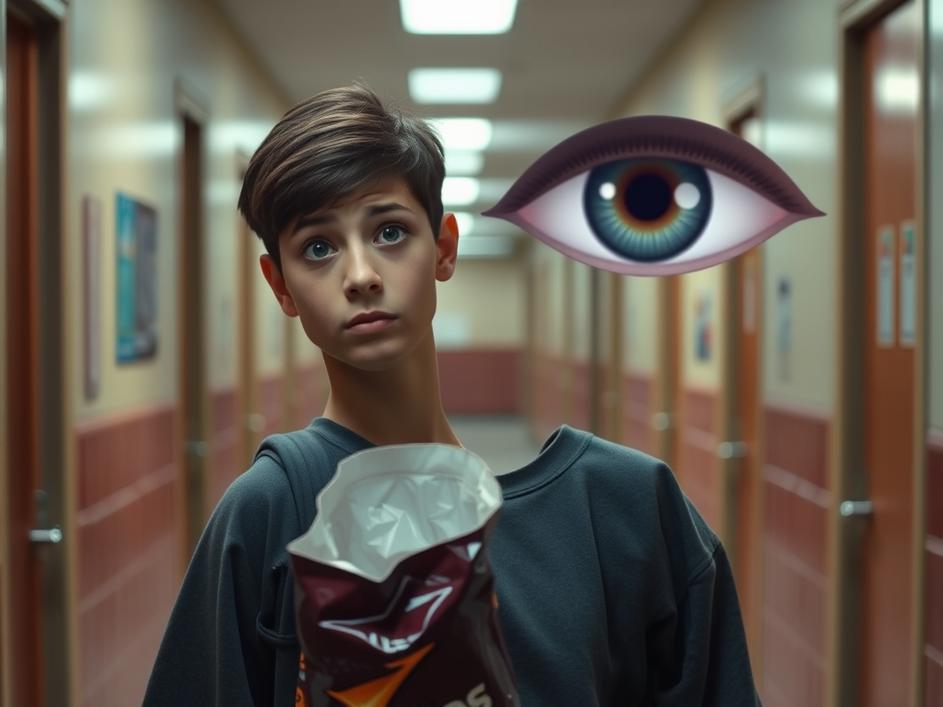
ToggleImagine you’re just a kid, minding your business at school. You’ve got your backpack, your books, maybe a half-eaten snack. Suddenly, everything changes. Flashing lights, shouting, and police officers with guns drawn, all pointed at you. Your heart pounds. Your mind races. What did you do? What’s going on? For 16-year-old Taki Allen in Baltimore, this terrifying scene became a very real nightmare, not because he did anything wrong, but because a computer system made a serious error. A snack bag, specifically an empty one that once held Doritos, was mistaken for a firearm. This wasn’t a human mistake in the heat of the moment; it was an artificial intelligence system that somehow got it profoundly, dangerously wrong. It’s a story that makes you pause and think about the tech we’re putting into our schools and lives.
The incident unfolded at Kenwood High School, a place meant to be safe. Taki was simply walking through the halls. The details are stark: an AI-powered security camera system, designed to keep students safe, flagged something. It saw an object it thought was a weapon. The alert went out, and police responded with the urgency you’d expect when a gun is reportedly involved in a school. Officers arrived, and within moments, Taki found himself in an unthinkable situation. Hands up, the weight of the officers’ attention on him, the chilling sight of their weapons. It’s easy to imagine the sheer terror and confusion he must have felt. This wasn’t a drill. This was real life, unfolding in the worst possible way, all because a machine couldn’t tell the difference between a crinkled bag of chips and something truly dangerous. It’s a moment that could shake anyone to their core, let alone a teenager.
So, how does an advanced AI system make such a basic, yet life-threatening, error? It really makes you wonder. These systems are trained on massive amounts of data, learning to identify objects and patterns. They’re supposed to be smarter than us in some ways, faster at processing visual information. But here’s the kicker: they only know what they’re taught. If the training data wasn’t diverse enough, or if a very specific angle, lighting, or crumpled shape of a Doritos bag just happened to perfectly mimic a firearm from the AI’s limited perspective, it can ‘hallucinate’ an object that isn’t there. It doesn’t have common sense. It doesn’t understand context. It can’t process the fact that a student usually carries a backpack and books, not a gun, and certainly not a gun disguised as a snack bag. It just sees pixels and tries to match them to its internal database, sometimes with disastrous results. This highlights a fundamental flaw in how some AI systems operate in the real world.
This event isn’t just a bizarre, isolated incident. It shines a harsh light on the growing use of AI in surveillance and security, especially in public spaces like schools. We’re increasingly relying on these smart systems to protect us, to make our world safer. But what happens when their ‘intelligence’ leads to false alarms that put innocent people, especially kids, in harm’s way? It erodes trust. How can students and parents feel safe knowing a vending machine snack could trigger an armed response? Beyond that, these AI systems are not always unbiased. If they’ve been trained on data that over-represents certain demographics in crime scenarios, they can perpetuate and even amplify existing biases, leading to disproportionate targeting of specific groups. Taki Allen’s experience is a chilling reminder that these aren’t just technical glitches; they’re deeply human problems with very real consequences for individuals and communities.
Think about what Taki went through. Even after the officers realized their mistake, even after the relief of knowing he wasn’t actually in trouble, the experience of being held at gunpoint will stick with him. That kind of fear leaves a mark. It’s not something you just shake off. This incident highlights a crucial point: when we deploy powerful technology like AI, especially in sensitive environments like schools, we have to consider the human impact. It’s not just about stopping bad things from happening; it’s also about preventing good things from being wrongly targeted. We need robust testing, constant human oversight, and clear accountability when things go wrong. Simply rolling out the latest tech without considering its potential for harm is irresponsible. We can’t let the promise of AI blind us to its very real limitations and the ethical dilemmas it creates for our society.
Who is responsible when an AI makes such a grave error? Is it the school for deploying the system? The company that developed the AI? The police for their response, even if justified by the initial alert? These are questions we need to answer. This story should serve as a wake-up call. We need to demand that AI systems deployed in public safety roles are not just ‘smart’ but also ‘safe’ and ‘fair.’ That means transparency in how they work, independent audits of their accuracy and bias, and a commitment to putting human judgment and safety above technological convenience. Taki Allen’s terrifying encounter with an overzealous algorithm reminds us that while AI can be a powerful tool, it’s still just that – a tool. And like any tool, its power must be wielded with immense care and a deep understanding of its potential for both good and, unfortunately, for profound harm. We owe it to our children and ourselves to get this right.



Comments are closed