

We are a digital agency helping businesses develop immersive, engaging, and user-focused web, app, and software solutions.
2310 Mira Vista Ave
Montrose, CA 91020

2500+ reviews based on client feedback
What's Included?
ToggleWhen you look at the latest numbers, AMD’s share of the server market has nudged up a few points. That movement might seem small, but it arrives at a time when every chip maker is scrambling to feed the AI hunger of cloud providers. The demand for GPUs and specialized accelerators has pushed data centers to rethink their hardware stack, and AMD has positioned itself as a viable alternative to the usual suspects. Investors are now asking whether this modest gain is a sign of a deeper shift toward AMD‑based solutions in AI workloads. The answer, in my view, lies in how well the company can marry its traditional CPU strengths with the newer AI‑focused features that customers are demanding.
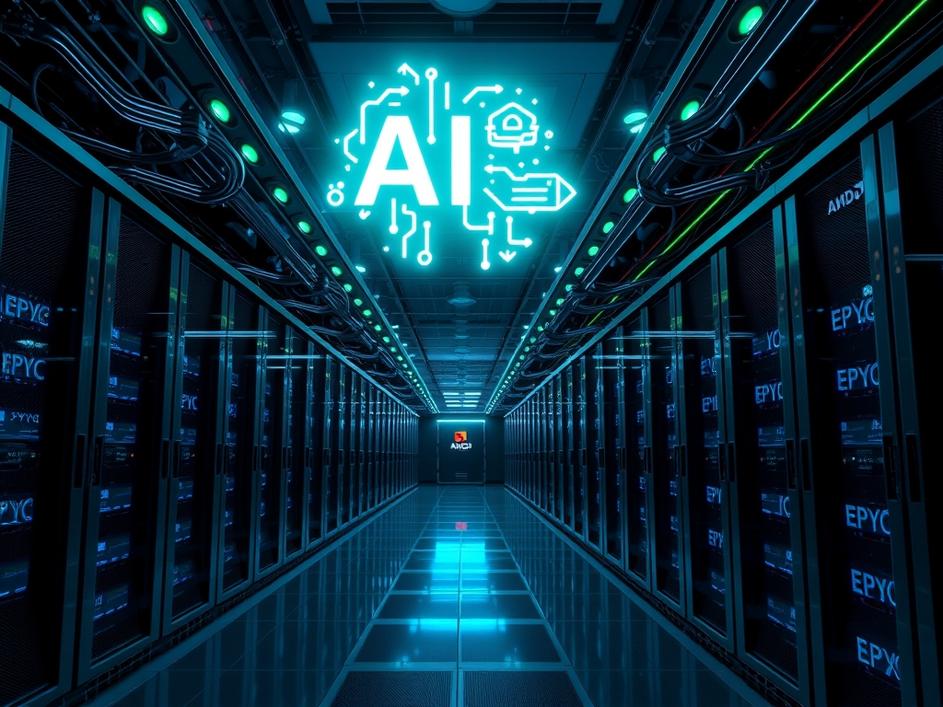
The server arena has become a crowded playground. Intel still holds the largest slice, but its growth has slowed as customers diversify. Nvidia dominates the GPU side, yet its pricing and power draw keep some buyers looking for cheaper, more power‑efficient options. In this environment, AMD’s EPYC line offers a blend of high core counts and lower total cost of ownership. Cloud giants like Amazon and Microsoft have already begun to mix AMD silicon into their fleets, citing better performance per watt for certain AI inference tasks. This trend is reflected in the recent uptick in AMD’s market share, which suggests that the company is not just a niche player but a contender for a larger role in the server ecosystem.
What sets AMD apart right now is its focus on integrating AI capabilities directly into its CPUs. The latest generation of EPYC processors includes built‑in matrix extensions that accelerate common AI kernels without needing a separate GPU. This approach reduces latency and cuts down on the number of chips a data center has to manage. Moreover, AMD’s partnership with major OEMs has accelerated the rollout of these chips in next‑gen servers. The company also announced a roadmap that promises even larger core counts and higher memory bandwidth by 2028, aiming to keep pace with the ever‑growing models used for large language processing. If these plans stay on track, AMD could capture a bigger slice of the AI‑driven server market.
The balance sheet tells a story of steady improvement. Revenue from the enterprise segment grew by double digits last quarter, largely driven by server sales. Gross margins have edged higher as the mix shifts toward higher‑margin EPYC chips. Analysts at Simply Wall St note that the stock’s valuation is still modest compared with its growth trajectory, giving it room to appreciate if the AI narrative sticks. Cash flow remains strong, allowing AMD to fund R&D without diluting shareholders. However, the market still prices in a lot of optimism, so any slowdown in AI spending could put pressure on the share price.
No story is complete without a look at the downsides. Supply chain hiccups could delay the rollout of the newest EPYC silicon, especially as foundries juggle demand from multiple customers. Competition remains fierce; Intel is rolling out its own AI‑enhanced Xeon line, and Nvidia continues to dominate the GPU market with its Hopper architecture. If cloud providers decide that a heterogeneous mix of CPUs and GPUs offers the best performance, AMD might end up as a complementary piece rather than a primary driver. Additionally, macro‑economic headwinds could curb data‑center expansion, which would affect all server vendors.
Looking ahead, the key question is whether AMD can turn its current share gain into a sustainable advantage. The company has the technical roadmap and the early customer wins to suggest it can. Yet it must navigate supply constraints and stay ahead of Intel’s AI push. For investors who believe AI will keep expanding the data‑center footprint, AMD offers a compelling play that balances growth potential with a relatively reasonable price tag. For the tech community, the rise of AMD in the server space signals more competition, which should lead to better performance and lower costs for everyone. In short, the recent share increase is a useful barometer of how seriously the market takes AMD’s AI story, and it could be the first sign of a longer‑term shift.
Source: Original Article

Comments are closed