

We are a digital agency helping businesses develop immersive, engaging, and user-focused web, app, and software solutions.
2310 Mira Vista Ave
Montrose, CA 91020

2500+ reviews based on client feedback
What's Included?
ToggleAndrew Yang might not have become president, but he certainly sparked important conversations. Back in 2020, when most politicians were focused on traditional issues, Yang was sounding the alarm about something many dismissed as science fiction: the rapid advancement of artificial intelligence and its potential impact on jobs. He wasn’t just throwing out buzzwords; he was talking specifics, like the displacement of truck drivers and retail workers by automation. Now, years later, his warnings seem less like futuristic predictions and more like urgent realities.
Yang’s recent interview highlights that his 2020 campaign was not just about winning an election. It was about bringing crucial issues to the forefront of the national conversation. He knew the concerns of the average American were often overlooked. One of these major worries was job security, a concept now heavily influenced by the looming presence of AI. It appears he ran to educate as much as to win, and that makes him unique.
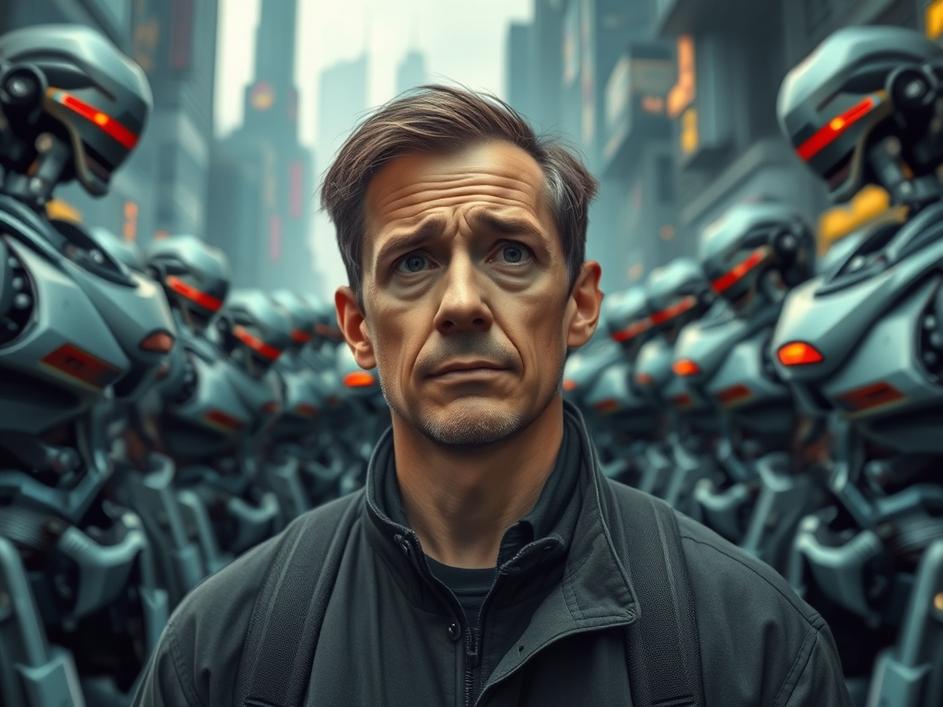
One of the most significant points Yang makes is the potential for massive job displacement due to AI. It’s easy to think of AI as just another technological advancement, like the internet or smartphones. However, the difference is that AI has the capability to perform tasks previously thought to be exclusive to human workers. This is not just about manufacturing jobs anymore. AI is starting to encroach on white-collar professions as well. Consider AI writing code, creating marketing copy, or even assisting in medical diagnoses. These advancements threaten to automate vast portions of the workforce, and the consequences could be severe.
Yang doesn’t just highlight the problem. He suggests proactive solutions. A universal basic income (UBI) was a cornerstone of his 2020 platform. While some dismissed it as unrealistic, Yang argued that UBI could provide a safety net for workers displaced by automation. It’s an idea that warrants serious consideration. Imagine a world where millions of people are suddenly out of work because robots can do their jobs better and cheaper. How do they survive? How do they maintain their dignity and contribute to society? A UBI could be a vital part of the answer.
The potential consequences of AI extend far beyond economics. What happens to society when large numbers of people feel they have no purpose or value? How do we address the psychological impact of widespread joblessness? These are not just academic questions. They are real-world challenges that we need to start addressing now. Yang’s warning also makes me think about the widening gap between the wealthy, who own the AI and the means of production, and everyone else. The need to address the ethical and social impact of rapidly advancing technology is greater than ever before.
Yang emphasizes the urgent need for government intervention. He stresses the importance of education and retraining programs, helping workers adapt to the changing job market. Furthermore, we need to consider regulations to ensure AI is used responsibly and ethically. Who decides what AI can and cannot do? How do we prevent AI from being used to discriminate or manipulate people? These questions need to be answered before AI becomes too powerful to control. I wonder if the government is nimble enough to keep up.
Andrew Yang’s message serves as a wake-up call, especially for those in Washington. He is urging politicians to take the threat of AI seriously. It’s not enough to simply acknowledge the existence of AI; we need to understand its potential consequences and develop strategies to mitigate the risks. Yang has presented many important questions and potential pathways to think about, and it’s vital that elected leaders pay attention to his analysis. We can’t afford to wait until it’s too late. He may have been ahead of his time in 2020, but his concerns are more relevant than ever.
Ultimately, the future of AI depends on the choices we make today. Do we allow AI to control our lives, or do we shape AI to serve humanity? Yang argues for a human-centered approach, where technology empowers individuals and creates a more equitable society. This means investing in education, supporting workers, and ensuring that AI is used for the benefit of all, not just a select few. It’s a vision worth fighting for.
Yang’s reflections on his 2020 campaign and his warnings about AI are a stark reminder that the future is not something that happens to us; it’s something we create. It’s time to take the AI revolution seriously, to engage in thoughtful discussions about its implications, and to take proactive steps to ensure a future where technology and humanity can thrive together. The time to act is now, before AI truly takes over. The robots are coming, and we need to be ready.



Comments are closed