

We are a digital agency helping businesses develop immersive, engaging, and user-focused web, app, and software solutions.
2310 Mira Vista Ave
Montrose, CA 91020

2500+ reviews based on client feedback
What's Included?
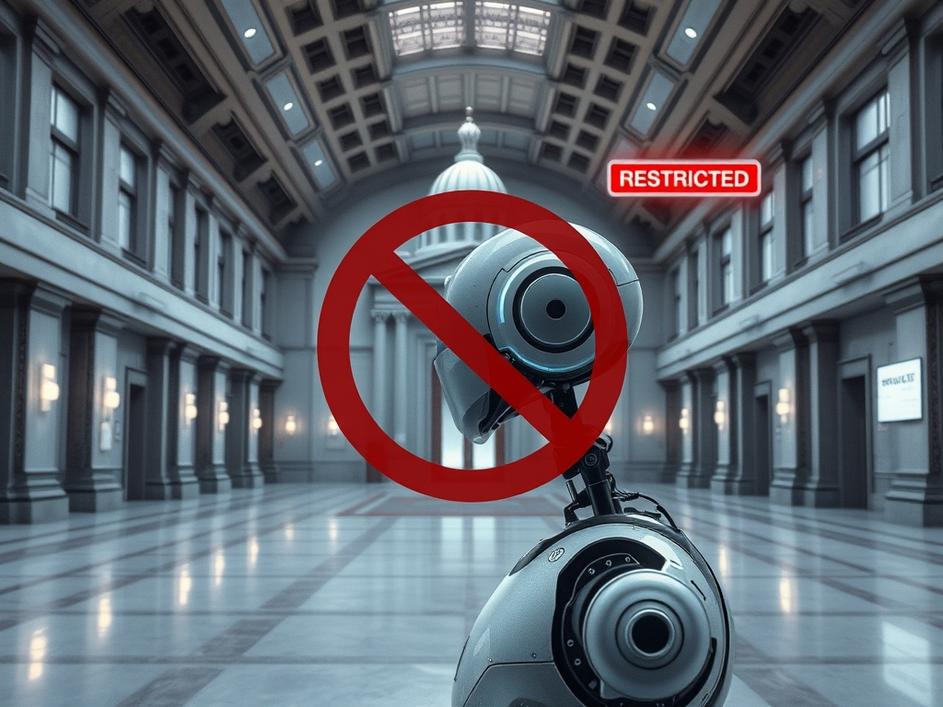
ToggleIn a surprising twist, reports are surfacing that federal agencies are finding ways around a previous administration’s ban on Anthropic’s AI technology to explore its capabilities. This raises a lot of questions. Why was it banned in the first place? What makes Anthropic’s AI so special that agencies are willing to navigate complex restrictions? And what does this mean for the future of AI use in government?
While the specifics of the ban aren’t widely discussed, it likely stemmed from a combination of factors during Donald Trump’s presidency. It is possible that concerns about data security, national security risks, or simply a preference for other AI vendors played a role. Sometimes, these decisions are influenced by political relationships and allegiances, rather than purely technological considerations. The decision to single out Anthropic probably wasn’t random. It’s important to remember that technology policy is often intertwined with political strategy.
So, what is it about Anthropic’s AI that makes it so attractive, even in the face of a ban? It likely boils down to performance and unique features. Anthropic, known for its focus on AI safety and ethics, has developed models that may offer advantages in specific areas, such as natural language processing or complex problem-solving. Federal agencies are constantly looking for ways to improve efficiency and effectiveness. If Anthropic’s technology offers a significant edge, it’s understandable that they’d want to investigate, regardless of previous restrictions. These algorithms could, for instance, help detect cyberattacks or predict logistical problems.
The report suggests that agencies are “skirting” the ban, which implies they are finding loopholes or alternative pathways to access Anthropic’s AI. This might involve using third-party vendors, conducting tests under different classifications, or leveraging existing research agreements. It’s also possible that the ban itself isn’t as absolute as it seems, perhaps containing exceptions for specific use cases or research purposes. Government bureaucracy is complex, and there are often ways to achieve a desired outcome even when faced with seemingly insurmountable obstacles. One thing to keep in mind is that the government is often a testbed for up-and-coming tech, and that might be a way to test it legally.
This situation raises important ethical and policy questions. On one hand, government agencies have a responsibility to explore the best possible tools to serve the public. If Anthropic’s AI can genuinely improve services, it makes sense to investigate its potential. On the other hand, ignoring or circumventing official bans sets a questionable precedent. It undermines the authority of the previous administration and raises concerns about transparency and accountability. Furthermore, it could spark political backlash, with critics accusing the agencies of overreach or partisan bias. The optics of this situation are tricky, and it will be interesting to see how it unfolds. If the performance of Anthropic’s AI is as advertised, it may be worth the political turbulence.
This incident highlights the growing importance of AI in government and the need for clear, consistent policies. As AI technology continues to evolve, governments will increasingly rely on it to improve efficiency, enhance security, and deliver better services. However, it’s crucial that these advancements are implemented responsibly and ethically. That means establishing transparent guidelines, addressing potential biases, and ensuring that AI systems are used in a way that protects privacy and civil liberties. The Anthropic situation serves as a reminder that technology policy is not a static thing. It requires ongoing evaluation and adaptation to keep pace with innovation and changing societal values.
There are obvious security risks in embracing AI, particularly as foreign governments and rogue actors become more sophisticated. Some experts believe that quantum computing will nullify current encryption standards, and AI systems are uniquely suited to help in both offensive and defensive measures. Therefore, AI security is more important than ever. Regulations and best practices are slow to develop, so governments have to be proactive. This is especially crucial given the volume of sensitive data held by the government, which must be protected from theft or manipulation. Furthermore, AI models themselves can be vulnerable to attacks, potentially leading to biased or inaccurate results. It’s imperative that agencies prioritize security when exploring and implementing AI technologies.
The story of federal agencies testing Anthropic’s AI despite a previous ban is a complex one, filled with political intrigue, technological promise, and ethical considerations. It underscores the challenges of navigating the rapidly evolving landscape of AI and the importance of establishing clear, consistent policies that balance innovation with responsibility. As AI becomes more integrated into government operations, it’s crucial that decisions are made transparently and with careful consideration of the potential implications. Whether Anthropic’s AI will ultimately be embraced by the government remains to be seen, but the current situation serves as a valuable case study in the intersection of technology, politics, and public policy.



Comments are closed