

We are a digital agency helping businesses develop immersive, engaging, and user-focused web, app, and software solutions.
2310 Mira Vista Ave
Montrose, CA 91020

2500+ reviews based on client feedback
What's Included?
ToggleApple’s Lockdown Mode, introduced nearly four years ago, is designed to offer extreme protection for users at high risk of targeted cyberattacks. Think journalists, activists, government officials – people who might be in the crosshairs of sophisticated adversaries. The headline? Apple claims that, so far, no one using Lockdown Mode has been successfully hacked. That’s a pretty bold statement in today’s digital landscape, and it raises some interesting questions.
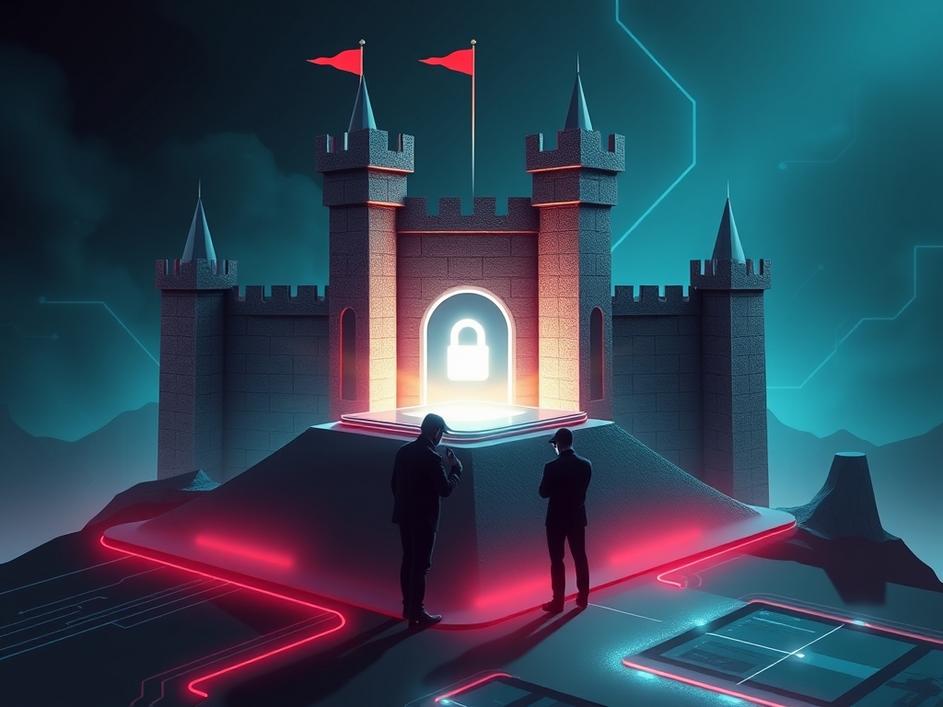
So, what does Lockdown Mode actually *do*? It’s not just a marketing gimmick. It drastically restricts certain iPhone, iPad, and Mac functionalities. Web browsing gets tougher, with complex web technologies often blocked. Message attachments, other than images, are verboten. Incoming FaceTime calls from unknown numbers? Gone. Shared albums? Nope. Device connections to computers or accessories are heavily restricted when the device is locked. It’s essentially a digital bunker for your device, sacrificing convenience for security.
Before we declare Apple the undisputed champion of cybersecurity, let’s pump the brakes. The fact that *no one* has *reported* a successful hack while using Lockdown Mode doesn’t mean it’s impossible. It simply suggests it’s a very high hurdle. Sophisticated attackers, especially those employed by nation-states, are constantly evolving their methods. It’s also important to remember that Lockdown Mode is a relatively niche feature. The vast majority of Apple users probably don’t even know it exists, let alone use it. This means the attack surface, from a hacker’s perspective, is much smaller than the general iOS or macOS environment. Less usage means fewer opportunities to find vulnerabilities specific to Lockdown Mode.
Apple’s claim, even with the caveats, is significant. It highlights the effectiveness of a defense-in-depth strategy. By layering multiple security measures and aggressively restricting functionality, Apple has created an environment that is demonstrably harder to compromise. This has implications for security beyond just Lockdown Mode. It reinforces the idea that sacrificing some convenience can lead to significant gains in security, and it encourages other tech companies to explore similar approaches. Further, it puts pressure on the hacking community. If Lockdown Mode truly is as effective as Apple suggests, it forces attackers to expend significantly more resources and develop more sophisticated exploits to target even a single user. That increased cost makes mass exploitation far less viable.
The cybersecurity landscape is a never-ending game of cat and mouse. Apple develops new security features, and hackers find ways around them. Lockdown Mode is a powerful tool, but it’s not a magic bullet. It’s a snapshot in time. The techniques used by attackers today will likely be different tomorrow. So, what’s next? We can anticipate attackers focusing on social engineering tactics to trick users into disabling Lockdown Mode or exploiting vulnerabilities in software *before* Lockdown Mode is enabled. Zero-day exploits, which target previously unknown vulnerabilities, will always be a threat. And, of course, the weakest link in any security system is often the user. No amount of technological protection can fully compensate for poor security practices. The ongoing challenge for Apple, and indeed for all technology companies, is to stay one step ahead of the attackers, constantly adapting and evolving their security measures. This includes not only improving the technical defenses but also educating users about the risks they face and how to protect themselves.
Beyond the technical details, Lockdown Mode raises important questions about digital privacy and security in a world where governments and corporations have the ability to monitor our every move. The fact that such a feature even *needs* to exist speaks volumes about the threats faced by certain individuals. It’s a reminder that privacy is not a given; it’s something that must be actively protected. Lockdown Mode is a powerful tool for those at risk, but it’s also a symbol of the increasing tension between security, privacy, and convenience in the digital age. As technology continues to evolve, we need to have a serious conversation about how to balance these competing interests and ensure that privacy remains a fundamental right.
So, should the average iPhone user start using Lockdown Mode? Probably not. The restrictions it imposes are significant and would likely be too disruptive for everyday use. However, the underlying principles behind Lockdown Mode – a defense-in-depth strategy, aggressive restriction of unnecessary functionality, and a focus on minimizing the attack surface – are valuable lessons for everyone. We can all improve our security by being more mindful of the apps we install, the links we click, and the information we share online. Even simple steps, like enabling two-factor authentication and using strong passwords, can make a big difference. Lockdown Mode is an extreme measure for extreme circumstances, but it serves as a powerful reminder that security is a choice, and we all have a role to play in protecting ourselves.
Apple’s success with Lockdown Mode, while not absolute, points to a future where devices are inherently more secure. As technology advances, we can expect to see more sophisticated security features built into our devices by default. Features that are today considered ‘extreme’ might become commonplace. Ultimately, the goal should be to create a digital environment where security is seamless, transparent, and doesn’t require users to sacrifice convenience. While that future is still a ways off, Apple’s Lockdown Mode is a significant step in the right direction. It’s a reminder that security is not just an afterthought; it’s a fundamental requirement in a world increasingly defined by technology.


Comments are closed