

We are a digital agency helping businesses develop immersive, engaging, and user-focused web, app, and software solutions.
2310 Mira Vista Ave
Montrose, CA 91020

2500+ reviews based on client feedback
What's Included?
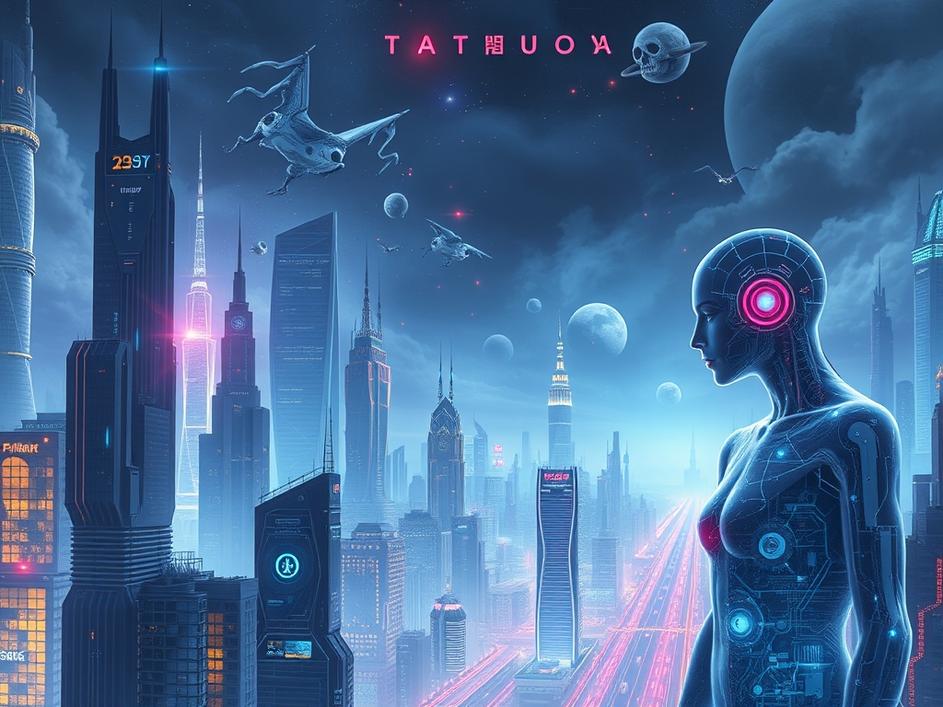
ToggleWe hear a lot about artificial intelligence these days, but lurking beneath the surface of self-driving cars and helpful chatbots is a more radical idea: transhumanism. This philosophy, embraced by some influential figures in the tech world, envisions a future where humans transcend their biological limitations through technology. It sounds like science fiction, but key players like Elon Musk, Peter Thiel, and Sam Altman are investing heavily in technologies that could fundamentally alter what it means to be human.
One of the most mind-bending aspects of transhumanism is the pursuit of “consciousness uploading.” The idea is simple, at least in theory: scan your brain, digitize your thoughts and memories, and transfer them to a computer. Voila, immortality! Sam Altman, for example, has reportedly invested in research exploring this concept. The implications are staggering, and frankly, a little unsettling. Imagine a world where our minds exist as software, bouncing between servers and potentially living forever. But what would that existence even *be*? Would it still be *you*?
Elon Musk’s Neuralink takes a different, but equally ambitious, approach. Instead of uploading consciousness, Neuralink aims to create a direct interface between the human brain and computers. Think of it as a supercharged brain-computer interface that enhances our cognitive abilities, allowing us to learn faster, communicate telepathically, and perhaps even control devices with our minds. Musk envisions a future where humans and AI are so deeply intertwined that we become, in effect, cyborgs. And while the initial applications focus on treating neurological disorders, the long-term potential stretches far beyond medicine, raising serious questions about equity and access. Will brain enhancements be available to everyone, or just the wealthy elite? The societal implications are massive.
Peter Thiel’s interest in transhumanism stems from a desire to overcome death itself. He has invested in anti-aging research and technologies aimed at extending human lifespans significantly. While living longer is a common desire, Thiel’s pursuit of radical life extension raises ethical dilemmas. What are the environmental consequences of a population that lives for centuries? How would it affect social structures and resource allocation? And perhaps most importantly, is immortality something we should even strive for? Death, after all, is a fundamental part of the human experience, giving life meaning and urgency.
It’s easy to dismiss transhumanism as a fringe movement or a futuristic fantasy. But when powerful and influential figures are pouring billions of dollars into these technologies, it’s time to pay attention. The potential benefits of these advancements are undeniable. Imagine curing diseases, enhancing our cognitive abilities, and extending our healthy lifespans. But these possibilities come with significant risks. Who decides how these technologies are used? How do we ensure equitable access? And perhaps most fundamentally, what are the long-term consequences of altering the very nature of what it means to be human?
As we stand on the cusp of a potentially transformative era, it’s crucial to engage in a thoughtful and open discussion about the ethical implications of transhumanism. We need to develop clear guidelines and regulations to ensure that these technologies are used responsibly and for the benefit of all humanity, not just a select few. The future is not predetermined. It’s up to us to shape it. We need to consider the societal impact of these technologies and proceed with caution, ensuring that our pursuit of progress doesn’t come at the cost of our humanity. The conversation needs to move beyond the tech circles and into the public sphere, involving ethicists, policymakers, and everyday citizens. Only then can we hope to navigate the complex challenges and opportunities that lie ahead.
The core question at the heart of the transhumanist debate is simple, yet profoundly complex: what does it mean to be human? Is it our biological form, our capacity for emotion, our mortality? Or is it something more, something that can be transferred, enhanced, or even transcended through technology? The answers to these questions will shape the future of our species, and it’s a conversation we need to start having now, before the cyborg future arrives.


Comments are closed