

We are a digital agency helping businesses develop immersive, engaging, and user-focused web, app, and software solutions.
2310 Mira Vista Ave
Montrose, CA 91020

2500+ reviews based on client feedback
What's Included?
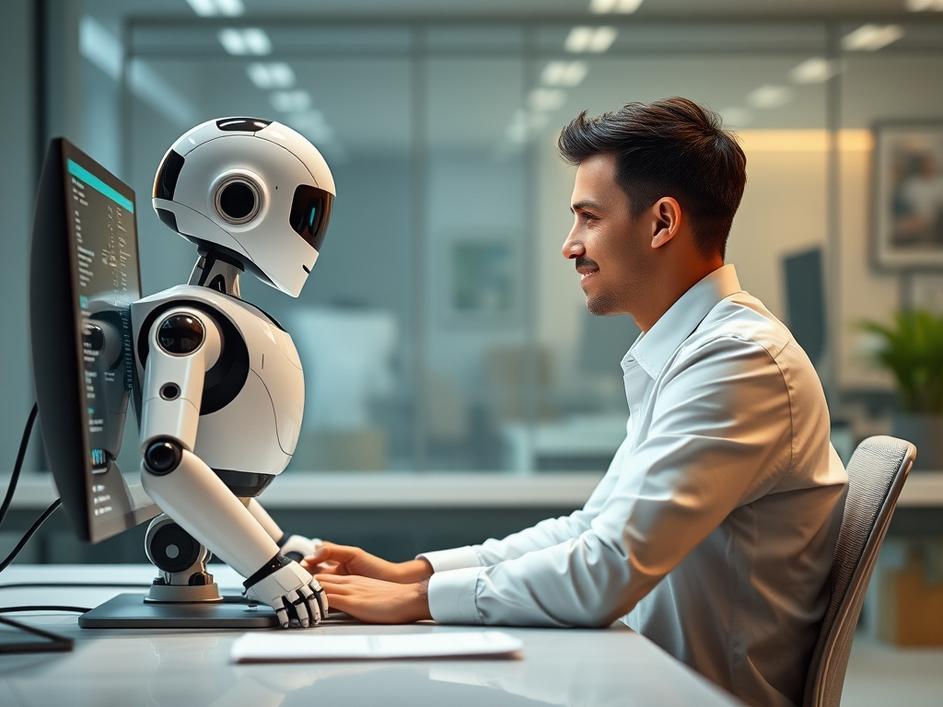
ToggleIt’s interesting to see how people’s use of AI assistants is evolving. We’re moving beyond simple commands to a place where humans and AI are really working together. Rajesh Kumar’s experience with Microsoft 365 Copilot provides a great example. He started with basic prompts but now uses the tool in a much more integrated way. This suggests a broader trend: AI isn’t just a tool for quick answers; it’s becoming a collaborative partner.
Kumar’s journey highlights how our interaction with AI is changing. At first, he used short, simple questions. Now, he’s crafting more detailed prompts, indicating a deeper understanding of the AI’s capabilities and a willingness to explore its potential. This kind of progression is key. To really get the most out of these tools, we need to learn how to communicate effectively with them, refining our approach as we go. The more specific and thoughtful the input, the better the output.
One of the most exciting aspects of AI assistants is their ability to boost creativity and productivity. Kumar uses Copilot to brainstorm ideas and generate different versions of documents. This frees him from some of the more tedious aspects of his work, allowing him to focus on higher-level thinking and strategy. It also opens up new avenues for creativity, as the AI can suggest ideas that he might not have considered on his own. However, it’s crucial to remember that these are just suggestions, it still requires a human mind to evaluate them.
Even with increasingly sophisticated AI, human oversight remains crucial. Kumar emphasizes the importance of reviewing and refining the AI’s output. These tools are powerful, but they’re not perfect. They can make mistakes, misinterpret information, or produce results that are simply not appropriate. A human eye is needed to ensure accuracy, relevance, and ethical considerations are met. The key is to view AI as an assistant, not an autopilot.
AI tools have the potential to be an equalizer in the workplace. By automating routine tasks and providing access to information and insights, they can help level the playing field for individuals and smaller organizations. Those who may lack resources or specialized expertise can gain a competitive edge by using AI to augment their capabilities. However, access and training are important. There’s a risk of a digital divide if some don’t have the knowledge or availability of these technologies.
The most important lesson is that collaboration between humans and AI is key to success. AI assistants are not meant to replace humans, but rather to work alongside us, augmenting our abilities and helping us achieve more. By embracing this collaborative approach, we can unlock new levels of productivity, creativity, and innovation. We’ll be able to handle our jobs more efficiently and effectively by working with, instead of against, AI tools.
Looking ahead, we can expect to see even more sophisticated AI assistants integrated into our work lives. These tools will become more intuitive, more personalized, and more seamlessly integrated into our workflows. They will be able to anticipate our needs, provide proactive support, and learn from our interactions. As AI continues to evolve, it will be imperative for individuals and organizations to embrace lifelong learning and adapt to the changing demands of the workplace.
While the potential benefits of AI assistants are significant, it’s important to also acknowledge the challenges and considerations. Data privacy, security, and ethical use are paramount. We need to ensure that AI systems are developed and deployed in a responsible manner, with appropriate safeguards in place to protect individuals and society. Transparency and accountability are essential. Users need to understand how AI systems work and how their data is being used. We need to create rules and have conversations about the role of AI.
Rajesh Kumar’s experience with Microsoft 365 Copilot offers a glimpse into the future of work, a future where humans and AI collaborate to achieve more than either could alone. It showcases the potential for AI to boost creativity, productivity, and innovation, but also highlights the importance of human oversight and ethical considerations. As AI continues to evolve, it will be vital for individuals and organizations to embrace lifelong learning, adapt to change, and work together to ensure that AI benefits everyone. The integration of AI is still pretty new, but AI tools can change how we conduct business.


Comments are closed