

We are a digital agency helping businesses develop immersive, engaging, and user-focused web, app, and software solutions.
2310 Mira Vista Ave
Montrose, CA 91020

2500+ reviews based on client feedback
What's Included?
ToggleArtificial intelligence is making impressive strides. We’re seeing AI systems that can forecast trends, anticipate needs, and even predict our next moves with increasing accuracy. The cost of prediction, thanks to AI, is plummeting. This might seem like we’re on the verge of creating truly intelligent machines. But is prediction really the same thing as intelligence? I think not. While prediction is a valuable tool, it’s just one piece of a much larger puzzle.
Prediction, at its core, is about identifying patterns and extrapolating them into the future. AI algorithms excel at this because they can process vast amounts of data and identify correlations that humans might miss. For example, an AI can analyze your past purchases and predict what you’re likely to buy next. This is useful for targeted advertising and personalized recommendations. But understanding why you made those purchases, the motivations behind them, and the context surrounding them – that requires a deeper level of comprehension that goes beyond mere prediction.
True intelligence involves judgment, reasoning, and the ability to adapt to novel situations. It’s about understanding the nuances of a situation, considering ethical implications, and making informed decisions even when the data is incomplete or contradictory. Prediction, on the other hand, is limited by the data it’s trained on. It can only predict based on what it has already seen. If a situation falls outside of its training data, its predictions are likely to be inaccurate or even nonsensical. This is where human intelligence shines. We can draw on our past experiences, our knowledge of the world, and our capacity for empathy to make informed decisions in complex and uncertain situations.
Intelligent decision-making requires more than just predicting potential outcomes. It also involves evaluating those outcomes, weighing the risks and benefits, and choosing the course of action that best aligns with our goals and values. Consider a self-driving car. It can predict the movements of other vehicles and pedestrians. But it also needs to make split-second decisions about how to react to those movements. Should it brake hard, swerve to avoid an obstacle, or accelerate to merge into traffic? These decisions require a complex interplay of prediction, reasoning, and judgment – capabilities that are still largely beyond the reach of current AI systems. And in cases of moral dilemmas, the AI would not be able to make a decision based on an ethical framework, unlike a human.
There’s a risk in over-relying on AI-powered prediction. If we start to blindly trust AI predictions without questioning them or applying our own judgment, we could end up making poor decisions. We might also become overly dependent on AI, losing our ability to think critically and solve problems on our own. It’s important to remember that AI is a tool, not a replacement for human intelligence. We should use AI to augment our abilities, not to supplant them. A healthy dose of skepticism and a commitment to critical thinking are essential to ensure that we use AI wisely and ethically.
The future of AI lies not in creating machines that can perfectly predict the future, but in creating tools that can help us make better decisions. AI can provide us with valuable insights, identify potential risks and opportunities, and automate routine tasks. But ultimately, it’s up to us to use that information to make informed judgments and take responsible actions. Instead of striving to create artificial general intelligence (AGI) that can replicate all aspects of human intelligence, we should focus on developing AI systems that can augment our existing capabilities and help us solve real-world problems.
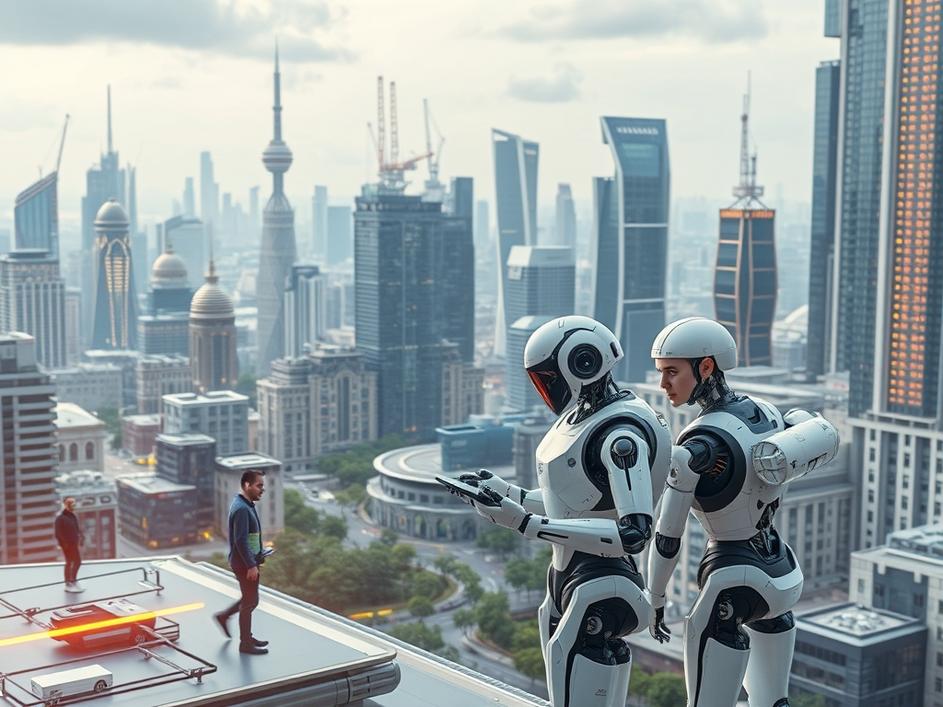
As AI continues to evolve, we must resist the temptation to view it as a replacement for human intelligence. Instead, we should embrace the potential for a powerful partnership. By combining the predictive power of AI with the critical thinking, judgment, and creativity of humans, we can unlock new levels of innovation and progress. This requires a shift in mindset, from viewing AI as a threat to viewing it as a valuable collaborator. Only then can we truly harness the transformative potential of AI and create a future where humans and machines work together to solve the world’s most pressing challenges.
Ultimately, intelligence is more than just crunching numbers and spitting out predictions. It’s about understanding the world around us, connecting with others, and making a positive impact. While AI can undoubtedly play a significant role in shaping our future, it’s crucial to remember that human intelligence – with its capacity for empathy, creativity, and critical thinking – will always be essential. Let’s not confuse prediction with intelligence, and let’s ensure that we use AI to enhance, not diminish, our human capabilities.



Comments are closed