

We are a digital agency helping businesses develop immersive, engaging, and user-focused web, app, and software solutions.
2310 Mira Vista Ave
Montrose, CA 91020

2500+ reviews based on client feedback
What's Included?
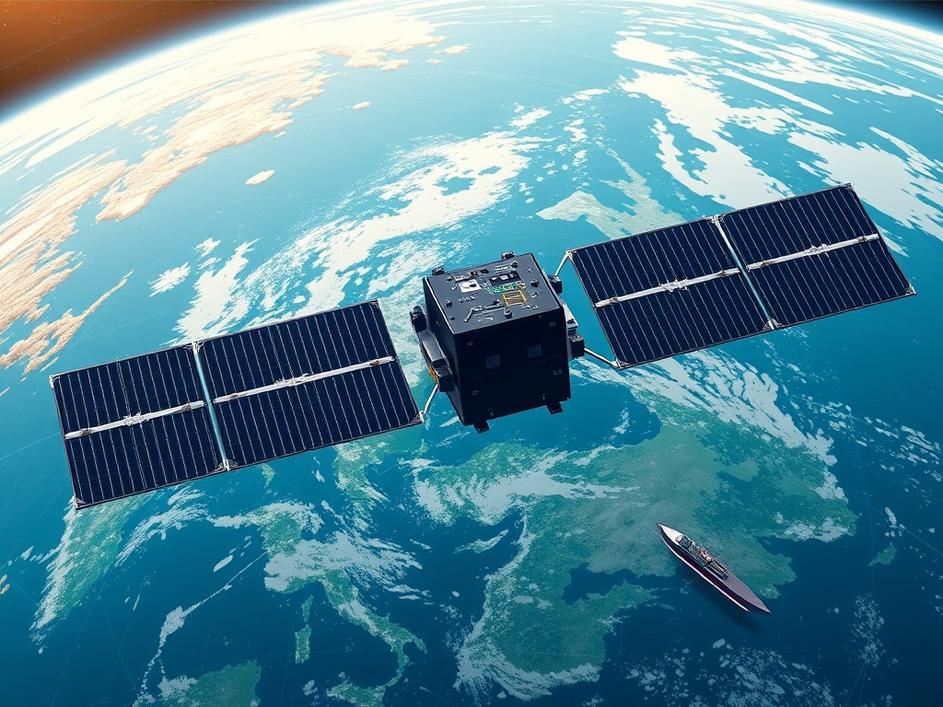
ToggleThe world of the Internet of Things (IoT) just got a major boost. Rapidtek Technologies Inc., a company specializing in space communication modules and phased-array antenna tech, successfully launched its Black Kite-1 satellite. This isn’t just another satellite launch; it’s a significant step towards building a Low Earth Orbit (LEO) constellation designed to revolutionize IoT connectivity across the globe. The launch, conducted in collaboration with Taiwan’s space agency, TASA, marks a pivotal moment for Rapidtek and the broader IoT landscape. Rapidtek’s launch contributes to expanding IoT infrastructure and its reach across the globe.
So, why is a LEO constellation such a big deal for IoT? LEO satellites orbit much closer to Earth than traditional geostationary satellites. This proximity translates to lower latency and better signal strength, critical factors for many IoT applications. Think about sensors monitoring remote infrastructure, tracking assets across vast distances, or enabling real-time data collection in agriculture. These applications demand reliable, low-latency connectivity, something that LEO constellations are uniquely positioned to provide. The Black Kite-1 is equipped with advanced communication modules and phased-array antenna technologies, which are designed to optimize signal transmission and reception, ensuring seamless connectivity for a wide range of IoT devices.
Rapidtek isn’t just throwing another satellite into space. They’re bringing their deep expertise in space communication modules and phased-array antenna technologies to bear. These technologies are crucial for maximizing the performance and efficiency of the Black Kite-1 satellite. Phased-array antennas, for example, allow for beam steering, which means the satellite can focus its signal on specific areas, improving signal strength and reducing interference. Their focus on space communication modules also ensures the satellite is equipped with the latest technology for transmitting and receiving data. That expertise is what sets Rapidtek apart.
The successful launch of Black Kite-1 has implications that extend far beyond Rapidtek. It represents a significant step towards creating a more connected world. Imagine a world where remote sensors can monitor environmental conditions in real-time, providing valuable data for climate research. Consider the possibilities for precision agriculture, where sensors can optimize irrigation and fertilization, leading to increased yields and reduced waste. And think about the potential for improved logistics and supply chain management, where assets can be tracked with pinpoint accuracy across the globe. Black Kite-1 is expected to enhance IoT service coverage, especially in areas with limited or no existing connectivity. It will provide connectivity to devices in remote locations such as maritime, agriculture and environmental monitoring.
Of course, building a global LEO IoT constellation is not without its challenges. One major hurdle is the cost. Launching satellites and maintaining a constellation requires significant investment. Another challenge is managing interference and ensuring reliable connectivity across a diverse range of devices and environments. Plus, there’s the regulatory landscape, which is constantly evolving. Rapidtek will need to navigate these challenges carefully as they continue to build out their constellation. Despite these challenges, the potential rewards are enormous. Black Kite-1 is just the first step, and Rapidtek has plans to launch more satellites in the coming years, further expanding the reach and capabilities of their IoT network.
The launch of Black Kite-1 is more than just a technological achievement; it’s a glimpse into the future of global connectivity. It demonstrates the power of innovation to solve real-world problems and create new opportunities. As Rapidtek continues to build out its LEO IoT constellation, we can expect to see even more innovative applications emerge, transforming industries and improving lives around the world. This successful launch is not only a win for Rapidtek and TASA, but also a win for the global IoT community. The expansion of IoT infrastructure is essential for advancing IoT technologies to their full potential. This marks the beginning of a new era of possibilities and a more connected world.



Comments are closed