

We are a digital agency helping businesses develop immersive, engaging, and user-focused web, app, and software solutions.
2310 Mira Vista Ave
Montrose, CA 91020

2500+ reviews based on client feedback
What's Included?
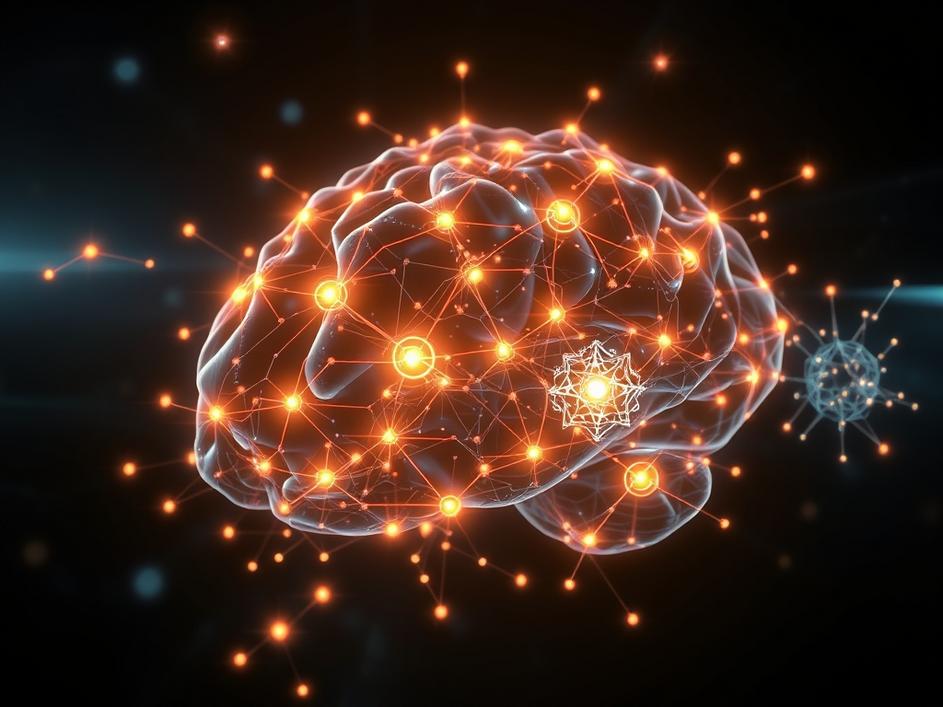
ToggleAI has come a long way. We see it everywhere, from our phones helping us with tasks to big data centers powering complex operations. Right now, a lot of the talk is about really big AI models, like the ones that can write stories or answer complex questions. These models are powerful, but they work in a sort of massive, all-encompassing way. They are designed to do many things at once, using a single, gigantic neural network. But what if there’s a different path? A new idea is bubbling up, one that suggests we build AI not as one giant brain, but as many smaller, specialized “minds” working together, tucked inside each other like Russian dolls. This approach, often called “nesting minds,” is sparking a lot of interest. It could change how we think about and build intelligent systems, making them smarter and perhaps even more flexible in the long run.
Think of it like this: instead of one huge brain trying to do everything, you have a main brain that oversees a whole team of smaller, expert brains. Each of these smaller brains specializes in one thing. For example, in an AI designed to understand a complex legal document, one “nested mind” might focus only on identifying legal terms, another on understanding clauses, and yet another on spotting contradictions. These smaller units aren’t just random subroutines; they’re like mini-AIs with their own ways of thinking and processing information. The big AI then takes the insights from all these specialized “minds” and puts them together to form a complete picture. It’s a bit like a highly organized committee where each member has deep knowledge in a specific area, and their combined wisdom leads to a better overall decision. This contrasts with current monolithic large language models (LLMs) which try to handle all tasks with a single, vast architecture.
There are some really good reasons why building AI this way could be a big deal. For starters, it makes AI more focused. When an AI doesn’t have to be a jack-of-all-trades, it can become really good at its specific job. This could mean more accurate results and fewer mistakes in complex tasks. Also, if something goes wrong, it might be easier to figure out which “nested mind” is causing the problem, rather than trying to debug one massive, tangled system. It also brings a level of adaptability. Imagine if you want your AI to learn a new skill; you might just need to add or update one of its specialized “minds” instead of retraining the entire colossal model. This modularity means we can fine-tune different parts without affecting the whole. This approach mirrors how our own brains work, with different areas handling vision, language, memory, and so on, all working together for a unified experience.
Of course, it’s not all smooth sailing. Getting these “nested minds” to talk to each other effectively is a huge challenge. How do they share information? How does the main AI know which “mind” to consult for a particular problem? We need smart ways to coordinate them, making sure they don’t step on each other’s toes or, even worse, misunderstand each other. This is often called the ‘orchestration problem’ – making sure all the different parts play together nicely. There’s also the question of efficiency. Running many mini-AIs at once could take a lot of computing power. We’d need clever ways to make sure this layered approach doesn’t slow everything down or use up too many resources. It’s like managing a huge orchestra; everyone needs to play in tune and follow the conductor, or it just sounds like noise. Developing robust communication protocols and efficient resource allocation will be key to making this concept work in practice.
If we can get this “nesting minds” idea right, the possibilities are truly exciting. Think about self-driving cars. Instead of one AI trying to do everything from recognizing traffic lights to predicting pedestrian movements, you could have specialized “minds” for each task, all feeding information to a central decision-maker. This could make these systems much safer and more reliable. Or imagine AI helpers for doctors, where different “minds” analyze different aspects of a patient’s data, providing a more comprehensive view. This modular approach could also open doors for AI to tackle even more complex scientific problems or create truly novel artistic works, tasks where current large models sometimes struggle with nuanced understanding. It could lead to AI that is more robust in unpredictable real-world situations, as specialized units can handle specific anomalies better.
From my perspective, this “nested minds” concept feels like a really intuitive step forward in AI development. It moves us away from just making bigger and bigger models, and instead focuses on smarter, more organized architecture. It feels more akin to how biological intelligence works – with specialized modules interacting to create complex thought. If we can master the art of nesting these “minds,” we might get closer to AI that doesn’t just process information but genuinely understands and adapts in ways we’re still figuring out. It might also help us build AI that is more transparent, where we can better trace how decisions are made, moving away from the “black box” problem that sometimes plagues today’s super-large models. This isn’t just about adding more raw power; it’s about better, more elegant design, and that’s a big deal for the future of artificial intelligence. It suggests a path toward more explainable and trustworthy AI systems.
So, the idea of “nesting minds” inside AI layers is a truly fascinating one. It’s a fresh way to think about how we build intelligence, moving towards systems that are not just powerful, but also specialized, adaptable, and potentially easier to manage. While there are definitely challenges to work through, the promise of more robust, nuanced, and perhaps even more “human-like” AI is a strong motivator. This isn’t just a small tweak; it could be a fundamental shift in how we approach the very nature of artificial intelligence, bringing us closer to truly intelligent machines. It’s an exciting time to watch these ideas unfold and see where this innovative path leads us next.



Comments are closed