

We are a digital agency helping businesses develop immersive, engaging, and user-focused web, app, and software solutions.
2310 Mira Vista Ave
Montrose, CA 91020

2500+ reviews based on client feedback
What's Included?
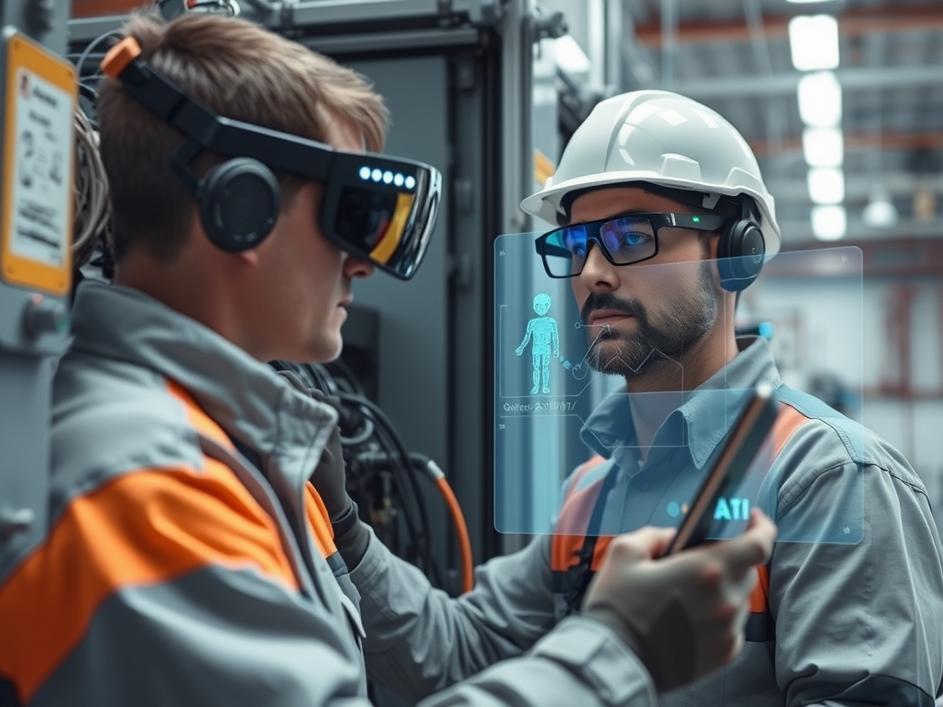
ToggleArtificial intelligence is making waves in practically every industry, and field service is no exception. Imagine a world where technicians arrive at your doorstep equipped not just with tools, but also with the power of AI to diagnose problems faster, order the right parts instantly, and get your equipment back up and running with minimal fuss. That’s the promise that companies like C3.ai are hoping to deliver, and their recent partnership with Vonage aims to bring that vision closer to reality.
C3.ai, a company specializing in enterprise AI applications, is joining forces with Vonage, a well-known name in cloud communications. The idea is to integrate C3.ai’s AI-powered platform with Vonage’s communication tools to improve field service operations. This means that when a customer calls to report a problem, AI can help diagnose the issue, schedule a technician, and even provide the technician with real-time information and guidance during the service call. Think of it as giving every field technician an AI-powered assistant.
So, what’s the big deal? Well, field service is a huge market, encompassing everything from appliance repair to industrial equipment maintenance. Inefficiencies in this area can lead to frustrated customers, wasted time, and increased costs. If AI can streamline these processes, the potential benefits are enormous. For example, AI can analyze data from sensors on equipment to predict when maintenance is needed, preventing breakdowns before they happen. It can also optimize technician routes, ensuring they get to the right place at the right time with the right tools. And by providing technicians with real-time access to information, AI can help them resolve issues more quickly and effectively.
Of course, making this vision a reality is not without its challenges. One of the biggest hurdles is data. AI algorithms need vast amounts of data to learn and improve, and field service operations often involve fragmented data sources and legacy systems. Integrating C3.ai’s platform with Vonage’s communication tools and with the existing systems of field service providers will require significant effort and expertise. Ensuring data privacy and security is also paramount, especially when dealing with sensitive customer information.
The C3.ai and Vonage deal represents a real-world test of whether AI can truly deliver on its promise in the field service industry. While AI has shown great potential in other areas, the complexities of field service, with its unpredictable environments and diverse range of equipment, present unique challenges. The success of this partnership will depend on their ability to overcome these challenges and demonstrate tangible improvements in efficiency, customer satisfaction, and cost savings. The industry will be watching closely to see if this AI-powered approach can truly transform the way field service is delivered.
It’s easy to get caught up in the hype surrounding AI, but it’s important to focus on the practical benefits. In the context of field service, this means using AI to solve specific problems and improve existing processes, not just for the sake of using AI. For example, AI can be used to optimize technician schedules based on their skills and availability, or to provide them with step-by-step instructions for repairing complex equipment. By focusing on these types of concrete applications, companies can avoid the pitfalls of over-promising and under-delivering.
This collaboration could signify a shift in how we approach fixing things. Imagine a world where your appliances essentially fix themselves, guided by AI and supported by readily available technicians who are empowered by data. It’s an exciting prospect, and the C3.ai and Vonage partnership is a step towards making that future a reality. Whether or not this specific deal proves to be a resounding success, it highlights the growing importance of AI in field service and the potential for technology to transform the way we maintain and repair the world around us.
Ultimately, the success of any technology in field service hinges on its impact on the customer experience. Will AI make it easier for customers to schedule appointments, track the progress of repairs, and communicate with technicians? Will it lead to faster resolution times and fewer repeat visits? If the answer to these questions is yes, then AI will have proven its worth. But if customers find the AI-powered experience to be cumbersome or impersonal, then the technology will likely fail to gain widespread adoption. The focus must always be on using AI to enhance, not replace, the human element of field service.



Comments are closed