

We are a digital agency helping businesses develop immersive, engaging, and user-focused web, app, and software solutions.
2310 Mira Vista Ave
Montrose, CA 91020

2500+ reviews based on client feedback
What's Included?
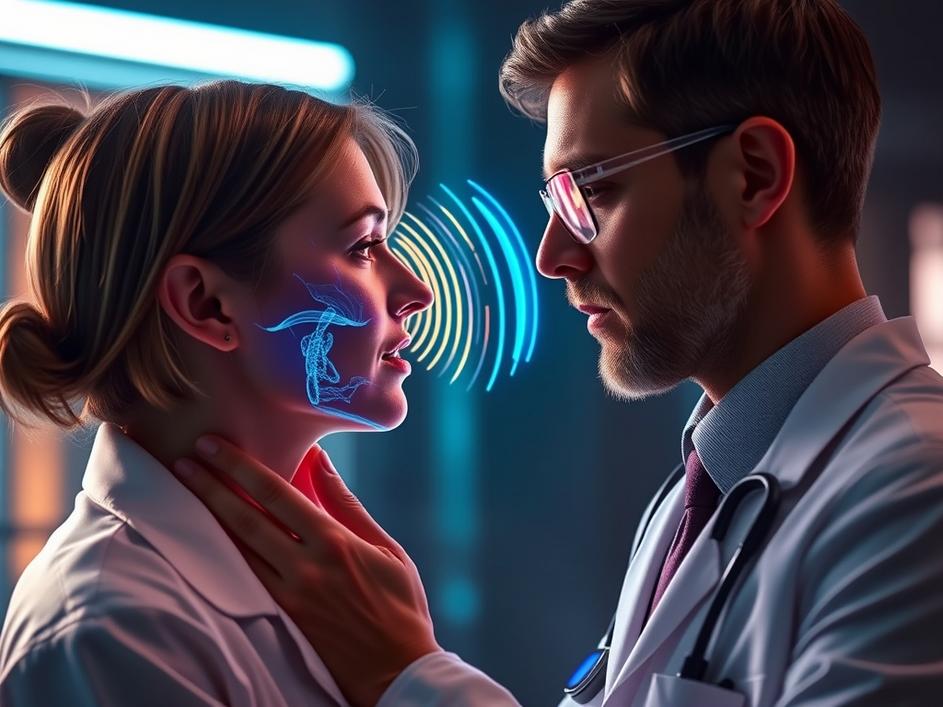
ToggleImagine a future where a simple phone call to your doctor could help detect diseases before they even fully manifest. It sounds like science fiction, right? Well, AIIMS Nagpur is turning that possibility into a potential reality. They’ve launched a fascinating study exploring how artificial intelligence can analyze voice patterns to identify underlying health conditions. This isn’t just about detecting a cold; it’s about potentially uncovering serious illnesses through subtle changes in your voice that a human ear might miss.
The human voice is incredibly complex. It’s influenced by a multitude of factors, from the physical structure of our vocal cords to our emotional state. But it’s also influenced by our health. Diseases can cause subtle changes in our breathing, muscle control, and even the tissues of our throat and mouth, all of which can affect our voice. The AIIMS study aims to identify specific vocal biomarkers – unique patterns or characteristics in the voice – that are associated with different diseases. Think of it like a fingerprint, but for your health, hidden within your speech.
So, how does this AI actually work? It involves training a sophisticated algorithm on a massive dataset of voice recordings from people with various health conditions. The AI learns to recognize subtle differences between healthy and unhealthy voices, and to associate specific vocal patterns with specific diseases. This process requires a lot of data and advanced computing power, but the potential payoff is enormous. By identifying diseases early, doctors can intervene sooner, potentially improving treatment outcomes and saving lives. It is not a replacement for existing diagnosis methods, but it can improve screening efficiency.
The implications of this research extend far beyond the doctor’s office. Imagine wearable devices that constantly monitor your voice and alert you to potential health problems. Or consider the possibilities for remote patient monitoring, especially in underserved areas where access to healthcare is limited. This technology could also be used to screen large populations for specific diseases, allowing for early detection and intervention on a massive scale. The possibilities are truly exciting, but it’s important to approach this technology with careful consideration of privacy and ethical implications.
Of course, there are challenges to overcome. The AI needs to be trained on diverse populations to ensure it’s accurate for everyone. Factors like age, gender, and even accent can influence voice patterns, so the AI needs to be able to account for these variations. And it’s crucial to ensure that the technology is used responsibly and ethically, protecting patient privacy and preventing discrimination. It’s also important to remember that this is just one piece of the puzzle. Voice analysis should be used in conjunction with other diagnostic tools, not as a replacement for them. Further research will be needed, of course.
AIIMS Nagpur’s research is a fascinating glimpse into the future of healthcare. It’s a reminder that technology has the potential to revolutionize the way we diagnose and treat diseases. While challenges remain, the potential benefits of voice-based disease detection are undeniable. As AI continues to advance, we can expect to see even more innovative applications of this technology, transforming the way we understand and care for our health. The use of such technology requires an interdisciplinary approach, involving doctors, AI researchers, and ethicists to ensure that it is implemented effectively and responsibly.
The AIIMS Nagpur initiative, while focused on initial detection, could also assist in monitoring the progression of diseases. For instance, observing changes in voice patterns over time might offer insights into how well a patient is responding to treatment, or whether a condition is worsening. This longitudinal data could be invaluable for personalized medicine approaches, allowing doctors to tailor treatments based on real-time feedback from the patient’s voice. Furthermore, the development of voice-based diagnostic tools could significantly reduce the burden on healthcare systems. It offers a non-invasive, cost-effective method for preliminary screenings, potentially reducing the number of patients requiring more expensive and invasive diagnostic procedures. This is particularly relevant in resource-constrained settings where access to advanced medical technology is limited.
As with any AI-driven diagnostic tool, the ethical implications of voice-based disease detection must be carefully considered. One primary concern is data privacy. The collection and analysis of voice data raise questions about who has access to this information, how it is stored, and how it is used. Robust data protection measures are essential to prevent misuse and ensure patient confidentiality. Another ethical consideration is the potential for bias in AI algorithms. If the AI is trained on data that is not representative of the entire population, it may produce inaccurate results for certain demographic groups. It is crucial to address these biases through careful data collection and algorithm design. The practical implementation of voice-based diagnostic tools also presents challenges. Ensuring the accuracy and reliability of the technology requires rigorous testing and validation in diverse clinical settings. Additionally, healthcare professionals need to be trained on how to interpret the results of voice analysis and integrate them into their clinical decision-making. Over-reliance on AI or misinterpretation of results could have serious consequences for patient care.
The AIIMS Nagpur study is a promising step forward in the use of AI for disease detection. While challenges remain, the potential benefits of this technology are significant. As AI continues to evolve, it is likely that voice-based diagnostic tools will become increasingly sophisticated and accurate, playing a growing role in healthcare. However, it is essential to approach this technology with caution, addressing the ethical and practical considerations to ensure that it is used responsibly and effectively for the benefit of all patients.


Comments are closed