

We are a digital agency helping businesses develop immersive, engaging, and user-focused web, app, and software solutions.
2310 Mira Vista Ave
Montrose, CA 91020

2500+ reviews based on client feedback
What's Included?
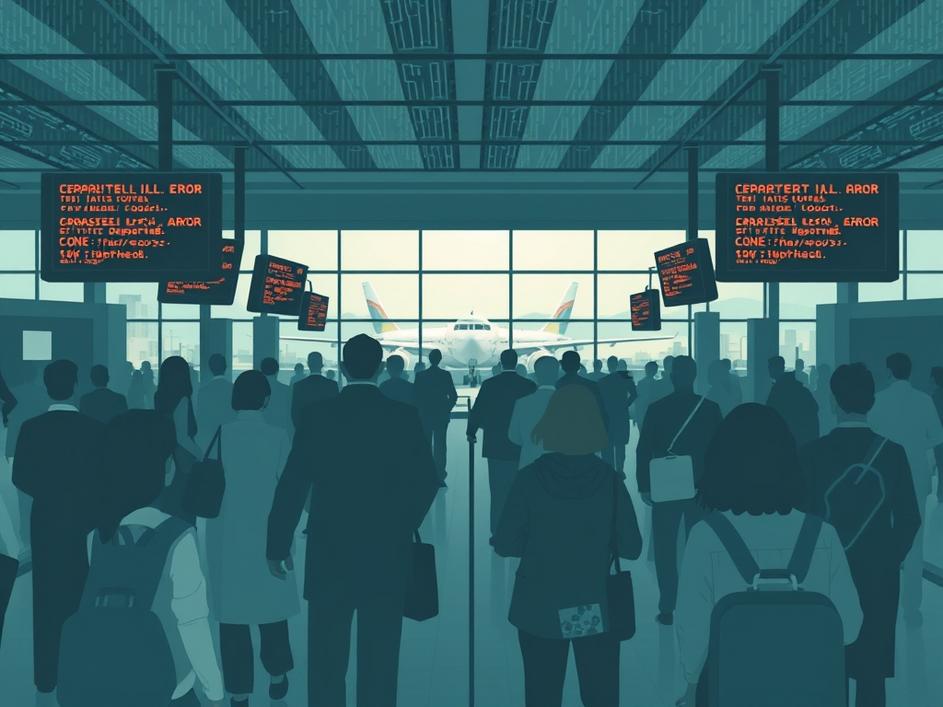
ToggleImagine this: You’re at the airport, bags checked, boarding pass ready. Maybe you’re heading to a big family event, a crucial business meeting, or finally starting that much-needed vacation. Then, suddenly, the screens change. Flights delayed. Then, canceled. Not just one or two, but all of them. Across the entire country. This isn’t some dramatic movie scene; it was the reality for thousands of Alaska Airlines and Horizon Air passengers recently. All because of one thing: a tech outage. One moment, planes were in the air or getting ready to go. The next, a digital hiccup brought everything to a screeching halt. It’s a stark reminder of just how much we rely on invisible lines of code to keep our modern world moving, especially when it comes to something as complex as air travel.
So, what exactly happened? The news points to a widespread technical problem. This wasn’t bad weather or an issue with a plane’s engine. It was a failure in the systems that make an airline run. Think about it: every single step of your journey, from when you book your ticket, to how your luggage gets routed, to the flight plan filed with air traffic control, to the crew schedules, is all managed by computers. If one major part of that digital brain goes offline, the whole body freezes up. It means ground staff can’t check people in, pilots can’t get crucial information, and planes can’t get clearance to take off. It’s like someone unplugging the main router for a massive, intricate network, and the ripple effect spreads across time zones and thousands of miles, leaving confusion and frustration in its wake.
What makes this particular incident stand out even more is that it wasn’t Alaska Airlines’ first tech trouble recently. This marks the second significant IT issue they’ve faced. For anyone who flies often, or for people who depend on an airline to get them where they need to be, repeated tech problems start to chip away at trust. We expect our planes to be safe, but we also expect the entire process of flying to be reliable. When the digital backbone of an airline keeps stumbling, it raises bigger questions. Are enough resources being put into maintaining and upgrading these critical systems? Is there enough redundancy, meaning backup plans, for when things inevitably go wrong? In a business where every minute counts, and where people’s plans and lives are on the line, solid, dependable technology isn’t just a bonus; it’s absolutely essential.
While engineers work furiously behind the scenes to fix the problem, the real impact is felt by the people caught in the middle. Imagine you’re trying to get home for a special occasion, or you’re a business person missing a vital meeting that costs your company money. Maybe you’re connecting to another international flight and now you’ve missed it entirely, facing expensive rebooking and unexpected overnight stays. The stress of being stranded, the scramble to find alternative travel, the frustration of wasted time and money—these are the real human costs of a tech outage. It’s not just about a plane sitting on the tarmac; it’s about missed moments, lost opportunities, and the emotional toll on thousands of travelers who suddenly find their meticulously planned journeys thrown into disarray by something completely out of their control.
This incident with Alaska Airlines isn’t just about one company; it’s a stark reminder of how deeply intertwined our lives are with technology. From our banking to our healthcare, from how we communicate to how we travel, digital systems are the silent, often invisible, engines of modern life. We embrace technology because it brings incredible efficiency and convenience. But with that reliance comes vulnerability. When these complex systems fail, even for a few hours, the consequences can be massive and far-reaching. It pushes us to think about the robustness of all our critical infrastructure. How do we build systems that are not only powerful but also resilient, with strong safeguards and quick recovery plans when the inevitable glitch happens? This event serves as a powerful case study for every industry, not just aviation.
For airlines, and indeed for any major organization heavily dependent on technology, incidents like this ground stop are a wake-up call. It highlights the urgent need for continuous investment in state-of-the-art IT infrastructure, robust cybersecurity measures, and comprehensive disaster recovery plans. It’s about being proactive, not just reactive. Passengers, too, are learning to expect the unexpected in an era where technology is both a blessing and a potential source of disruption. While we hope for smooth journeys, a dose of preparedness, like having travel insurance or backup plans, is becoming more and more sensible. The skies may be filled with incredible machines, but their ability to soar depends entirely on the stability of the digital ground they stand on, a ground that needs constant, careful tending to ensure our trust in air travel remains high.



Comments are closed