

We are a digital agency helping businesses develop immersive, engaging, and user-focused web, app, and software solutions.
2310 Mira Vista Ave
Montrose, CA 91020

2500+ reviews based on client feedback
What's Included?
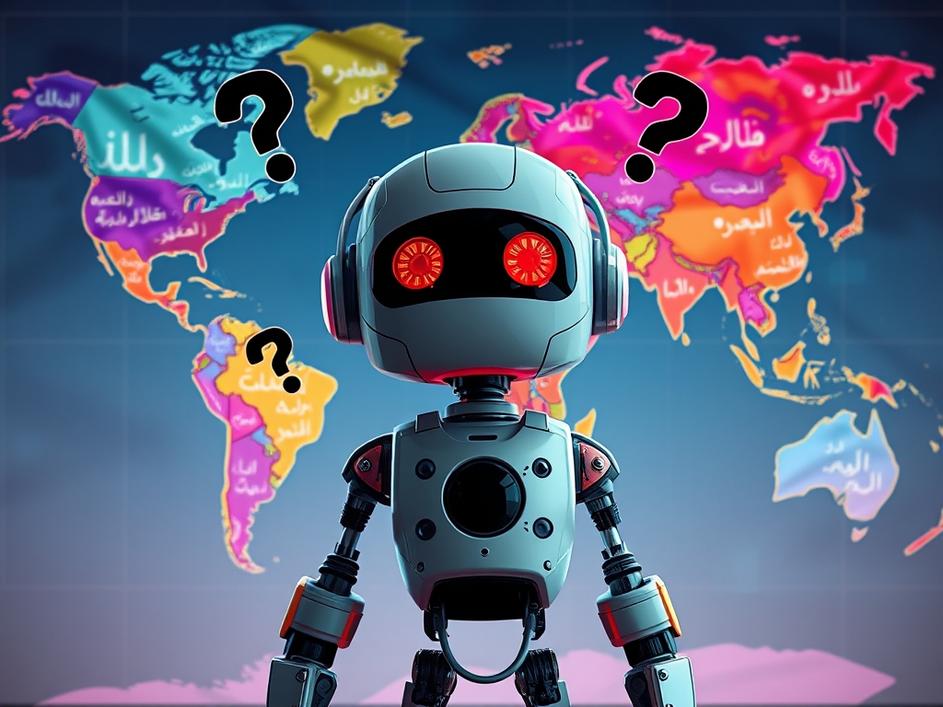
ToggleImagine asking a question in English and getting a response sprinkled with Arabic words. That’s exactly what some ChatGPT users recently experienced, leading to confusion and sparking curiosity. Social media lit up with examples of the chatbot seemingly throwing in Arabic phrases unexpectedly. It definitely got people talking (and scratching their heads).
So, what’s the deal? Is ChatGPT suddenly multilingual in a way we didn’t expect? It’s probably not a conscious decision by the AI. One possibility is that the training data used to build ChatGPT contained instances where English and Arabic were mixed. Maybe there were documents about Arabic culture or language learning materials where English explanations were paired with Arabic terms. If the AI encountered these mixed-language contexts often enough, it might have learned to associate certain English prompts with Arabic responses, even if those responses aren’t contextually relevant. It could also be a bug in the system, like a glitch in the language processing or output generation stages, that causes random insertion of text from other languages.
This whole situation highlights something crucial about AI: it’s heavily reliant on the data it’s fed. AI models learn patterns and relationships from the information they receive. If the data is biased, incomplete, or, in this case, mixed in languages, the AI’s output will reflect those characteristics. It serves as a reminder that AI isn’t some magical, all-knowing entity. It’s a tool shaped by the data and algorithms used to create it. We need to be mindful of the potential for biases and unexpected behaviors that can arise from the training process.
Building AI that can understand and generate multiple languages is a complex task. Different languages have unique grammatical structures, cultural nuances, and writing systems. Training an AI to handle all these differences accurately requires massive amounts of high-quality data and sophisticated algorithms. And even then, there’s no guarantee that the AI will always get it right. Language is inherently ambiguous and context-dependent, which can be challenging for even the most advanced AI models to navigate. The appearance of Arabic words in ChatGPT’s English responses could be a symptom of these underlying challenges.
While it might seem like a funny or strange anomaly, this incident has some real implications. Imagine relying on an AI for important translations or cross-cultural communication, and it starts mixing in unexpected words or phrases. It could lead to misunderstandings, offense, or even misinterpretations of crucial information. Therefore, it’s essential to thoroughly test and evaluate multilingual AI systems to ensure they’re reliable and accurate. This includes carefully examining the training data, monitoring output for unexpected behavior, and incorporating feedback from users who speak the languages involved.
What does this mean for the future of AI and language? Well, as AI models become more sophisticated, we can expect them to handle multiple languages with greater accuracy and fluency. But it’s also a reminder that we need to be critical consumers of AI-generated content. Don’t blindly trust everything an AI tells you, especially when it comes to language. Double-check translations, be aware of potential biases, and use your own judgment to assess the accuracy and appropriateness of the information. The Arabic-injected responses also underscore the need for ongoing research into how AI models learn and process language. By better understanding these processes, we can develop more robust and reliable AI systems that can effectively bridge language barriers and facilitate cross-cultural communication.
OpenAI, the creators of ChatGPT, will undoubtedly be working to address this issue. Identifying the root cause of the problem, whether it’s a data bias, a software bug, or something else entirely, is the first step. Then, they’ll need to implement changes to the training data, algorithms, or system architecture to prevent similar occurrences in the future. This might involve cleaning up the training data to remove instances of mixed-language content, refining the language processing algorithms to better distinguish between different languages, or adding safeguards to prevent the output of irrelevant or unexpected words.
Ultimately, the case of ChatGPT’s unexpected Arabic responses is a valuable learning opportunity. It highlights the importance of responsible AI development, the need for careful data management, and the ongoing challenges of building AI that can truly understand and process human language. As AI continues to evolve, we need to remain vigilant, critical, and engaged in the conversation about its potential and its limitations.
While the Arabic insertions were unexpected, they also serve as a reminder of the complex and sometimes unpredictable nature of AI. As we continue to develop and integrate AI into our lives, it’s crucial to approach it with a healthy dose of curiosity, skepticism, and a willingness to learn from its quirks and surprises. The world of AI is constantly evolving, and unexpected events like this can provide valuable insights into its inner workings and its potential impact on society.



Comments are closed